
A single millimeter of incorrect offset on your Porsche 911 wheels can be the difference between a masterclass in cornering and a frustrating weekend of fender rubbing. You already know that your 911 is a precision instrument where every component must work in harmony. It's natural to feel anxious about how aftermarket setups might impact your Porsche Active Suspension Management (PASM) or whether a staggered configuration will actually improve your grip. You want that perfect, flush fitment without the headache of modifications.
This guide allows you to master the technical nuances of Porsche 911 fitment. You'll learn how to select high-performance wheels that elevate your car’s stance and handling without compromise. We'll explore the critical differences between narrow-body and wide-body offsets, the performance gains from reduced unsprung weight, and the factory-plus styles dominating the 2026 market. Get ready to take the guesswork out of your upgrade and achieve a look that's both aggressive and technically flawless.
Key Takeaways
- Understand the critical role of staggered fitment. Learn how specific widths and offsets maintain legendary rear-engine stability.
- Identify generation-specific specs. Navigate the technical shifts between the 997, 991, and 992 chassis to ensure a perfect bolt-on experience.
- Compare high-performance materials. Discover why forged Porsche 911 wheels offer the ultimate advantage in strength and weight reduction.
- Elevate your aesthetic with confidence. Explore the "OEM+" philosophy to find modern concave or classic mesh designs that complement your car's soul.
- Secure a guaranteed fitment. Learn how to eliminate rubbing and clearance issues by leveraging expert technical data for a flush, professional stance.
Understanding the Porsche 911 Wheel Architecture
The 911's rear-engine layout dictates its entire wheel strategy. Because the engine hangs behind the rear axle, massive traction is required to manage that unique weight bias. This isn't just about looks; it's about physics. Porsche 911 wheels must handle extreme lateral forces while keeping the car's center of gravity low. Reducing unsprung weight is the fastest way to sharpen steering response. Every pound saved on a wheel is worth multiple pounds of vehicle mass when you're diving into a corner. It's the difference between a car that feels heavy and one that feels alive.
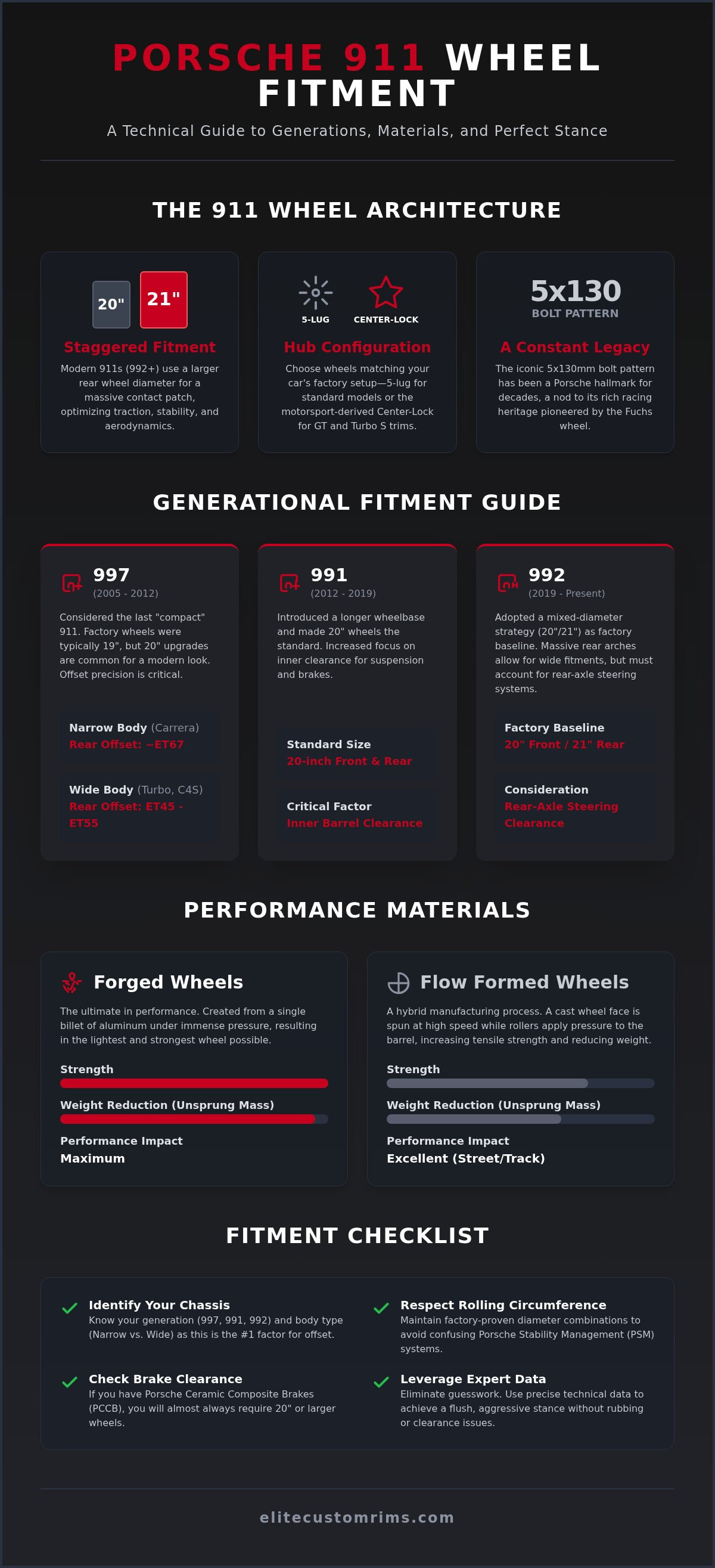
Since the 1960s, the 5x130 mm bolt pattern has remained a constant. It's a hallmark of the brand's racing pedigree. This legacy traces back to the iconic Porsche Fuchs wheel, which pioneered lightweight forged construction for production cars. While the pattern stays the same, the offsets vary wildly between models. You must account for body width. Narrow-body models like a base Carrera require higher offsets to keep the wheels tucked. Wide-body variants, including the Turbo and C4S, utilize more aggressive offsets and wider barrels to fill out those flared arches. Don't guess here; the wrong offset will lead to immediate fender contact.
The Significance of Staggered Fitment
Modern 911s, particularly the 992 generation, utilize a staggered diameter setup. It's common to see a 20-inch front wheel paired with a 21-inch rear. This creates a larger contact patch at the back for acceleration and braking stability. It also optimizes the car's rake for better aerodynamics. Don't mess with the rolling circumference. If you install the wrong tire-to-wheel ratio, you'll confuse the Porsche Stability Management (PSM) system. This can lead to intrusive traction control or even limp mode. Stick to proven diameter combinations to maintain that factory-plus performance.
Center-Lock vs. 5-Lug Configurations
The center-lock system is pure motorsport. It uses a single large nut instead of five small bolts, allowing for faster wheel changes in the pits. You'll find these on the GT3, Turbo S, and now more frequently on the GTS trims. While they look incredible, they require specific tools and massive torque to secure. Switching a 5-lug car to center-locks is a complex hub conversion. It's generally better to stick with your factory hub type. We offer elite forged options for both configurations, ensuring you get the racing aesthetic without the mechanical headache of a conversion.
Navigating Porsche Chassis Codes: 997, 991, and 992 Fitment
The transition from air-cooled models to the water-cooled era fundamentally changed how Porsche 911 wheels interact with the chassis. Older G-body and 993 models relied on high-profile tires and smaller diameters. Modern 911s demand larger barrels and aggressive offsets to accommodate massive brake systems and sophisticated suspension geometry. Understanding these generation-specific requirements is the only way to achieve a flush look without compromising the car's mechanical limits.
997 Fitment Nuances (2005-2012)
The 997 generation is widely considered the last compact 911. It maintains classic proportions while moving toward the larger diameters we see today. Most 997s left the factory with 19-inch wheels, but 20-inch upgrades are a popular way to modernize the aesthetic. You must be precise with offsets here. Narrow-body Carreras require high rear offsets, often around ET67, to prevent the tire from poking past the fender. For owners of wide-body 997 models like the Turbo or C4S, the ideal rear offset range typically falls between ET45 and ET55 depending on the wheel's width.
991 And 992 Modern Standards (2012-2026)
The 991 generation introduced a longer wheelbase and made 20-inch wheels the standard for S models and above. This shift provided more stability but increased the importance of inner clearance. With the 992 generation, Porsche moved to a mixed-diameter strategy. You'll now find 20-inch wheels on the front and 21-inch wheels on the rear as the factory baseline. These massive rear arches allow for incredibly wide fitments, but you must account for active aerodynamics and rear-axle steering. These systems can reduce the available space for wider aftermarket barrels.
Material choice is equally critical as you move into these high-performance generations. Understanding the technical benefits of forged vs. flow formed wheels will help you decide between ultimate weight savings or a more budget-conscious street setup. If your 911 features Porsche Ceramic Composite Brakes (PCCB), you'll almost always need at least a 20-inch wheel to clear the oversized calipers. Don't let the technical data overwhelm your build. If you're ready to upgrade, explore our precision-matched Porsche inventory to ensure your new setup fits perfectly the first time.
Performance Materials: Forged vs. Flow Formed Porsche Rims
Choosing the right material for your Porsche 911 wheels isn't just a matter of price. It's a critical performance decision. The 911 is a surgical instrument. Every component must contribute to its balance. When you replace factory rims, the material determines how the car accelerates, brakes, and turns. High-quality materials reduce rotational inertia. This means the engine spends less energy spinning the wheel and more energy pushing the car forward. For enthusiasts, this technical background on Performance Materials: Forged vs. Flow Formed Porsche Rims is essential for making an informed investment.
Weight is the enemy of performance. A 22-inch forged wheel can be up to 15 pounds lighter than a cast equivalent. This massive reduction in unsprung weight allows the suspension to react faster to road imperfections. It keeps the tire in contact with the pavement more consistently. You'll feel the difference in the first corner. The car feels lighter on its feet. Steering becomes more communicative. Acceleration becomes more immediate. It's a transformative upgrade that honors the engineering behind the Porsche name.
Why Forged is the Elite Choice for Porsche
Forged aluminum is the gold standard for high-performance vehicles. These wheels are machined from a solid block of 6061-T6 aluminum under extreme pressure. This process creates a dense, aligned grain structure that's incredibly strong. This structural integrity is vital for 911 owners who push their cars through high-lateral G-force corners. You don't want wheel flex when the chassis is loaded. Forged wheels offer the highest strength-to-weight ratio available. While we focus here on the 911, you can see similar benefits in our guide on why forged Audi wheels are the elite choice for luxury performance models. Losing five pounds per corner might sound small, but it completely changes the steering feel and feedback through the wheel.
Flow Formed Wheels for Daily Performance
Flow forming is the perfect middle ground for street-driven Carreras. This process starts with a specialized cast wheel. The barrel is then heated and rolled out under high pressure. This stretches the aluminum and improves the grain structure of the barrel itself. It's significantly stronger and lighter than a standard cast wheel. It also offers excellent durability and pothole resistance for daily driving. From a financial perspective, flow-formed wheels are a smart investment. They typically offer about 80% of the performance benefits of a fully forged wheel at roughly 40% of the cost. It's a high-value option for owners who want a "factory-plus" look and improved handling without the premium price of a full-forged set.
Aesthetic Direction: Choosing the Right Style for Your 911
The "OEM+" philosophy is the gold standard for 911 customization. It's about refining the car's presence while respecting its original design language. You want an upgrade that looks like it could have come from the Exclusive Manufaktur department. Selecting the right Porsche 911 wheels requires balancing your car's trim level with its intended use. A GT3 deserves a different aesthetic than a refined Carrera 4S. It's about finding that perfect intersection of heritage and modern performance.
Styles for the Carrera and Targa
Sophistication is the priority for the Carrera and Targa. Multi-spoke designs offer a classic grand touring look. They provide a dense, intricate visual that pairs perfectly with the 911’s flowing lines. If you drive a Targa, match your wheel finish to your Targa bar. A silver bar looks exceptional with brushed clear or silver wheels. A black bar demands satin or gloss black rims to maintain a cohesive theme. For those leaning toward a stealthier look, check out the sleek appeal of premium black rims for finish inspiration. These sophisticated styles provide a "factory-plus" feel that enhances the car without looking out of place.
Aggressive Fitment for Turbo and GT Models
Turbo and GT models need visual weight. Deep concave profiles are the best way to emphasize the massive rear haunches of a wide-body 911. These designs pull the center of the wheel inward. This creates a 3D effect that looks aggressive from every angle. Lightweight Y-spoke and V-spoke patterns are the preferred choice here. They offer a pure motorsport aesthetic. If your car features center-locks, an open V-spoke design highlights the single-nut hub. It's a visual cue that immediately signals high-performance capability and racing pedigree.
Finish Trends and Functional Design
Finish trends for 2026 move toward high-contrast and technical looks. Satin black remains a staple for a modern, aggressive feel. However, we're seeing a strong return of gold and bronze finishes. These colors provide a retro-modern nod to Porsche’s racing history. Beyond color, consider spoke density. Open spoke designs aren't just for show. They improve brake cooling by allowing more airflow to the rotors. This also provides maximum visibility for your calipers. Whether you have standard red or the iconic yellow of PCCBs, your Porsche 911 wheels should frame them properly. Classic mesh designs are great for a vintage feel, while modern concave styles favor the 992's sharp edges.
Don't settle for a "close enough" look. Browse our curated Porsche wheel collection to find the exact style that matches your 911's personality.
Secure Your Perfect Stance with Elite Custom Rims
Elite Custom Rims takes the technical anxiety out of your Porsche build. We don't just sell rims; we engineer the perfect stance. Whether you're refreshing a 997 or pushing a 992 to its limits, our precision-matched inventory ensures a flush fitment every time. We understand the high stakes of Porsche performance. Our focus remains solely on new, high-quality inventory. We eliminate the risks associated with used or refurbished parts. You get a reliable partner invested in your long-term satisfaction and your car's mechanical integrity.
The Elite Consultation Process
Our team of specialists verifies every technical detail before your order ships. We cross-reference offsets, bolt patterns, and brake clearances against our master database. This meticulous approach is the core reason Why Professional Fitment Matters for Luxury Vehicles. We ensure your Porsche 911 wheels clear PASM components and PCCB calipers with surgical precision. Transform your 911's presence today. Stop worrying about rubbing or incorrect backspacing. Trust our data-driven curation to deliver a result that looks and feels like a factory-plus upgrade.
The Elite Custom Rims advantage lies in our curation. We act as the authoritative source of truth for 997, 991, and 992 compatibility. We take the guesswork out of the equation. Our inventory features the most current styles, focusing heavily on the "Elite Choice" of forged aluminum for performance-minded owners. These wheels reduce unsprung weight and sharpen your car's dynamics. We are the trend-conscious curator for the modern enthusiast. Every wheel we sell is a smart investment in your car's handling and resale value.
We value your time. Our logistics are streamlined for the discerning Porsche owner. We offer fast, national shipping across the United States. Your wheels arrive ready to transform your driving experience. No delays. No excuses. We provide straightforward solutions for elite cars that demand excellence.
Ready to Upgrade Your Porsche?
Browse our curated selection of Porsche-specific wheels. We offer no-nonsense results for high-performance vehicles. You want elite aesthetics. You want improved handling. We deliver both with professional assurance. Our process is designed for maximum efficiency. We provide the expertise you need and the logistical support you expect from a premium partner. Shop the Porsche 911 Wheel Collection now and secure the perfect stance for your 911.
Elevate Your 911 Performance and Style
Achieving the perfect stance for your Porsche requires more than just picking a design you like. It demands a deep understanding of staggered offsets, chassis-specific geometry, and the technical benefits of lightweight materials. By prioritizing forged construction and generation-accurate fitment, you protect your car's legendary handling while significantly enhancing its visual presence. Whether you’re modernizing a 997 or refining a 992, the right set of Porsche 911 wheels serves as the ultimate intersection of engineering and art.
Elite Custom Rims is ready to take the guesswork out of your next upgrade. We provide expert fitment verification for every order to ensure a flawless, rub-free experience. Our master-level curation of forged and flow-formed performance wheels gives you the "factory-plus" look you deserve. With premium national support and a focus on high-end reliability, we are the partner you can trust for your luxury vehicle. Transform your driving experience with confidence and precision.
Upgrade Your Porsche with Elite Custom Rims
Frequently Asked Questions
Will aftermarket wheels void my Porsche warranty?
No, aftermarket wheels won't void your entire vehicle warranty. Under the Magnuson-Moss Warranty Act, a manufacturer can't deny a warranty claim unless they prove the aftermarket part caused the specific failure. If an incorrect offset causes premature wheel bearing wear, that specific repair might not be covered. Always choose high-quality Porsche 911 wheels with precise, factory-spec offsets to maintain your car's mechanical integrity and protect your coverage.
What is the difference between narrow-body and wide-body 911 wheels?
The primary difference lies in the rear wheel offset (ET). Wide-body models like the Turbo, GT3, and Carrera 4S feature flared rear arches that require lower offsets to push the wheels outward for a flush stance. Narrow-body Carreras use higher offsets to keep the wheels tucked safely within the fenders. Installing wide-body wheels on a narrow-body chassis usually results in the tires poking past the bodywork, which causes rubbing and poor handling.
Can I use my factory Porsche center caps on aftermarket wheels?
It depends on the wheel's center bore design. Many premium aftermarket rims are specifically engineered to accept the standard 76mm Porsche center cap to maintain a factory-plus aesthetic. However, some track-focused forged wheels use proprietary cap sizes to save weight or accommodate specific hub profiles. We recommend verifying the cap diameter before you buy. If you want to keep your crests, look for wheels labeled as "OEM cap compatible."
Do I need different lug bolts for my new Porsche rims?
Hardware changes are often necessary. Most factory Porsche wheels utilize a ball seat bolt, while many aftermarket designs require a conical seat (tapered) bolt. Using the wrong seat type is a major safety risk because the bolt won't seat properly against the wheel face. You must also ensure the bolt length provides enough thread engagement. We always recommend checking your new wheels' seat requirements and hub thickness before installation.
What is the standard bolt pattern for a Porsche 911?
The standard bolt pattern for 5-lug Porsche 911 models is 5x130 mm with a 71.6 mm center bore. This measurement has remained remarkably consistent across the 997, 991, and 992 generations. While the pattern is uniform, don't assume every 5x130 wheel fits every 911. You must still account for generation-specific offsets and spoke clearances to avoid hitting the brake calipers or suspension components. Precision is key for a rub-free fitment.
How does wheel weight affect my Porsche 911’s performance?
Wheel weight directly impacts unsprung mass and rotational inertia. Lighter Porsche 911 wheels allow your suspension to react faster to road imperfections, which improves grip and ride quality. Since the engine doesn't have to work as hard to spin a lighter mass, you'll enjoy sharper acceleration and shorter braking distances. Reducing weight at the corners is one of the most effective ways to transform your car's steering response and overall agility.
What are the benefits of a staggered wheel setup on a 911?
A staggered setup manages the 911's unique rear-engine weight bias. Wider rear wheels provide a larger contact patch to handle the engine's power and maintain stability during hard acceleration. Modern 911s often use staggered diameters, such as 20-inch fronts and 21-inch rears, to optimize the car's rake and aerodynamic balance. This configuration ensures the rear stays planted while the front remains light and responsive for precise turn-in during spirited driving.
Are center-lock wheels compatible with standard 5-lug Porsche hubs?
No, they are not directly compatible. Center-lock wheels require a specialized hub assembly with a single large locking nut rather than five individual bolts. If your 911 came from the factory with a 5-lug setup, you can't simply bolt on center-lock wheels without a full hub conversion. These conversions are complex and expensive. We recommend sticking to high-performance 5-lug designs unless you're prepared for a professional, motorsport-grade hub swap.