
What if you could ditch those plastic factory aero covers without losing a single mile of battery range? It's a common frustration. You've invested in a high-performance Tesla or Mercedes, but the stock wheels look like a cheap afterthought. You want a head-turning aesthetic. You also need to protect your mileage. Most enthusiasts worry that installing custom electric car wheels will ruin their efficiency or compromise safety due to heavy battery loads.
We understand that hesitation. That's why this 2026 guide focuses on the perfect intersection of luxury and engineering. You'll discover how premium forged materials and aerodynamic profiles can actually maintain or even improve your handling. We'll walk you through EV-specific weight ratings, the latest style trends, and the technical facts about fitment. Stop settling for factory compromises. It's time to upgrade with confidence and give your electric vehicle the premium finish it deserves. Get ready to take the guesswork out of your upgrade.
Key Takeaways
- Understand why EV-specific wheels require higher load ratings to manage heavy battery packs and instant motor torque.
- Master the science of rotational mass to ensure your new custom electric car wheels don't compromise regenerative braking or total range.
- Explore the latest aesthetic trends for 2026, from aerodynamic turbine designs to minimalist styles for Tesla, Mercedes, and Audi.
- Learn how to select the perfect width and offset to maintain a sleek profile while minimizing air drag.
- Eliminate technical anxiety with expert-vetted fitment strategies that protect your vehicle's performance and safety.
What Makes an Electric Car Wheel Different from Traditional Rims?
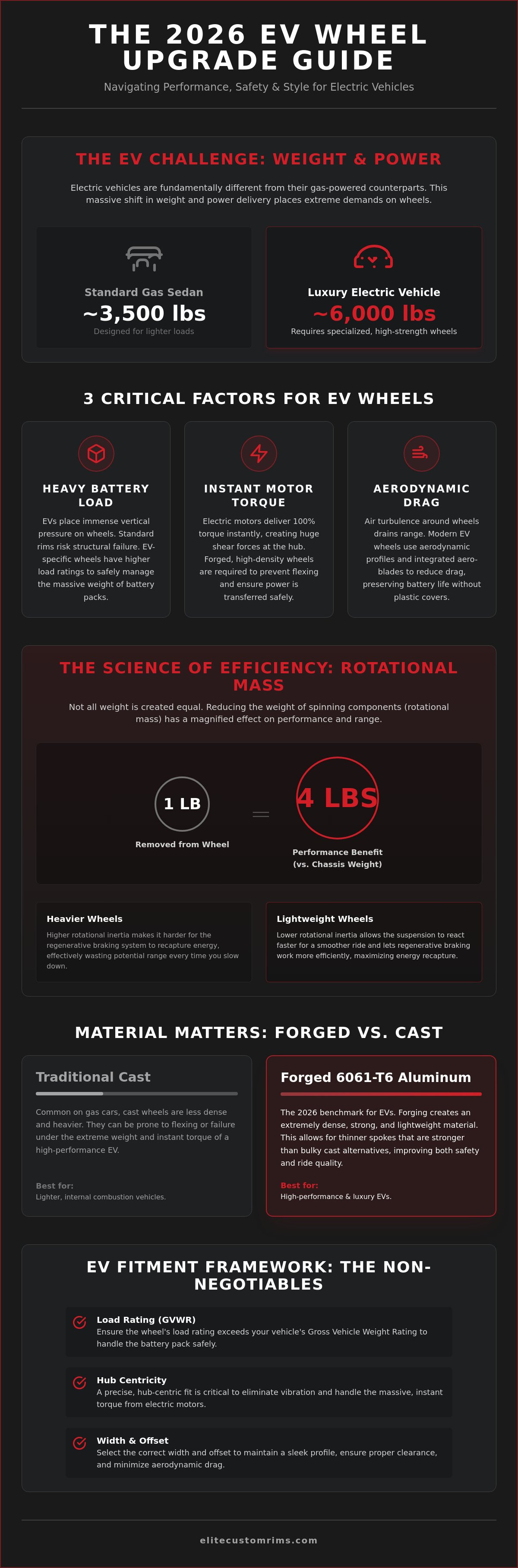
Electric vehicles aren't just cars with batteries. They're high-torque, heavy-duty machines that demand specialized hardware. Transitioning to an EV means managing massive weight and explosive power. Standard rims aren't built for this environment. Choosing custom electric car wheels requires understanding two critical factors: weight and force. A standard gas sedan might weigh 3,500 pounds, but an EV often tips the scales at 6,000 pounds. This extra mass places immense vertical pressure on the wheel's structure. If you use a wheel designed for a gas car, you risk structural failure under the heavy battery pack. Safety isn't optional.
The Challenge of Instant Torque and Heavy Batteries
Electric motors deliver 100% of their torque the moment you touch the pedal. This instant power creates massive shear force at the wheel hub. If a wheel lacks structural rigidity, it can flex or even fail during rapid acceleration. Traditional cast wheels often found on internal combustion vehicles don't provide the necessary density. High-performance EVs utilize advanced drive systems like a Wheel hub motor or dual-motor setups that focus stress directly on the rim's center. We recommend checking these specific load specs before buying:
- Gross Vehicle Weight Rating (GVWR): Ensure the wheel exceeds the per-axle weight of your specific model.
- Hub Centricity: Precision fitment is required to handle high-torque vibration.
- Structural Density: Look for wheels tested for high-impact resistance.
Aero-Efficiency vs. Open-Spoke Aesthetics
Range anxiety is real. Factory wheels often feature flat, plastic-looking aero covers for a technical reason. At highway speeds, air turbulence around the wheel wells accounts for a significant portion of total aerodynamic drag. Open-spoke designs might look aggressive, but they create "dirty" air that drains your battery faster. The 2026 trend in custom electric car wheels solves this. Manufacturers now use CNC machining to create deep-concave profiles with integrated aero-blades. You get the high-end, forged aluminum look without the range penalty. It's the best of both worlds. You've worked hard for your vehicle's aesthetic. Don't let a poorly designed wheel ruin your efficiency.
The industry has shifted. We've moved away from heavy cast iron and basic flow-forming toward aerospace-grade materials. Forged 6061-T6 aluminum is the benchmark for 2026. This material provides the extreme density needed to support luxury EV SUVs like the Cadillac Escalade IQ or the Porsche Taycan. It allows for thinner spokes that remain stronger than bulky cast alternatives. This reduction in unsprung weight improves your suspension's ability to react. You'll notice a smoother, more controlled ride immediately. Trust the engineering, not just the look.
Weight and Rotational Mass: The Technical Anatomy of EV Rims
Every pound counts when you're fighting for range. Physics tells us that not all weight is created equal. Static weight refers to the cargo in your trunk or the passengers in your seats. Rotational mass, however, refers to the parts of your car that spin. In the EV world, reducing rotational mass is the most effective way to boost efficiency. Industry experts often use a 1:4 ratio as a rule of thumb. This means removing one pound of weight from your custom electric car wheels provides the same performance benefit as removing four pounds from the vehicle's chassis. It's a massive lever for improving your car's dynamics.
Heavy wheels don't just drain your battery during acceleration. They also hinder your regenerative braking system. When you lift off the pedal, your motor acts as a generator to capture kinetic energy. Heavy, high-inertia wheels have more momentum, making it harder for the motor to slow them down efficiently. Research in Aerodynamic Design Optimization of Electric Vehicles suggests that while aero-profiles are vital at high speeds, mass is the primary factor in city driving. If your wheels are too heavy, you're literally throwing away watt-hours every time you stop and go.
Why Lightweight Alloys are Essential for EVs
Reducing unsprung weight is the secret to a premium ride. Unsprung weight includes everything not supported by the car's springs, specifically your wheels, tires, and brakes. When you hit a bump, a lighter wheel allows the suspension to react faster. This prevents that "crashing" sensation common in heavy EVs with large factory rims. Rotational inertia is the resistance of a wheel to changes in its rotation speed, directly dictating how many watt-hours per mile your EV consumes during every acceleration cycle. By choosing lighter alloys, you're making your car more agile and more efficient simultaneously. Check out our latest Tesla wheels to see how weight reduction transforms the driving experience.
Forged Aluminum: The Gold Standard for Performance
Manufacturing process matters more than most owners realize. Most factory wheels are cast, which involves pouring molten metal into a mold. This creates a porous, weaker grain structure. Forged wheels are crushed into shape under thousands of tons of pressure. This process aligns the metal's grain, creating a much denser and stronger part. Porsche and Tesla enthusiasts prioritize forged custom electric car wheels because they can be made thinner and lighter without sacrificing the high load rating required for heavy batteries. For those pushing their cars on the track or the street, understanding the grain structure in The Ultimate Guide to Porsche 911 Wheels: Performance, Fitment, and Alloy Technology provides a roadmap for selecting the strongest possible alloy. Don't settle for "flow-formed" compromises when your safety and range are on the line.
Custom Wheel Styles for Luxury EVs: Examples and Trends
Luxury EVs demand a design language that matches their futuristic tech. Choosing custom electric car wheels is no longer just about picking a pattern. It's about finding a style that respects the vehicle's unique proportions while shedding that "stock" appearance. The Turbine style remains a classic for a reason. These directional designs don't just look fast; they act as fans to pull heat away from the brakes while maintaining a smooth air profile. This functional beauty is exactly what high-end owners seek. It's an upgrade that pays dividends in both performance and presence.
This passion for aesthetic transformation is a hallmark of the custom vehicle community. Whether it's perfecting the stance of a Tesla or sourcing specialized components from Fat Boy Design USA for a vintage motorcycle build, the goal remains the same: achieving a level of performance and style that factory parts simply cannot match.
Color trends have shifted dramatically for 2026. While traditional silver has its place, the EV community has embraced Satin Black and Gunmetal for a stealthier, more integrated look. Bronze has also emerged as a top choice for those wanting to highlight the premium nature of their build. It provides a warm contrast to the stark whites and deep blues common in modern EV paint palettes. Deep concave designs are also gaining traction. These add an aggressive, wide-body stance to the Tesla Model S and Model X, making the car look planted without needing wide-body kits.
Tesla-Specific Aesthetics: Beyond the Aero Cover
Tesla owners often feel trapped between the efficiency of aero covers and the weight of factory Uberturbines. You don't have to choose. Custom alternatives offer a more bespoke look while significantly reducing weight. Achieving a flush fitment on the Model 3 and Model Y is a priority for many. By selecting the correct offset, you can bring the wheel out to the fender edge for a wider stance without the vibration risks of spacers. This creates a more aggressive profile while keeping the wheel tucked enough to avoid excessive drag. For a deeper dive into the trade-offs, read The Tesla Aero Wheels Myth-Busting Guide: Efficiency vs. Aesthetics in 2026.
European Luxury: Matching Wheels to Audi and Mercedes EVs
European manufacturers like Audi and Mercedes-Benz have pioneered the 'Solid Face' trend. This design features large, flat surfaces with minimal openings, creating a clean and ultra-modern aesthetic for the e-tron and EQS lineups. It's about maintaining that 'OE-plus' look. You're upgrading the size and style, but keeping the factory-level sophistication. Modern luxury wheels for these brands prioritize a futuristic, minimalist multi-spoke pattern that complements the clean body lines of European electric sedans.
Innovations in materials are also pushing these designs further. Some manufacturers are Boosting EV Range Via A Carbon Revolution by integrating carbon fiber elements into luxury wheel faces. This reduces weight while allowing for intricate, multi-layered designs that were previously impossible. Whether you prefer a minimalist multi-spoke or a deep concave profile for your Model S, the goal is a seamless integration. Your custom electric car wheels should look like they were designed specifically for your car's electric architecture, not just bolted on as an afterthought.
Fitment Framework: Protecting Your Range and Performance
Fitment is the final frontier of EV customization. It's a technical balancing act where millimeters matter. Many drivers believe that any wheel with the correct bolt pattern will work. They're wrong. When selecting custom electric car wheels, you must account for how the wheel's position affects the air flowing over the vehicle's body. A wheel that sticks out too far creates a massive air pocket. This increases your drag coefficient and kills your highway range. You want a flush look, but you cannot ignore the physics of air resistance.
The "plus-sizing" dilemma is another critical factor. Moving from a factory 19-inch wheel to a 21-inch setup looks incredible. However, larger diameters often come with a range penalty of around 10% due to increased rotational mass and less aerodynamic tire sidewalls. You're also dealing with "tire stretch." If your wheel is too wide for the tire, the sidewall stretches thin. This doesn't just look bad; it exposes the rim edge to curb rash and creates turbulence that drains your battery. Precision is the only way to maintain the performance you paid for.
The Math of Range: Width and Rolling Resistance
Wider wheels usually lead to wider tires. More rubber on the asphalt increases rolling resistance. While this improves grip for high-torque launches, it forces the motor to work harder at cruising speeds. Finding the "sweet spot" is key. You need enough width for traction but not so much that you're dragging an anchor. A wheel's offset determines how far it sits in the wheel well, directly altering the vehicle's aerodynamic profile and efficiency. If the offset is too low, the wheel pushes out, catching the wind like a sail.
Ensuring Precise Fitment for Tesla and Luxury Models
Bolt patterns are non-negotiable. A Tesla Model 3 uses a 5x114.3 pattern, while an Audi e-tron typically uses 5x112. Performance models like the Tesla Model S Plaid or the Porsche Taycan have massive brake calipers. You need a specific inner-barrel design to clear these high-performance stoppers. Standard "gas car" wheels often lack the internal clearance for these large EV brakes. Check out our Tesla Model Y Wheels: The 2026 Performance and Aesthetics Guide for model-specific data on offsets and brake clearance.
Silence is the hallmark of a luxury EV. Any slight imbalance in the wheel hub will be felt immediately through the steering wheel. Electric cabins are whisper-quiet, making micro-vibrations feel like a major defect. Hub-centric wheels are essential because they ensure the wheel is perfectly centered on the hub. This eliminates the vibrations that aftermarket spacers often cause. Browse our Mercedes Wheels to find a vibration-free, high-performance fitment that respects your car's engineering. Shop with confidence knowing your fitment is backed by expert data.
Elite Custom Rims: Curating Your Performance EV Aesthetic
Selecting the right custom electric car wheels shouldn't feel like a gamble. We've eliminated technical anxiety by mastering the specific load and torque demands of the electric market. Our process is built on professional assurance. We don't just sell rims; we curate a selection that guarantees structural integrity. Every wheel in our inventory is vetted for the extreme curb weights of modern battery packs. You get a head-turning look without compromising the safety of your vehicle. It's about practical reliability meeting high-end style.
Investing in high-quality, new wheels is a smart financial move. Cheaper alternatives often fail under EV torque, leading to costly replacements or damaged suspension components. We focus exclusively on premium, new inventory to ensure your vehicle's long-term value remains intact. Our "No-Guesswork" shopping experience allows you to filter by year, make, and model with total confidence. It's fast. It's efficient. It's designed for the modern enthusiast who values their time as much as their car's performance. Stop guessing and start driving.
Expert Support for Your EV Upgrade
Our team specializes in the technical nuances of luxury marques. Whether you're upgrading a Rolls Royce or a Cadillac Escalade, we verify every fitment point. We understand that these high-end vehicles have unique aerodynamic and clearance requirements. We take the guesswork out of the equation. We offer national shipping on all our premium rims, ensuring they arrive ready for your vehicle. Our commitment is simple: providing the most reliable, trend-conscious wheels on the market today. We handle the logistics so you can focus on the transformation.
- Precision Fitment: Guaranteed compatibility for Audi, Mercedes, and Tesla models.
- Load Rated: Every wheel meets or exceeds EV-specific weight requirements.
- Verified Inventory: We focus exclusively on high-performance new products for discerning owners.
- Expert Guidance: Direct access to specialists who understand electric vehicle engineering.
Ready to Transform Your Electric Drive?
Redefining your vehicle's presence starts with the right foundation. A set of lightweight alloys can change how your car feels on the road and how it looks in your driveway. Don't settle for factory limitations or plastic covers. Explore our latest collection and see the difference that professional curation makes. Take the next step in your EV journey. For a complete look at the top styles of the season, read The Best Aftermarket Rims for 2026: A Premium Roundup for Luxury and Performance. Upgrade your drive today with the authority in custom electric car wheels.
Elevate Your Electric Drive Today
Upgrading your vehicle is about more than just a new look. It's about respecting the engineering of your high-performance machine. You now understand that the right custom electric car wheels must balance structural rigidity with aerodynamic efficiency. By reducing rotational mass and ensuring a hub-centric fitment, you protect your battery range and maintain the whisper-quiet ride you love. Don't settle for factory compromises when you can have elite performance and a bespoke aesthetic.
We take the guesswork out of your upgrade. Our team offers specialized fitment for Tesla, Audi, and Porsche to ensure your vehicle handles exactly as intended. We provide a curated inventory of high-load-rated wheels designed specifically for the weight and torque of modern EVs. With nationwide US shipping, your new setup is ready to mount and drive. It's time to give your electric vehicle the premium finish it deserves. Trust the experts to deliver a fitment that is as safe as it is stylish.
Shop Premium Custom EV Wheels at Elite Custom Rims
Your journey toward a more efficient and head-turning drive starts now. We're ready to help you transform your vehicle with professional confidence and technical precision. For those looking for technical data on the high-grade electronic components that power these advanced systems, click here to view resources from Adage Components. Let's redefine your electric experience together.
Frequently Asked Questions
Will custom wheels significantly decrease my electric car's range?
Custom wheels only decrease range if they're heavier or less aerodynamic than your factory setup. A typical heavy cast wheel might cause a 5% to 10% range loss. However, switching to lightweight forged options can actually preserve or even slightly improve your efficiency in city driving. The key is balancing weight reduction with a design that manages air turbulence effectively at highway speeds.
Can I use standard aftermarket wheels on an electric vehicle?
You cannot safely use just any standard aftermarket wheel on an electric vehicle. EVs are significantly heavier than their gas powered counterparts due to massive battery packs. Most traditional wheels aren't tested for these extreme vertical loads. Always verify that your chosen custom electric car wheels have a certified load rating that matches or exceeds your vehicle's Gross Vehicle Weight Rating.
What is the best wheel size for a Tesla Model Y to maintain efficiency?
The 19 inch wheel remains the gold standard for Tesla Model Y efficiency. While 20 inch or 21 inch wheels offer a more aggressive look, they increase rotational mass and aerodynamic drag. Moving from 19 inch to 21 inch wheels typically results in a range penalty of approximately 10%. If range is your priority, stick to smaller diameters with high quality lightweight construction.
Do electric cars need special tires or just special wheels?
Electric cars benefit from both specialized tires and wheels to maximize their potential. EV specific tires are designed to handle instant torque and reduce road noise. Specialized wheels provide the structural integrity needed for heavy battery loads while optimizing airflow. Using both ensures you maintain peak efficiency, safety, and the whisper quiet cabin experience that defines modern electric driving.
How much weight can I save by switching to forged EV wheels?
Switching from factory cast rims to premium forged wheels can save between 5 and 10 pounds per corner. This might seem small, but it represents a massive reduction in rotational mass. Because wheels are unsprung weight, saving 20 pounds across a full set can significantly improve your suspension response and acceleration. It's one of the most effective performance upgrades available for luxury EVs.
What does 'load rating' mean and why is it critical for EVs?
Load rating is the maximum weight capacity a single wheel is engineered to support safely. This metric is critical for EVs because battery packs add thousands of pounds of static weight. A wheel with an insufficient load rating can flex, crack, or fail entirely under the stress of a heavy EV. Always check the stamped rating on the back of the wheel before installation.
Does changing my wheels void my EV's manufacturer warranty?
Changing your wheels does not automatically void your manufacturer warranty. In the United States, the Magnuson Moss Warranty Act protects consumers. A dealership can only deny a warranty claim if they can prove the aftermarket wheels directly caused a specific mechanical failure. High quality, properly fitted wheels that meet factory load specifications rarely present any legal or technical warranty issues.
Are aero covers actually necessary for highway driving?
Aero covers are effective at reducing drag during highway driving, but they aren't the only way to save range. These plastic covers work by smoothing the airflow over the wheel face at high speeds. If you dislike the look, you can achieve similar results with custom electric car wheels that feature integrated aerodynamic blades. You get the performance benefit without the cheap factory aesthetic.