
Your 2026 Tundra is a precision machine that demands more than generic, off-the-shelf parts. You want an aggressive, flush stance without the nightmare of rubbing tires or highway vibrations. We get the confusion surrounding the 6x139.7mm bolt pattern change. We know the fear of buying wheels that simply don't fit. Choosing the right Toyota Tundra wheels shouldn't be a gamble. It's about matching technical specs with your personal style. Aim for a truck that performs as well as it looks.
This guide eliminates the guesswork and secures your path to a premium upgrade. We break down the exact fitment requirements for every 2026 trim, from the rugged TRD Off-Road to the refined 1794 Edition. Explore the latest satin and bronze finish trends. Learn why a 95mm hub-centric design is non-negotiable for your ride quality and safety. Master your Tundra’s stance with our expert breakdown of the best wheel styles and performance upgrades for 2026. Build a bolder, more capable truck with confidence.
Key Takeaways
- Master the critical transition from 5-lug to 6-lug patterns to ensure your next set of Toyota Tundra wheels provides a seamless fit for the 2026 model.
- Decode the technical relationship between offset and backspacing to achieve an aggressive stance without sacrificing suspension clearance.
- Explore the 2026 style shift toward "Luxury Off-Road" aesthetics that perfectly complement the Tundra's premium trim levels.
- Evaluate the performance benefits of forged versus cast options to maximize fuel economy and improve your truck's handling.
- Learn how professional fitment verification removes technical anxiety by guaranteeing accuracy for your specific Tundra generation.
The Evolution of Toyota Tundra Wheels: Fitment Matters
The Toyota Tundra occupies a unique space in the American half-ton market. It combines legendary Japanese engineering with the sheer scale required for heavy-duty hauling. For decades, owners have customized these trucks to reflect that duality. In 2026, the trend has shifted toward a "street-legal aggressive" stance. This look prioritizes a wide, muscular profile while maintaining the refined handling expected from a modern pickup. Achieving this requires more than just picking a pretty design. It demands a deep understanding of how the History of the Toyota Tundra has dictated its technical evolution. Master your fitment to ensure your truck performs as well as it looks.
Gen 2 vs. Gen 3: The Lug Pattern Divide
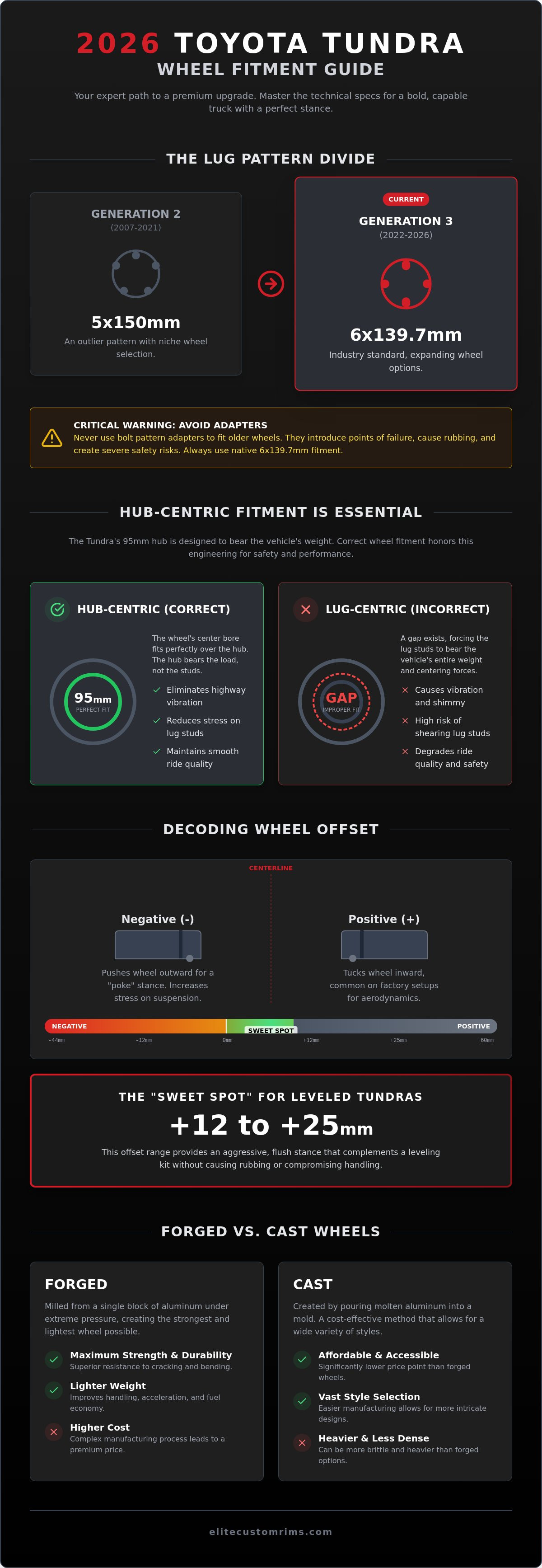
The most significant hurdle for owners is the dramatic change in bolt patterns. From 2007 to 2021, the second-generation Tundra utilized a 5x150mm pattern. This was an outlier in the truck world, making wheel selection a niche endeavor. If you're shopping for 2022 through 2026 models, you've moved into the third generation. These newer trucks feature a 6x139.7mm (6x5.5 inch) pattern. This shift aligned the Tundra with industry standards, but it made older Toyota Tundra wheels obsolete for new buyers. Don't fall into the trap of using bolt pattern adapters to bridge the gap. Adapters introduce unnecessary points of failure. They can push the wheel out too far, causing severe rubbing and safety risks. Stick to native fitment for maximum reliability and peace of mind.
Why Hub-Centric Wheels are Essential for Toyotas
Toyota trucks are designed with hub-centric fitment. This means the wheel's center bore fits perfectly over the vehicle's hub. The weight of the truck rests on the hub itself, not the lug studs. Many generic aftermarket wheels are lug-centric, relying solely on the nuts to center the wheel. On a heavy-duty platform like the Tundra, this is a mistake. It leads to uneven weight distribution and potential hardware failure. Choose Toyota Tundra wheels that honor this engineering requirement.
- Eliminate Vibration: Hub-centric designs ensure the wheel is perfectly centered every time, preventing highway shimmy.
- Reduce Stress: Proper fitment prevents the lug studs from shearing under heavy towing or off-road loads.
- Maintain Ride Quality: You bought a Tundra for its smooth power; don't ruin it with shaky, poorly fitted wheels.
If your chosen wheels have a larger center bore than the Tundra's 95mm hub, you must use high-quality centering rings. These simple components fill the gap and restore the hub-centric integrity of your setup. We take the guesswork out of this process. We verify every spec to ensure your upgrade is as safe as it is stylish. Focus on quality, and your Tundra will reward you with years of flawless performance.
Decoding Tundra Wheel Specs: Offset and Backspacing
Achieving the perfect stance for your truck requires more than just an eye for design. It’s a game of millimeters. Offset is the most critical measurement in this process. It determines the lateral position of the wheel relative to the fender. A high positive offset keeps the wheel tucked neatly inside the wheel well. A lower or negative offset pushes the wheel outward. This creates the "poke" aesthetic many enthusiasts crave. If you want a clean, flush look where the tire edge aligns perfectly with the fender flare, you must calculate your offset with precision. Get it wrong, and you’ll face the frustration of tires rubbing against the frame or fender liners during tight turns.
Wheel width plays a supporting role in this equation. As you increase width, your offset requirements shift to maintain inner clearance. A wider set of Toyota Tundra wheels allows for larger tires, but it also reduces the margin for error. You need enough room to prevent the tire from hitting the suspension components while avoiding excessive protrusion that could damage your paint. Browse our professional collection to explore Toyota wheels that balance these technical demands with premium style.
The "Sweet Spot" Offset for Tundras
For most 2022 to 2026 Tundra owners, the "sweet spot" depends on your suspension setup. Standard factory wheels typically range from +25 to +60 offset. These high-positive numbers ensure the truck stays aerodynamic and avoids debris kick-up. If you’ve installed a leveling kit, you can safely move toward a +12 to +25 offset. This range provides a wider, more aggressive footprint without compromising your scrub radius. Avoid extreme negative offsets on daily drivers. They significantly increase the scrub radius, which leads to heavier steering, accelerated ball joint wear, and unpredictable handling on uneven pavement.
Measuring for Suspension Clearance
Modern Tundras, particularly the TRD models, feature massive brake calipers that require specific barrel clearances. If you plan on upgrading to aftermarket Upper Control Arms (UCAs), your wheel choice becomes even more restricted. Many high-performance UCAs are thicker than factory units. They require wheels with less backspacing to prevent the inner tire sidewall from making contact. Backspacing is the distance from the mounting surface to the inner edge of the rim. Understanding this measurement is vital for protecting your suspension. Follow these rules for a safe setup:
- Check Caliper Clearance: Ensure the wheel spokes clear the front brake calipers, especially on 18-inch applications.
- Verify UCA Compatibility: Confirm your wheel backspacing allows for full suspension articulation without UCA contact.
- Account for Tire Squat: Remember that tires bulge under load; always leave a small safety margin for off-road compression.
Precision fitment isn't a luxury. It's a requirement for a truck of this caliber. By mastering these specs, you guarantee a ride that is as smooth as it is bold.
Top Toyota Tundra Wheels Styles: The 2026 Roundup
The 2026 Tundra isn't just a workhorse. It's a statement of luxury and utility. While many competitors focus solely on rugged, muddy aesthetics, the modern Tundra owner demands a more sophisticated balance. We call this the "Luxury Off-Road" aesthetic. It's particularly popular for the Capstone and Platinum trims. These builds require a wheel that looks at home at a high-end valet while possessing the strength to handle a weekend trail. Style defines your truck's identity. Demand more from your setup. Choose a design that reflects both your ambition and your truck's capability.
Finish choice is the final touch in your customization journey. Satin black remains the leading choice for 2026 builds. It hides brake dust effectively and provides a grounded, muscular look. However, anthracite and bronze finishes are surging in popularity. They offer a sophisticated contrast to the Tundra’s paint colors, especially for Lunar Rock or Army Green models. If you’re building a wide-body Tundra, consider a deep-dish design. These wheels provide a massive lip that emphasizes the truck's width and creates a powerful, unmistakable presence on the road.
TRD Wheels and OE-Style Upgrades
TRD-inspired designs remain the gold standard for many owners. The iconic Satin Black TRD Pro look is timeless. It provides a "factory-plus" appearance that looks intentional and clean. Choosing TRD wheels offers several practical advantages beyond aesthetics. They preserve your vehicle's resale value. They maintain your warranty peace of mind. These wheels are engineered specifically for the Tundra's weight and hub-centric needs. They offer a secure, reliable upgrade for those who value the Toyota heritage.
Premium Aftermarket Rims for Street and Trail
Aftermarket options allow for deeper personalization. Minimalist multi-spoke designs are trending for street-focused builds. They provide a clean, modern look that highlights the Tundra’s sharp body lines. For those who venture off-road, simulated beadlocks offer a rugged, technical vibe without the maintenance headaches of true beadlock hardware. If you want maximum street presence, consider upgrading to 22 inch rims. These larger diameters fill the wheel wells perfectly on Platinum and 1794 trims. They provide a high-end, commanding profile that generic truck wheels simply can't match. Elevate your Toyota Tundra wheels selection with a curated approach to style and performance.
Performance and Durability: Forged vs. Cast Options
Upgrading your truck's performance starts where the rubber meets the road. While aesthetics grab attention, the structural integrity of your Toyota Tundra wheels determines how your vehicle handles extreme stress. Most factory wheels are cast. This process involves pouring molten aluminum into a mold. It's efficient, but it can leave microscopic voids in the metal. Forging is the premium alternative. It uses immense heat and pressure to crush a solid block of aluminum into shape. This creates a denser, grain-aligned structure that handles the Tundra's massive torque and towing demands with ease.
Weight is the silent performance killer. Forged wheels can be up to 25% lighter than cast wheels of the same size. This reduction in unsprung mass allows your suspension to react with more precision. It improves acceleration and stopping distances. Research from SEMA indicates that a 10% reduction in wheel weight can lead to a 1-2% improvement in overall performance. For a heavy-duty pickup, these gains add up quickly at the fuel pump and on the trail.
Why Forged Wheels are the Elite Choice
Forged wheels are the ultimate insurance policy for owners who tow or frequent off-road trails. They possess a higher load rating, which is critical for the Tundra's substantial towing capacity. You need a wheel that won't crack under the pressure of a heavy tongue weight or a sharp rock impact. Forged wheels offer up to 300% more structural strength than standard cast alternatives. This resilience ensures your safety and protects your vehicle's components. Explore the technical breakdown of forged vs cast wheels to see which manufacturing method fits your driving style.
Finishing Tech: Protecting Your Investment
A wheel is only as good as its coating. Powder coating is the industry standard for durability. It’s a dry powder applied electrostatically and baked into a hard skin. It resists salt, mud, and road debris much better than traditional automotive paint. If you live in a region where roads are salted, avoid bare polished aluminum. These rims require constant polishing to prevent pitting. Look for high-quality clear coats or satin finishes that offer a "set it and forget it" maintenance routine. Identifying a quality finish is easy; look for a smooth surface and a thick, even application around the lug holes. Ready to upgrade? Shop our premium Toyota wheels to find a setup that survives the elements.
Securing Your Setup: Professional Tundra Fitment
You’ve mastered the technical nuances of offset, material science, and the critical shift in bolt patterns. Now comes the most important step: execution. Choosing the right Toyota Tundra wheels is only half the battle. Ensuring they arrive at your door with guaranteed accuracy is what separates a successful build from a logistical nightmare. We don't believe in "universal" solutions that require spacers or hub rings as an afterthought. Your truck deserves a setup engineered for its specific hub-centric requirements. Precision is our standard. Confidence is your result.
The transition to the 2026 model year brings refined suspension tuning and specific brake caliper clearances. We monitor these changes in real-time. Our logistics network is built for efficiency, delivering premium wheels nationwide with professional handling. Every order undergoes a rigorous internal review before it leaves our facility. We don't just ship boxes. We deliver the foundation of your truck’s new identity. Trust the experts who value your time as much as your Tundra’s performance.
The Elite Fitment Guarantee
Our commitment to "No-Guesswork" fitment is backed by proprietary data. Our specialists verify every Tundra order for year, make, and model accuracy. We confirm the 6x139.7mm bolt pattern and the 95mm center bore for your 2026 model. This eliminates the risk of receiving parts that cause vibration or require unexpected trimming. We focus exclusively on new, premium inventory. You will never find used or refurbished rims in our collection. We provide only the highest quality Toyota Tundra wheels to ensure your safety and vehicle integrity.
- Data-Driven Verification: We cross-reference your trim level against factory brake and suspension specs.
- Zero Refurbished Parts: Every wheel is brand new and inspected for finish perfection.
- Specialist Support: Our team understands the difference between a Limited trim and a TRD Pro setup.
Ready to Transform Your Tundra?
A high-quality wheel upgrade does more than change the look of your truck. It improves the stance, enhances the handling, and secures the resale value of your investment. You’ve done the research. You know the specs. Now, it's time to see the transformation in person. Browse our curated selection to find the style that matches your ambition. Whether you’re chasing a luxury street profile or a rugged trail-ready look, we have the inventory to make it happen. Find your perfect set of Toyota Tundra wheels at Elite Custom Rims today.
Before you finalize your purchase, run through this final checklist. Confirm your suspension height (stock vs. leveled). Double-check your desired tire width to avoid fender contact. Ensure your chosen load rating matches your maximum towing needs. Once these boxes are checked, you’re ready to build the boldest Tundra on the road. We’re here to ensure every millimeter is perfect.
Command the Road with Precision Fitment
Transforming your truck is about more than just a visual upgrade. It’s a technical evolution that demands accuracy and expertise. You now understand the critical shift to the 6x139.7mm bolt pattern and why hub-centric designs are non-negotiable for your ride quality. Whether you choose the lightweight durability of forged aluminum for heavy-duty towing or a bold TRD-inspired aesthetic for the street, your choice defines your vehicle's legacy. Don't settle for generic options that compromise your safety or performance.
At Elite Custom Rims, we are specialists in high-performance truck fitment. We take the guesswork out of the equation with guaranteed fitment support and reliable national shipping across the USA. It’s time to secure a setup that matches your ambition. High-end Toyota Tundra wheels should be as resilient as the truck they carry. Take the next step toward a bolder, more capable profile today.
Browse the 2026 Toyota Tundra Wheel Collection and discover the difference that professional curation makes. Your Tundra is ready for its upgrade. We're ready to help you build it.
Frequently Asked Questions
What is the bolt pattern for a 2026 Toyota Tundra?
The bolt pattern for the 2026 Toyota Tundra is 6x139.7mm, also known as 6x5.5 inches. This represents a major shift from the older 5-lug design found on previous generations. Always verify this measurement before purchasing new Toyota Tundra wheels to ensure a perfect fit. Using the correct pattern is the only way to guarantee safety and wheel integrity on the road. It ensures your truck remains reliable under heavy loads.
Can I put 20-inch wheels on a Tundra that came with 18s?
Yes, you can easily upgrade to 20-inch wheels even if your truck originally came with 18s. This is a popular modification for owners seeking a more premium, street-ready look. You must ensure the overall tire diameter remains consistent to avoid speedometer errors. Larger wheels often provide better handling and a firmer ride. Check your clearance for brake calipers and suspension components during the selection process to avoid any technical issues.
Do aftermarket Tundra wheels affect my towing capacity?
Aftermarket wheels only affect towing capacity if their load rating is lower than the factory requirements. Always choose wheels that meet or exceed the Tundra's maximum gross vehicle weight rating. Forged options are excellent for towing because they offer superior structural strength. Never compromise on load ratings when hauling heavy trailers. Proper Toyota Tundra wheels will maintain your truck’s capability while adding a customized, high-end aesthetic to your setup and ensuring long-term durability.
What is the best offset for a leveled Toyota Tundra?
The best offset for a leveled Tundra typically falls between +12 and +25. This range pushes the wheels slightly outward to create a flush or aggressive stance without causing severe rubbing. It provides the necessary clearance for larger tires while maintaining predictable handling. Avoid extreme negative offsets unless you are prepared for significant fender modifications. This "sweet spot" ensures your truck looks bold while remaining fully functional for daily driving and light off-road use.
Will TRD wheels fit on a non-TRD Tundra trim?
Yes, TRD wheels will fit any Tundra trim level as long as the bolt pattern matches your vehicle's generation. For 2022 through 2026 models, any TRD wheel with a 6x139.7mm pattern is compatible across the SR5, Limited, and Platinum trims. This is a great way to achieve a "factory-plus" look. It preserves the Toyota heritage while giving your truck a more rugged, performance-oriented personality without the need for complex modifications or spacers.
How do I know if the wheels I buy are hub-centric?
You can identify hub-centric wheels by checking the center bore measurement, which must be exactly 95mm for the 2026 Tundra. Hub-centric designs fit snugly over the vehicle's hub to distribute weight evenly. If a wheel has a larger bore, it is likely a "lug-centric" universal fit. In these cases, you must use high-quality hub-centric rings to fill the gap. This setup prevents vibrations and protects your lug studs from excessive stress during highway driving.
Do I need new lug nuts for my aftermarket Tundra wheels?
Most aftermarket wheels require new lug nuts because they use a conical seat rather than the flat mag-style seat found on factory Toyota wheels. Using the wrong lug nuts is a serious safety hazard. It prevents the wheel from seating properly against the hub. Always match the thread pitch and seat type to your specific aftermarket rims. We recommend purchasing a dedicated lug kit to ensure a secure and professional installation that lasts for years.
What is the difference between a 5-lug and 6-lug Tundra wheel?
The difference lies in the number of mounting points and the specific spacing between them. The 5-lug pattern (5x150mm) was used on second-generation Tundras from 2007 to 2021. The 6-lug pattern (6x139.7mm) is the current standard for 2022 through 2026 models. These two designs are not interchangeable. Attempting to use adapters to cross-pollinate between generations is not recommended due to safety risks. Stick to the pattern designed for your specific truck generation.