
The more expensive wheel is not automatically the better daily-driver upgrade. A cost-benefit analysis of forged wheels vs. a higher car trim depends on what you’ll notice every day: forged wheels may appeal if lower weight and wheel-focused performance matter most, while a higher trim may make more sense if you value comfort and features throughout the cabin. Neither choice is automatically worth the added cost.
It’s easy to focus on the visual impact of new wheels or the appeal of a better-equipped car. A sound decision weighs more than the purchase price: consider long-term value, repair difficulty, warranty coverage, and how you actually use your vehicle.
This comparison lays out the trade-offs, including how forged wheels compare with cast and flow-formed options and what a higher trim can add to everyday driving. You’ll also find a practical guide to matching the choice to your priorities, driving habits, and budget.
Key Takeaways
- Compare the full upfront spend with the everyday benefits each upgrade adds, not just its initial appeal.
- Understand how factory and aftermarket wheel choices can differ in warranty coverage before deciding.
- Assess a higher trim by the features it adds and how much you’ll value them in daily use.
- Consider how buyer preferences, originality, and condition can influence resale value and depreciation.
Upfront cost and long-term value
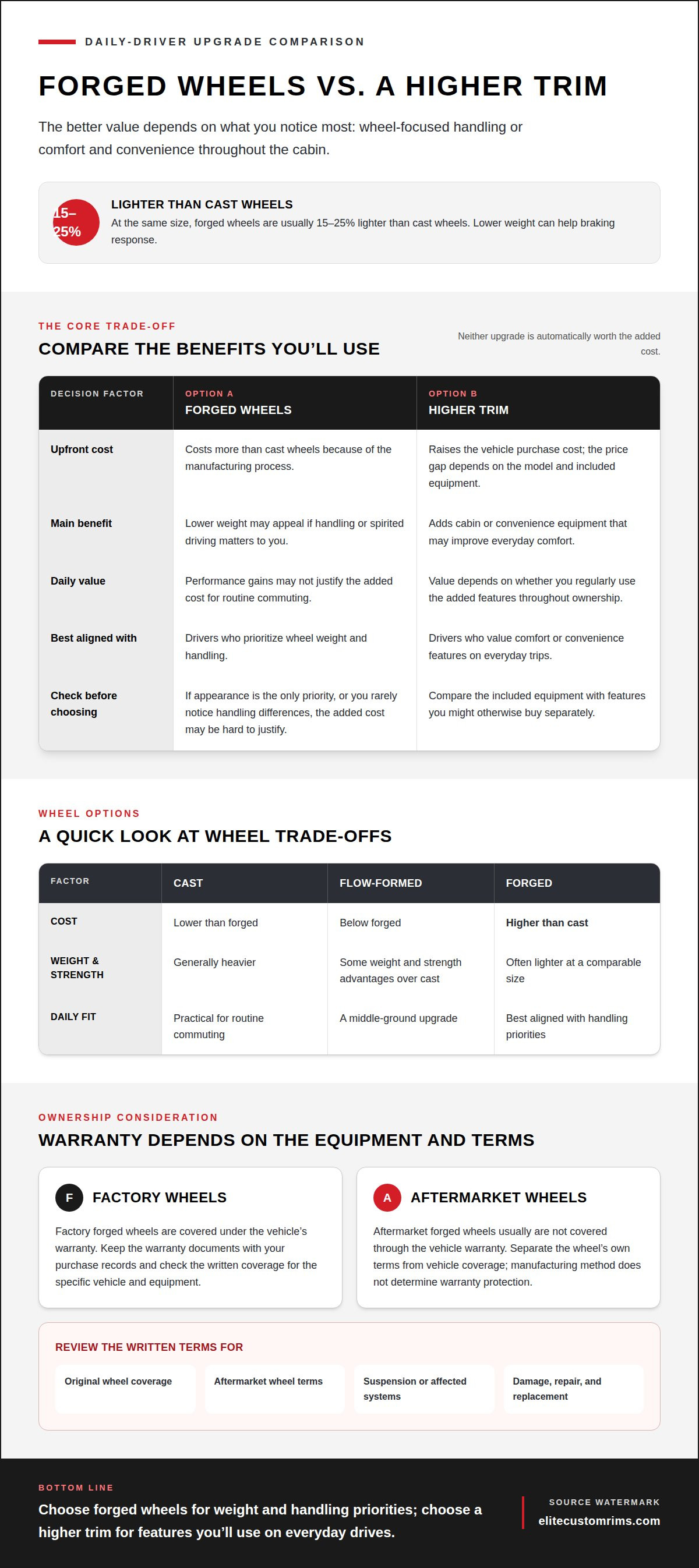
For daily driving, forged wheels prioritize lower weight and handling, while a higher trim adds cabin or convenience features. At the same size, forged wheels are usually 15-25% lighter than cast wheels, which can help braking response; comfort gains depend more on a trim’s specific features and your priorities. A cost-benefit analysis of forged wheels vs higher car trim starts with the upgrades you’ll notice most.
Forged Wheels
Forged aluminum wheels cost more than cast wheels because of their manufacturing process. Their lower weight may appeal to drivers who prioritize handling or frequently drive spiritedly. For routine commuting, though, the performance benefit may not justify the added cost.
Higher Trim
A higher trim increases the vehicle’s purchase cost in exchange for added equipment that may improve everyday comfort or convenience. Its value depends on whether you’ll use those features throughout ownership. Unlike a wheel upgrade, a trim change can affect several parts of the driving experience at once. Compare the included equipment with what you might otherwise buy separately, then weigh its value against the trim-price difference.
| Option | Upfront cost | Weight and handling | Daily value |
|---|---|---|---|
| Cast aluminum wheels | Lower than forged | Generally heavier | Practical for routine commuting |
| Flow-formed wheels | Below forged | Some weight and strength advantages over cast | A middle-ground upgrade |
| Forged wheels | Higher than cast | Often lighter at comparable size | Best aligned with handling priorities |
| Standard trim | Lower vehicle purchase cost | No wheel-specific change | Fits buyers satisfied with existing equipment |
| Higher trim | Higher vehicle purchase cost | Depends on included equipment | Valuable when added features see regular use |
Forged wheels may be poor value if you mainly commute, rarely notice handling differences, or would rather spend on features you use every day. They can also be an expensive choice if appearance is your only priority. A useful cost-benefit analysis of forged wheels vs higher car trim weighs regular benefits against the initial appeal.
Choose forged wheels if weight and handling are priorities; choose a higher trim for features you’ll use on everyday drives.
Warranty considerations
Warranty coverage can affect the ownership equation, but factory and aftermarket wheels are treated differently. Factory forged wheels are covered under the vehicle’s warranty, while aftermarket forged wheels usually are not covered through the vehicle warranty. That distinction matters if wheel coverage influences your decision.
For a factory-equipped vehicle, keep the warranty documents with your purchase records. They outline the coverage for the vehicle and its original equipment. A higher trim may include factory wheels and other equipment, but the trim name alone does not explain which parts or conditions the warranty covers. Read the written terms for the specific vehicle and equipment.
Aftermarket construction does not automatically extend the vehicle warranty. A billet wheel’s strength or forging method describes how it is made, not its warranty coverage. The same applies to forged and cast designs: the production method does not determine coverage, which depends on the relevant warranty terms. Do not assume that a custom appearance or performance-oriented design changes those terms.
- Factory equipment: Identify the original wheel coverage in the vehicle warranty.
- Aftermarket wheels: Separate the wheel’s own terms from the vehicle warranty.
- Related components: Review wording that addresses the suspension or other affected vehicle systems.
- Damage and repair: Find how the documents address wheel damage, repair, and replacement.
These distinctions help prevent a common misunderstanding: stronger wheels do not necessarily come with broader warranty protection. Lower wheel weight may support acceleration and handling, but those benefits do not establish warranty coverage. Likewise, a failure involving an aftermarket wheel does not, by itself, determine how other vehicle components are treated. The written terms and circumstances matter.
For a daily driver, compare warranty coverage with how you’ll actually use the upgrade. If factory coverage is a priority, original equipment has a clear advantage in its relationship to the vehicle warranty. If you’re drawn to aftermarket forged wheels for their design or driving characteristics, include their separate warranty position in your cost-benefit decision before buying.
How much does a higher trim level typically cost compared with a lower trim on the same car model?
There is no single useful price difference for every vehicle. The gap depends on the model and the equipment included at each trim level. For a fair comparison, use the same model year, body style, and powertrain. Subtract the lower trim’s listed price from the higher trim’s listed price. That figure is the starting cost of upgrading, not a universal estimate.
Use a specific example from the vehicle you’re considering: compare its base trim with the next trim up. Note which features change, such as cabin materials, comfort equipment, or driver-assistance technology. Separate features you’ll use regularly from those that add little to your routine. The trim premium buys a package, so its value depends on how useful that package is, not simply its position in the lineup.
For a fair comparison with forged wheels, keep the spending decision focused. Ask what the higher trim adds to the vehicle as a whole, then compare that benefit with the more focused effect of a wheel upgrade. Do not treat the trim-price difference as the value of any single feature. If a lower trim already meets your needs, paying extra for equipment you won’t use can weaken the case for upgrading.
- Compare listed prices for the same model year and configuration.
- Subtract the lower trim price from the higher trim price.
- List the equipment added at the higher trim.
- Mark which additions matter during your usual driving.
Before deciding, compare the total trim-price difference with your priorities and ownership plans. A buyer who values cabin comfort may get more everyday use from a higher trim’s added equipment. Someone satisfied with the standard cabin may prefer keeping the lower trim and putting the difference toward a targeted upgrade. This step-by-step comparison gives your cost-benefit analysis a specific vehicle and features to assess, rather than relying on a generic dollar figure.
How do forged wheels versus a higher trim affect resale value and depreciation?
Neither upgrade guarantees a higher resale price. The outcome depends on the vehicle’s condition, buyer preferences, and how clearly each upgrade adds value. A higher trim’s factory equipment is part of the vehicle’s original configuration. Forged wheels are an aftermarket change, so their appeal depends more on the next buyer’s taste and the wheels’ condition.
For example, someone comparing two versions of the same model can see which features came with the higher trim. Heated seats or upgraded cabin materials are easy to identify during a viewing. That does not mean every buyer will pay back the original trim premium. It means the equipment is integrated into the vehicle rather than valued as a separate modification.
Forged wheels raise a different resale question. A buyer who likes their design and driving feel may value them, while someone who prefers a factory appearance may not. Keep the original wheels if you replace them. That gives a future owner a choice and makes it possible to present the car in either its modified or original configuration. Records of wheel specifications and maintenance also help explain the change.
- Compare equivalent vehicles: Match model, model year, condition, and trim before judging resale differences.
- Document equipment: Keep the vehicle’s original specifications and records for factory features.
- Preserve options: Store original wheels when changing to forged wheels.
- Assess condition: Note wheel damage and the condition of the vehicle’s interior and exterior.
Depreciation reflects the vehicle as a whole, not just one upgrade. A higher trim raises the original purchase cost; its resale contribution depends on the equipment and buyer demand. Forged wheels add a visible modification, but their purchase cost does not establish their resale value. Compare similar listings and consider asking prices, equipment, and condition rather than assuming either upgrade will return its full cost.
Choosing forged wheels? Explore wheel options that suit your vehicle and preferred look.
Elite Custom Rims
Elite Custom Rims helps you explore wheel options when your comparison points to an aftermarket upgrade rather than a higher trim. Its selection includes Audi, Chevy/GMC, Mercedes, and Porsche wheels, with fitment options for specific vehicles. Use the listings to compare wheel style and specifications with your priorities, while keeping trim features and warranty considerations in view.
If you’re weighing wheel style against factory equipment, start with your vehicle and priorities. A wheel upgrade changes one part of the ownership experience; a higher trim adds equipment chosen by the automaker. Elite Custom Rims offers wheels for a range of vehicle brands, helping you explore the wheel side of that decision.
Contact Elite Custom Rims to discuss wheel options for your vehicle.
Make Your Next Upgrade Count
Let your daily routine guide the decision. Think about what you want to improve, then choose the upgrade that addresses it most directly. A careful cost-benefit analysis of forged wheels vs. higher car trim is not about choosing the more impressive option. It’s about matching your spending to the driving experience you want.
Before deciding, write down your top priorities and rank them. Consider how often you’d notice each change, how long you plan to keep the car, and whether the upgrade still feels worthwhile alongside your other ownership goals. This simple step turns a broad comparison into a decision based on your needs, not someone else’s idea of the ideal daily driver.
If wheels are the direction you’re considering, take the next step and contact Elite Custom Rims to explore options for your vehicle. Choose with confidence, and make your next drive feel more like your own.
Frequently Asked Questions
Are forged wheels worth it for a daily driver?
Forged wheels are worth considering if you’ll regularly value their lower weight and driving feel. For a commute-focused car, those differences may matter less than comfort features you use on every trip. Think about your usual roads, driving style, and how long you’ll keep the vehicle. If appearance is the main goal, weigh that personal value against the extra expense before choosing.
So, what’s the real difference?
The main difference is what each upgrade changes. Forged wheels replace the wheel set and may offer weight and handling benefits. A higher trim changes the vehicle’s factory equipment package, which may affect several aspects of everyday use. Picture choosing between a wheel-focused upgrade and a trim that adds cabin features. The better fit depends on which change you’ll notice most often.
What do you actually get for the money?
With forged wheels, you’re paying for a wheel made through a particular production process, along with its design and weight characteristics. A higher trim bundles factory-selected equipment into the vehicle. To make the comparison practical, list each included feature and mark how often you’d use it. That helps show whether the added cost buys a valued improvement or equipment that would rarely affect your routine.
What does "forged" actually mean?
“Forged” describes how a wheel is formed, not its fitment or finish. Aluminum is shaped under pressure, then machined to its final form. The term alone does not tell you whether a particular wheel matches your vehicle’s specifications or suits your preferred appearance. Compare construction, fitment, and design separately rather than assuming the label answers all three questions.
What features and upgrades are included in higher car trims, and what do they cost separately?
Depending on the model, higher trims can bundle equipment such as upgraded cabin materials, comfort features, or driver-assistance technology. No single separate-item cost applies across vehicles. Compare the trim descriptions for the same model, identify the added features, then find out which are offered individually and which are available only in a package. This shows whether the trim adds useful equipment or requires paying for extras you wouldn’t choose on their own.
What are the maintenance, repair, and replacement costs and risks of forged wheels?
Repair costs depend on the damage and whether the wheel can be repaired safely; damaged forged wheels can be difficult and costly to repair. A bend and a crack are different cases, and a cracked cast wheel is usually scrapped. After an impact, do not judge a wheel by appearance alone. Weigh repair against replacement, remembering that damage can add costs beyond routine upkeep.