
The toughest-looking wheel isn’t always the easiest to live with. For the most durable wheel finish for a daily driven car, powder coating is a practical choice: it resists rust, heat, chips, and scratches. But the finish is only part of the upkeep equation. Color also affects how visible brake dust and water spots are.
It makes sense to want wheels that look sharp after rain without demanding constant detailing. Silver is a practical everyday color because it tends to stay presentable with minimal effort, while dark finishes can make dust and marks more noticeable. This guide explains how powder-coated, painted, polished, and other finishes handle everyday exposure, what care helps protect them, and how appearance affects cleaning. Use these comparisons to weigh protection, rain, brake dust, and upkeep before choosing wheels for your car.
Key Takeaways
- Clean brake dust regularly, and choose a mild cleaner suited to the wheel’s finish to help prevent surface damage.
- Consider how rain, road treatments, and visible water spots affect upkeep before settling on a finish and color.
- Balance appearance with maintenance: polished metal needs ongoing care, while dark finishes can make certain marks more noticeable.
- Compare finish durability and cleaning needs together to find wheels that suit your daily driving conditions and style.
1. Cleaning brake dust and preventing finish damage
Brake dust can harm a wheel’s finish if it sits on the surface, so clean it regularly rather than waiting for heavy grime to build up. For powder-coated wheels, use soap and water or a mild, non-acidic wheel cleaner. Machined, clear-coated wheels also suit mild soap and water or water-based wheel cleaners. Avoid metal polish and acidic cleaners on that finish: the exposed machined face and clear coat need different care than bare metal.
Match the cleaning method to the coating. PVD topcoats can be damaged by drive-through car washes, high-pressure washing, and chrome cleaners containing harsh acids. Uncoated, bare-polished wheels need regular cleaning, polishing, and waxing to help limit oxidation and pitting. These finishes are not interchangeable: a cleaner suited to one surface may harm another.
Chrome needs particular care when rain or road moisture reaches existing damage. Moisture beneath a compromised finish can contribute to pitting or peeling. Where roads are treated with salt or magnesium chloride, clean chrome wheels frequently and avoid harsh chemicals. Gentle, consistent washing helps remove grime before it settles.
Impact damage is different from surface dirt. Carbon-fiber wheels cannot bend like steel or aluminum, and they are less able to absorb energy from extreme impacts. A severe impact may mean replacement rather than reshaping. Repair or replacement costs depend on the damage and wheel specifications, so do not treat a cosmetic repair quote as a carbon-fiber repair estimate.
How much does it cost to powder coat, paint, or refinish four wheels in the United States? The total depends on the finish, wheel condition, preparation, and work required across the set. Those factors determine the quote, so one figure would not represent every job.
Can curb rash or chips in powder-coated wheels be repaired, and how much does repair cost? Some localized damage may be repairable, but feasibility and cost depend on its depth, location, and the surrounding coating. Matching the finish may also be needed to restore a consistent appearance.
2. Choosing finishes for daily driving and rain
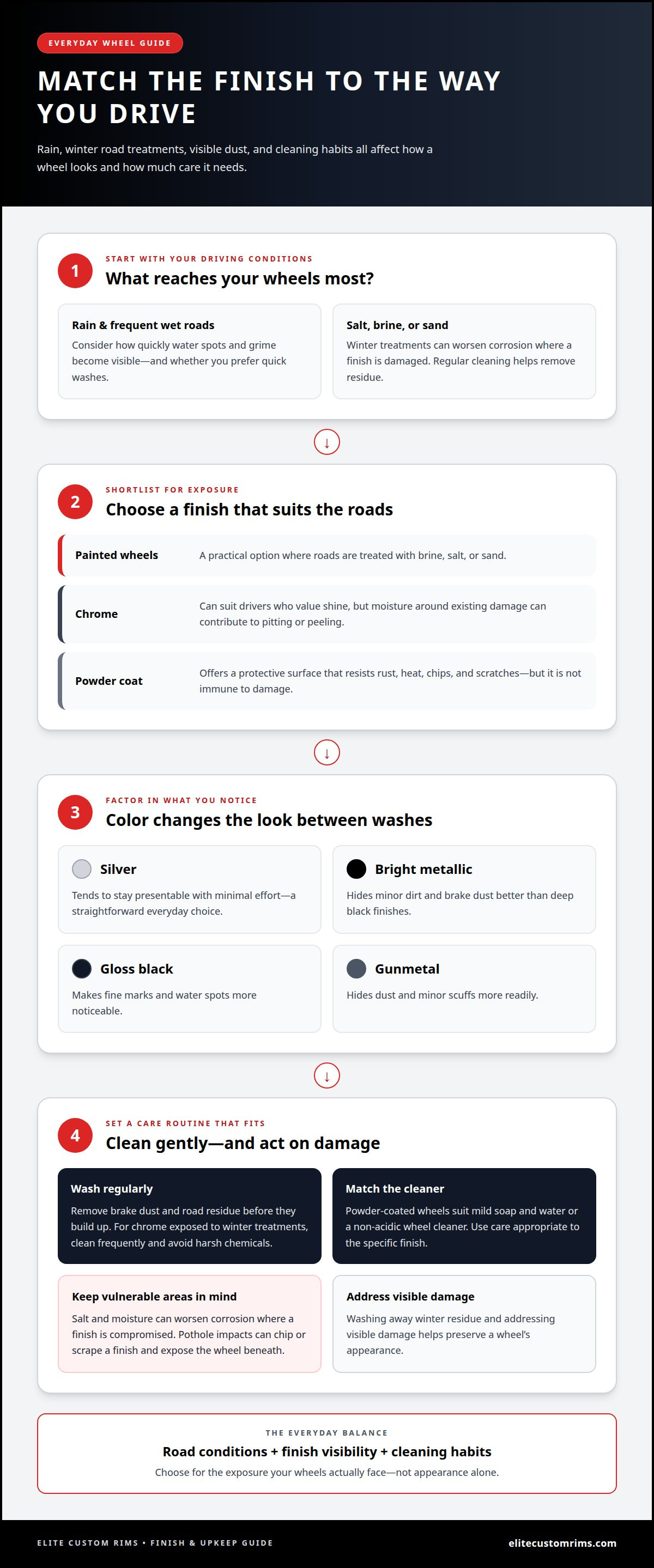
Rain makes cleaning frequency and finish visibility practical parts of the decision. Silver wheels are a straightforward everyday choice because they tend to stay presentable with minimal effort. Bright metallic finishes also hide minor dirt and brake dust better than deep black finishes. If you commute in rainy conditions and prefer quick washes, choose an appearance that stays tidy without constant detailing.
Winter road treatments change the equation. Salt, brine, and sand can reach damaged areas and contribute to corrosion, so a finish that tolerates regular cleaning is useful. Painted wheels are a practical option where roads are treated with brine, salt, or sand. Chrome can suit drivers who value its shine, but moisture around existing damage can lead to pitting or peeling. Frequent, careful cleaning helps limit grime and residue buildup.
How do salt, winter driving, UV exposure, and potholes affect durability? Salt and moisture can worsen corrosion where a finish is compromised. Pothole impacts can chip or scrape a finish, exposing the wheel beneath. Sun exposure can affect a finish’s appearance over time, so washing away winter residue and addressing visible damage helps preserve its look.
Choose based on the conditions your wheels actually face. The most durable wheel finish for a daily driven car depends on road treatments, cleaning habits, and how much visible dust matters to you. A commuter who mostly drives in dry weather may prioritize color and shine. Gloss black emphasizes fine marks and water spots, while gunmetal hides dust and minor scuffs more readily. These differences affect how often the wheels look ready for the next drive, not just how they look after a wash.
For a practical shortlist, weigh road treatments, cleaning habits, and finish visibility together. Choosing the most durable wheel finish for a daily driven car starts with the conditions it will face. If a specific look matters, browse wheel options by vehicle to explore styles suited to your car.
3. How wheel finishes affect protection and upkeep
Powder coating offers a protective surface that resists rust, heat, chips, and scratches. That makes it a strong candidate for regular road use, but it does not make wheels immune to damage. Brake dust still needs regular cleaning, and impacts can chip any finish. Follow care suited to the coating, such as using mild soap and water or a non-acidic wheel cleaner.
Are OEM painted or machined-face wheels less durable than powder-coated wheels? Not necessarily. Durability depends on the finish’s condition and care, not simply on whether a wheel is factory-finished. Painted wheels use wet paint with a clear topcoat, while machined faces expose bright metal beneath a clear coat that can eventually pit or peel.
Powder coating can resist corrosion, chips, and scratches, but road salt and brake dust still call for regular cleaning. Its protection depends on the coating remaining intact: curb rash or a chip can expose the surface beneath and create a vulnerable spot. Use gentle cleaning methods to remove residue without adding damage.
How long does a professional wheel powder coat typically last on a daily driver? There is no single reliable lifespan for every set. The result depends on coating quality, preparation, road conditions, impacts, and routine care. Salt exposure and untreated chips can affect how long the finish stays attractive.
Does powder coating weaken alloy wheels or affect their safety and warranty? The finish alone does not establish a wheel’s structural strength or safety, and it does not determine warranty coverage. Wheel condition, construction, and applicable warranty terms matter. Coating over cracks or impact damage does not resolve those underlying issues.
For upkeep, match the cleaner to the finish and remove brake dust regularly. Avoid acidic cleaners on clear-coated machined faces and harsh chemicals on chrome. Powder-coated wheels benefit from mild, non-acidic cleaning. These steps help preserve the coating, but no finish prevents damage from a hard curb strike or pothole.
4. Which wheel finishes are most durable for daily-driven cars: powder coat, paint, anodizing, or polished metal?
Powder coating is a strong choice for everyday protection. It resists rust, heat, chips, and scratches, making it well suited to regular road use. It still needs appropriate cleaning, and a hard impact can damage its surface. For drivers who prioritize a durable finish over frequent polishing, powder coating offers a practical balance.
Painted wheels use wet paint followed by a clear topcoat. That protective layer helps shield the paintwork, while damage can expose the finish beneath. Painted wheels can be sanded and repainted to help maintain their appearance over time. However, paint can flake, especially around vulnerable areas such as center caps.
Anodizing is another finish option, but its name alone does not show how a particular wheel will handle daily use. Consider the wheel’s surface treatment and care requirements alongside its appearance. For example, if you regularly encounter road salt, choose a finish that can be cleaned consistently rather than one selected only for its color.
Polished metal delivers a bright, reflective look, but bare-polished wheels without a topcoat need regular cleaning, polishing, and waxing. These steps help limit oxidation and pitting. If polished wheels lose their luster, repolishing can restore their appearance. However, polished alloy is harder to keep looking good in areas with harsh winter road treatments.
For a daily commuter, compare protection and maintenance together. Powder coating suits drivers seeking resistance to common surface damage; paint offers a clear-coated finish that can be refinished; polished metal rewards ongoing care. Choose anodizing based on the specific wheel and finish, not its label alone. Ready to compare wheel styles for your vehicle? Explore wheel options by vehicle.
Forum members reported paint flaking around center caps a year after work, while a powder-coated and painted wheel looked excellent; another powder-coated set remained excellent after 4 years. They said paint can be sanded and repainted at home, and held up through a Kansas winter with road treatments about 30 times in 4 months. Members called chrome more durable and polished alloy hard to maintain in areas with harsh winter road treatments.
Elite Custom Rims
Elite Custom Rims helps drivers find wheel options suited to their vehicle and finish preferences. If you are weighing a low-maintenance look against a brighter, more distinctive style, start with your daily roads, cleaning habits, and preferred appearance. Then narrow your choices to wheels designed for your make and model.
Explore Audi Wheels, Chevy/GMC Wheels, Mercedes Wheels, or Porsche Wheels for those vehicles. The right wheel combines compatible fitment with a finish that complements your car, while routine care helps preserve its appearance. Finish is a personal choice, but matching it to real driving conditions makes the decision more practical.
Contact Elite Custom Rims to discuss wheel options for your vehicle and driving needs.
Choose wheels that fit your everyday priorities
Start by deciding what matters most in your routine: simpler cleaning, a finish that stays presentable between washes, or a specific look. The most durable wheel finish for a daily driven car is the one that fits your road conditions and care habits, not simply the one that looks toughest in a photo. Keep that priority in mind as you narrow your options.
Elite Custom Rims offers Audi Wheels, Chevy/GMC Wheels, and Mercedes Wheels for drivers exploring different vehicles and styles. Consider how your preferred design will complement your car and suit the conditions it faces. Knowing your priorities makes it easier to choose confidently without selecting a finish that demands more upkeep than you want.
Contact Elite Custom Rims to discuss wheel options for your vehicle. Take the next step toward a look that suits your driving life.
Frequently Asked Questions
How do clear coats affect the durability of polished, machined, or chrome wheels?
A clear coat shields polished or machined metal from direct exposure, but damage to that layer can leave the underlying surface vulnerable. On a machined face, the clear-coated surface may eventually pit or peel. Chrome differs: its plated layers provide the finish, so it does not need a separate protective topcoat to prevent rust. For all three finishes, avoid cleaners that can harm the specific surface.
Which wheel finishes are easiest to clean and maintain, especially with frequent brake dust?
Silver, gunmetal, and bright metallic finishes make brake dust less conspicuous, and bronze also hides it well. That helps wheels look cleaner between washes, but color does not remove residue or make a complex wheel face easier to reach. For example, a design with tight spoke pockets may take more attention to clean than a simpler face. Choose a finish and spoke layout that suit your cleaning routine.