
The best wheel setup for a quiet ride usually starts with the smallest wheel size that fits your vehicle and a tire with a taller sidewall. Pair it with a touring-oriented tire and a tread pattern designed to reduce road noise. The right fit still depends on your vehicle and the roads you drive.
A larger wheel can sharpen a vehicle’s appearance, but its shorter tire sidewall may transmit more bumps and road noise into the cabin. Tire pressure, tread wear, and road surface also affect how quiet the ride feels.
This guide explains how tire size, rubber, and tread design affect noise, why road texture and vehicle characteristics matter, and how to balance comfort, appearance, and traction. Use this practical framework to choose a quieter setup without overlooking fitment or how you use your vehicle.
Key Takeaways
- Understand how tread blocks and air movement contribute to tire noise, and why aggressive traction patterns can sound louder.
- Learn how road texture, recommended tire pressure, and suspension characteristics shape the sound and comfort you experience.
- Weigh wheel diameter, sidewall height, tire width, and tire type to balance a quieter ride with your vehicle’s fitment needs.
- Spot tread features that can help soften road noise, and see why even wear matters for keeping tires quieter over time.
How tire air chambers, tread blocks, and airflow create noise
Tires can generate sound as they roll through the air inside the tire, the tread blocks, and moving air around the tread. Understanding these sources can help distinguish tire noise from other sounds inside the vehicle.
Air Chambers and Airflow Noise
A tire’s air chamber can amplify vibrations created where the rubber meets the road. As the tire rotates, air moves through grooves and around tread features, producing sound that may reach the cabin. The shape and arrangement of these channels affect what you hear. A steady hum, for example, may become more noticeable at highway speed as airflow and repeated road contact continue.
For a quiet, comfortable ride, use the pressure recommended for your vehicle. Don’t lower it to soften impacts: incorrect pressure can affect tire wear and performance. Find the recommended setting in your owner’s manual or on the vehicle’s tire-pressure label.
There’s no single typical cost for quiet touring tires and smaller wheels. The total depends on tire choice, wheel specifications, and vehicle fitment, so a general price would not accurately describe every setup.
Tread Blocks and Tire Noise
Tread blocks are the raised rubber sections that contact the road between grooves. Each block flexes as it meets and leaves the pavement, creating repeated vibrations that contribute to tire noise. Tall blocks, including those on traction tires, may move more under load and become louder. For regular paved-road driving, an aggressive tread can add noise without providing useful extra traction.
Airflow and tread-block movement work together, so tread design changes the sound you hear. A traction tire with large, separated lugs can produce a more pronounced pattern as each section meets the pavement. On smooth blacktop, that repeated contact may stand out during a steady drive. The same tread can sound different on other surfaces. Listen for a growing hum or uneven rhythm, since worn or irregular tread can change the sound over time.
Road surface and vehicle factors affecting ride noise
The same tire can sound different on different roads. Smooth freeway blacktop often produces less noise than pavement designed for stronger winter traction. Coarse surfaces make tire vibrations more noticeable inside the cabin. A change in sound after turning onto a rough road may come from the surface, not a sudden tire fault. Compare the sound on familiar roads before judging a wheel and tire setup.
Correct inflation matters too. Keep tire pressure at the vehicle manufacturer’s recommended setting rather than lowering it to soften the ride. Underinflation can change how the tire flexes against pavement, while excess pressure can make impacts feel harsher. Check the owner’s manual or vehicle label for the recommended pressure. Recheck after temperature changes or before a long drive, since pressure can shift with conditions.
Wheel and tire weight can affect comfort through the suspension. A heavier assembly may respond less readily to bumps, making sharp impacts feel more pronounced. Its effect on noise depends on the vehicle, tire, suspension, and pavement. Weight alone doesn’t predict cabin sound, but a heavy setup on rough asphalt may feel less composed than a lighter compatible setup.
Suspension design affects how much road vibration reaches the cabin. A softer suspension generally means less road noise, while a firm setup can make pavement texture more apparent. A vehicle may feel calm on smooth freeway blacktop, for example, then transmit more impact over patched streets. Tire pressure and suspension condition matter too, so a new wheel setup can’t erase noise caused by a rough road or firm ride. Consider your everyday routes and comfort priorities before choosing wheel and tire specifications.
Tire size, rubber composition, and traction features
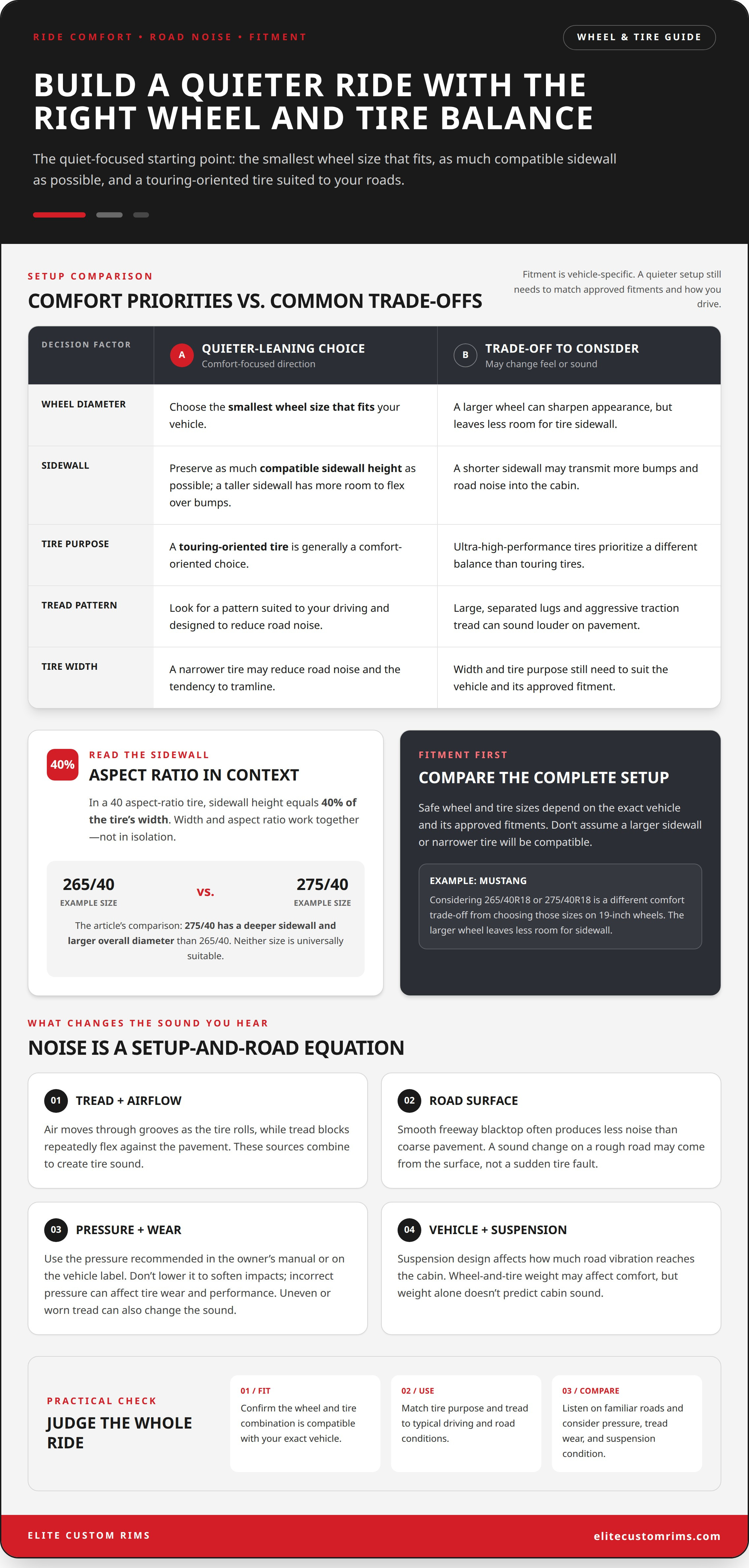
Wheel diameter determines how much tire sidewall can fit around the rim. A taller sidewall gives the tire more room to flex over bumps, which can support a more comfortable ride. For a quiet-focused setup, choose the smallest wheel size that fits your vehicle, then preserve as much sidewall height as compatible fitment allows. Tire construction and intended use matter too. Touring tires are generally a comfort-oriented choice compared with ultra-high-performance tires.
Tire sizing makes the sidewall relationship easier to understand. In a 40 aspect-ratio tire, the sidewall height equals 40 percent of the tire’s width. So a 275/40 tire has a deeper sidewall and larger overall diameter than a 265/40 tire. That comparison doesn’t make either size universally suitable; it shows why width and aspect ratio must be considered together.
The wheel and tire sizes that fit safely depend on the exact vehicle and its approved fitments. Choose a compatible combination for your vehicle rather than relying on a size that fits another model. Keep to the specified fitment, and don’t assume a larger sidewall or narrower tire will be compatible.
Width and tread purpose also shape road feel. Narrower tires may reduce road noise and the tendency to tramline, when grooves or ruts pull the steering. Heavy-duty tires built to carry big loads may be noisier—a familiar issue for commercial operators who turn to facilities like iqtruckcenter.com for heavy-duty suspension and wheel maintenance. Traction tires with large, separated lugs can also make more sound on pavement. Match the tire’s purpose to your vehicle’s typical use instead of choosing aggressive tread by default.
For example, a Mustang owner considering 265/40R18 or 275/40R18 has a different comfort trade-off from choosing those sizes on 19-inch wheels. The larger wheel leaves less room for sidewall, which can sacrifice some comfort. Compare the complete tire size and wheel fitment, not diameter alone. That gives you a more informed balance of cabin quiet, ride comfort, traction, and appearance.
Tread patterns and tire features that reduce noise
Quieter tires pair suitable tread features with a pattern suited to your driving. Compare tire type, available noise information, and feedback for your vehicle.
Road Noise Across Tire Types
All-season, touring, and performance tires balance road comfort, traction, and handling differently. Touring tires are generally comfort-focused, while ultra-high-performance tires may prioritize handling. All-season designs vary, so the category alone doesn’t tell you how quietly a tire will run. Compare actual tread patterns and noise information for touring and performance options in the same approved size. This makes the trade-off clearer than relying on a category label.
Look for continuous circumferential ribs and straight grooves, features associated with reduced road noise. Varied tread-block shapes can also make sound less noticeable by producing different pitches that tend to cancel one another. These design details help explain why tires intended for similar uses may sound different. Check the specific pattern, not just the sidewall description.
Checking Tire Noise Ratings and Reviews
Before buying, compare the manufacturer’s published noise information, when available, for the tire size you need. Then read owner reviews describing the same vehicle or a similar fitment. Look for recurring comments about a steady highway hum, rough pavement, or noise changing as tires wear. This helps you understand how a tire sounds in real driving, rather than relying on a rating alone.
Separate noise feedback from comments about grip or ride firmness. A review praising cornering response, for example, may not tell you whether the tire stays quiet on a daily commute. Uneven wear can distort tread patterns and reduce their sound-muting effect. Regular rotations, rebalancing, and alignments help promote even wear and quieter tires over time.
Use tread design and vehicle fitment together to narrow your wheel choices. Explore compatible wheel options for a setup that supports your priorities.
Elite Custom Rims
Elite Custom Rims offers wheel options to suit your vehicle and priorities. If you’re weighing appearance, compatible fitment, and ride comfort, explore options for Audi, Chevy/GMC, Mercedes, or Porsche vehicles. Wheel choice is only part of the setup: tire size, sidewall, tread, and inflation also influence noise and comfort. Keep those factors in mind as you narrow your preferences, and choose a wheel fitment suited to your vehicle rather than appearance alone.
For a quieter setup, use the guidance above to clarify the balance you want between ride comfort and style. Then contact Elite Custom Rims to discuss wheel options for your vehicle.
Choose a Quieter Setup That Fits Your Priorities
Make your next wheel decision with your everyday drive in mind. Decide how you balance comfort, appearance, and handling, then focus on a wheel fitment suited to your vehicle. The best wheel setup for a quiet ride supports those priorities while staying compatible.
Elite Custom Rims offers wheel options for Audi, Chevy/GMC, and Mercedes vehicles. Use your preferred style and vehicle fitment as a starting point for narrowing your options. A considered setup can bring your vehicle’s look and driving preferences into closer alignment.
Contact Elite Custom Rims to discuss wheel options for your vehicle. Take the next step toward a setup that feels right for your drive.
Frequently Asked Questions
What wheel and tire setup gives the quietest ride for a car?
A comfort-focused setup usually pairs a compatible smaller-diameter wheel with a tire that leaves room for a taller sidewall. Touring tires are a sensible category to compare for daily driving. The best wheel setup for a quiet ride still depends on your vehicle and usual roads, so compare approved fitments and prioritize tires designed for comfortable road use over aggressive traction or performance needs.
How do wheel diameter and tire sidewall height affect road noise and ride comfort?
A larger wheel often leaves less sidewall height within a similar overall tire diameter. That shorter sidewall has less room to flex over bumps, which can make impacts feel sharper in the cabin. Compare two approved fitments for your car, for example, and note how their sidewall proportions differ. Weigh comfort alongside appearance, and don’t choose a wheel diameter without accounting for the tire.
Which tire types and models are best for a quiet ride?
Touring tires are often a good starting point for drivers who prioritize comfort, while ultra-high-performance tires may emphasize handling. All-season tires vary by design, so the category alone won’t identify the quietest option. Instead of relying on a model name alone, compare tires available in your vehicle’s fitment and consider feedback from drivers using similar vehicles and roads.
How do tire tread pattern and rubber compound affect tire noise?
Tread geometry influences the repeated sounds made as tire blocks contact pavement, while rubber compound affects how the tread flexes on contact. Noise-reducing designs may use continuous ribs, straight grooves, or varied block shapes. Condition matters too: worn or uneven tread can behave differently from its original pattern. Compare the tire’s design and inspect its wear before treating noise as a product feature alone.
Are narrower tires quieter than wider tires?
Narrower tires may reduce road noise and the tendency to follow pavement grooves, but width alone doesn’t determine sound. Tread design, tire type, wear, road texture, and vehicle fitment all contribute. Compare narrower and wider options only within suitable fitments for your car. A narrower tire with aggressive tread, for example, may not sound quieter than a wider tire with a comfort-oriented design.