
Will 17in rims fit your vehicle just because the diameter matches? Not necessarily. Diameter is only the starting point. A mismatch in width, bolt pattern, offset, or brake clearance can affect whether a wheel fits correctly. Check the full application before choosing a style.
It makes sense to weigh more than appearance. A 17-inch wheel can create a balanced look, but the right choice depends on your vehicle, tire setup, and driving needs. This guide explains the trade-offs, the specifications to compare, and how to narrow your options without overlooking fitment.
We’ll cover wheel diameter, width, bolt pattern, and offset, along with how fitment can affect clearance and ride. You’ll also learn what to consider when comparing finishes and designs. Elite Custom Rims sells new wheels for luxury, performance, and utility vehicles, with options organized around specific vehicle applications. Start with your vehicle’s requirements, then compare styles that suit your needs.
Key Takeaways
- 17in rims describe wheel diameter, not complete fitment. Check your vehicle’s approved setup before comparing options.
- Consider how wheel diameter and tire sidewall work together, since the overall setup can influence ride, handling, and appearance.
- Compare bolt pattern, width, offset, center bore, load rating, and brake clearance against your vehicle specifications.
- Separate must-match compatibility requirements from style preferences to make your shortlist easier to manage.
- Choose in order: identify your vehicle, confirm fitment, then compare designs from options suited to your application.
What 17in Rims Tell You, and What They Don’t
The label gives you one useful measurement, but not a fitment answer. A 17-inch rim is a wheel with a nominal 17-inch diameter at the tire’s bead seat. That measurement alone doesn’t establish whether the wheel fits a particular vehicle. Treat diameter as a starting point, then compare the rest of the wheel and vehicle specifications.
What does the 17-inch measurement describe?
The 17-inch figure refers to the wheel’s diameter where the tire bead sits, not the outside diameter of the complete tire and wheel assembly. The tire’s sidewalls extend beyond the wheel on both sides, so tire size and sidewall height also contribute to the assembly’s overall diameter.
This distinction matters when comparing setups. A 17-inch wheel paired with one tire size can have a different overall diameter from the same wheel paired with another tire size. Sidewall height depends on the tire’s dimensions, including its aspect ratio. The wheel measurement alone doesn’t tell you the tire’s overall size, how the combination will sit, or whether it suits your vehicle.
For an overview of the components and concepts involved, see The basic principles of wheel design. The practical takeaway is simple: a wheel and tire work as a matched assembly, while vehicle compatibility depends on more than the wheel’s diameter.
Why can two 17-inch rims fit differently?
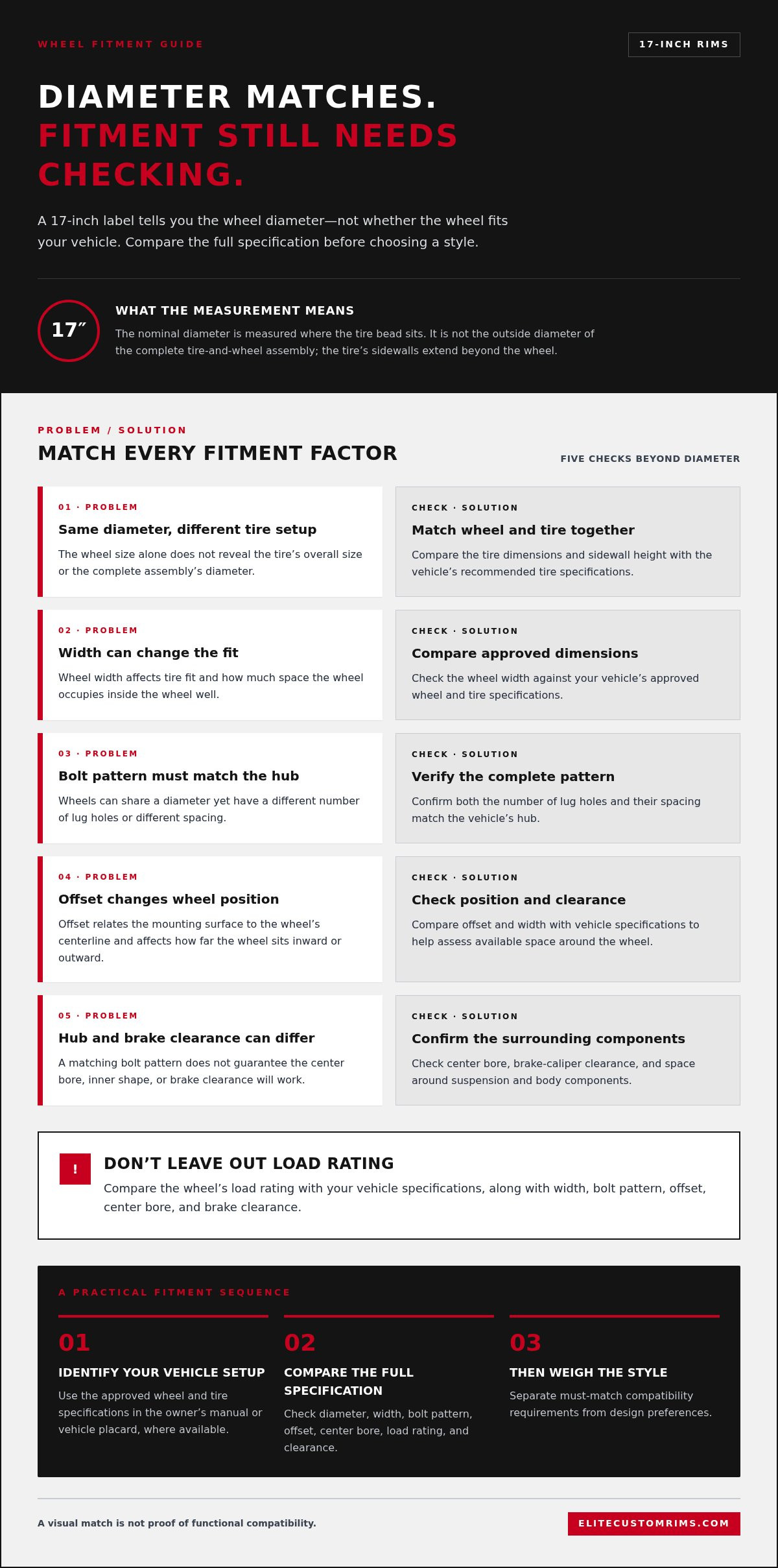
Two wheels can share a 17-inch diameter and still differ in key dimensions:
- Width: The distance between the wheel’s inner flanges. Width affects tire fit and how the wheel occupies space inside the wheel well.
- Bolt pattern: The number of lug holes and the spacing between them. It must match the vehicle’s hub.
- Offset: The position of the wheel’s mounting surface in relation to its centerline. It affects how far the wheel sits inward or outward.
- Center bore: The diameter of the opening at the center of the wheel, which needs to suit the vehicle’s hub arrangement.
Vehicle design adds another consideration. The wheel must clear the brakes, including the caliper, and fit within the available space without interfering with suspension or body components. Two wheels with matching bolt patterns may still differ in offset, width, or inner shape enough to create a clearance issue.
Start with the vehicle’s approved wheel and tire specifications, found in its owner’s manual or vehicle placard where available. Then compare candidate wheels against the full set of dimensions, not just the diameter. This is especially important when considering an alternative to the original setup. A visual match doesn’t prove functional compatibility. For a broader explanation of wheel dimensions and application-specific considerations, explore this custom wheels fitment reference.
In short, 17in rims share a diameter, not necessarily a fitment. Confirm the complete specification before narrowing your choices to a style.
How 17-Inch Rims Can Change Ride, Handling, and Appearance
A wheel-size change can alter a vehicle’s stance and driving feel, but the result depends on more than rim diameter. The tire, wheel dimensions, vehicle suspension, and intended use all play a part. The effect of a wheel-size change depends on the complete wheel-and-tire package and how it suits the vehicle.
There’s no universal “best” size. The right setup balances the look you want with the comfort, control, and everyday practicality you expect.
What trade-offs should drivers weigh?
Consider four priorities together: visual presence, compatible tire choices, ride comfort, and driving use. A wheel may create a more prominent appearance, while a tire with a shorter sidewall can leave less tire between the rim and road. The overall experience still depends on the vehicle and the specific parts selected, so don’t assume a particular diameter guarantees sharper handling or a smoother ride.
If you change wheel diameter, select a tire that’s compatible with both the wheel and the vehicle. Drivers who regularly encounter rough pavement may prioritize a setup that preserves more sidewall. Someone focused on a particular appearance may weigh proportions differently. Neither preference overrides vehicle requirements.
How do tires influence a 17-inch setup?
The tire connects the wheel to the road. Its sidewall height contributes to the assembly’s overall diameter, and that height is set by the tire size, not by the rim diameter alone. A 17-inch wheel can be part of different vehicle-specific combinations, but the tire’s dimensions must work with both the wheel and the vehicle.
Keep the vehicle’s recommended tire specifications in view when comparing setups. A change in wheel diameter often calls for a different tire size to maintain an appropriate overall diameter and preserve clearance. Tire selection, inflation pressure, and the vehicle’s suspension and alignment also influence ride and handling. A wheel swap by itself doesn’t determine the result.
Look at the whole package before deciding. A heavier wheel-and-tire combination may feel different from a lighter one, and changes in tire construction or sidewall can also affect steering response and how impacts are felt. These effects vary with the vehicle and components. For daily driving, consider your regular roads, passengers, cargo, and comfort expectations, not just how the vehicle looks while parked.
When comparing 17in rims, review the tire specification alongside the wheel instead of treating them as separate style choices. Check that the proposed combination suits the vehicle’s approved setup and intended use. If you’re weighing options for a specific vehicle, browsing wheels by vehicle application keeps fitment at the center of the decision.
Which 17-Inch Rims Fit? Check the Full Specification, Not Just Diameter
Fitment depends on how a wheel’s dimensions and construction work with a specific vehicle. A rim that looks right, or shares the original wheel’s diameter, can still have a mounting layout, position, or load capacity that doesn’t meet the vehicle’s requirements. Start with exact application data, then compare every relevant specification before considering appearance.
Which wheel specifications must match?
Use this comparison to keep the key checks organized. The vehicle’s owner’s manual, placard, and manufacturer fitment information are more useful references than visual similarity or a broad vehicle category.
| Specification | What it controls | Where to verify it |
|---|---|---|
| Bolt pattern | The number and arrangement of mounting holes that connect the wheel to the hub. It is separate from wheel diameter. | Vehicle documentation and exact application fitment data. |
| Width | The wheel’s width, which affects tire compatibility and how the wheel occupies space. | Approved wheel specifications and the candidate wheel’s details. |
| Offset | The mounting surface’s position, influencing how far the wheel sits inward or outward and its available clearance. | Vehicle-specific fitment information and wheel specifications. |
| Center bore | The size of the center opening in relation to the vehicle’s hub. | Hub and wheel specifications for the exact application. |
| Load rating | The load a wheel is designed to support. It must suit the vehicle’s requirements. | Wheel load information and vehicle documentation. |
| Brake clearance | Whether the wheel’s inner shape clears the brake components, including calipers. | Vehicle-specific wheel application data and brake-clearance information. |
These details work together. A matching bolt pattern confirms that the wheel can align with the mounting points, but it doesn’t establish that the wheel clears the brakes or sits correctly in the wheel well. Suitable width and offset don’t compensate for a center bore or load rating that fails to meet the vehicle’s needs.
How should you verify vehicle-specific compatibility?
Identify the vehicle by its exact year, make, model, and trim. A broad label such as “SUV,” or even a model name alone, may not capture changes between versions. Compare the wheel’s full specification with the approved fitment information for that precise application. Don’t rely on a photo, a broad category, or a wheel that merely resembles the original.
For an example of why vehicle-focused research matters, the Chevy Silverado wheel guide illustrates the importance of checking the specific application. Apply the same approach to 17in rims: identify the vehicle, compare the complete specification, and treat style as the final filter.
A Simple Checklist for Comparing 17in Rims
A clear order makes the search easier: identify the vehicle, establish the must-match specifications, then compare the designs that remain. This prevents a striking finish or appealing spoke pattern from distracting you from compatibility.
What information should you gather first?
Start with the exact year, make, model, and trim. Then find the vehicle’s current wheel and tire specifications in its documentation. Note how you use the vehicle, such as daily commuting or regular cargo hauling, and record any brake or suspension modifications that could affect clearance. These details give you a focused starting point rather than a broad category search.
How do you narrow the shortlist confidently?
Use product-specific fitment details to eliminate options that don’t meet the vehicle’s requirements. Compare the remaining choices for finish, design, and suitability for your driving routine. Treat compatibility as a pass-or-remove check, not a style preference. If a listing lacks the details needed to compare it with your vehicle information, don’t use appearance alone as proof of fit.
Follow this sequence:
- Identify the application. Record the exact year, make, model, and trim.
- Gather the baseline. Find the approved wheel and tire information for that vehicle.
- Note relevant changes. Include brake or suspension modifications and your intended use.
- Filter for compatibility. Compare each option’s required fitment specifications and remove mismatches.
- Choose by preference. Among suitable options, compare design, finish, and how each suits daily use.
Use a simple table to keep candidates side by side. Fill the compatibility columns first, then use the remaining columns to compare preferences.
| Option | Diameter and width | Bolt pattern and offset | Center bore, load, and clearance | Fitment match? | Finish and design | Use-case notes |
|---|---|---|---|---|---|---|
| Candidate A | Record listing | Record listing | Record listing | Pass / remove | Record preference | Daily use, cargo, or other needs |
| Candidate B | Record listing | Record listing | Record listing | Pass / remove | Record preference | Daily use, cargo, or other needs |
Don’t leave a compatibility field blank and assume it’s acceptable. Compare the exact wheel details with the vehicle’s application information, then keep only options that satisfy the required checks. You’ll have a shortlist based on fitment, with room to choose a style you’ll enjoy seeing on the vehicle.
Ready to compare wheels by vehicle application? Explore wheels for your vehicle and use your fitment checklist to guide the search.
Explore 17-Inch Wheel Options with Fitment in Mind
You now have a practical way to approach the choice: vehicle first, fitment second, style third. That order grounds your search in the requirements of your exact vehicle while leaving room to choose a design you like. A wheel’s diameter is one part of the decision, not a shortcut around a full fitment review.
What should a final fitment review include?
Before settling on a wheel, compare the listing with your vehicle’s application details. Recheck the year, make, model, and trim, then review diameter, width, bolt pattern, offset, and center bore. Consider load rating and brake clearance, too. Finish and design matter, but only after the wheel’s specifications and tire choice suit the vehicle.
- Vehicle: Confirm the exact year, make, model, and trim.
- Wheel: Compare diameter, width, bolt pattern, offset, and center bore.
- Clearance and capacity: Review load rating and brake clearance.
- Tire: Ensure the tire specification works with the selected wheel and vehicle application.
Use the same criteria for every option instead of assuming a familiar look means a familiar fit. If a detail doesn’t line up with the vehicle’s approved information, remove that wheel from your shortlist. This final pass helps distinguish an appealing design from a complete, vehicle-appropriate wheel-and-tire choice.
Where can you continue your wheel search?
Elite Custom Rims sells new wheels for specific vehicle applications across luxury, performance, and utility categories. Begin with your vehicle and its requirements, then compare options suited to that application. This makes it easier to weigh appearance preferences without losing sight of the specifications that matter for fit.
For broader guidance on how vehicle requirements shape wheel selection, use this custom wheel selection guide. It can help put fitment considerations into context as you compare choices for your vehicle.
Once you have your vehicle details and fitment priorities in hand, take the next step at Explore Elite Custom Rims. Browse new wheel options by vehicle application, compare the specifications, and narrow your shortlist to choices that balance fitment with the design you prefer.
Make Your Next Wheel Choice with Confidence
Before making a final decision, picture how you want your vehicle to feel and look in everyday use, not just in a product photo. A style that suits your priorities can make the upgrade feel personal while keeping practicality in view. Let your vehicle’s needs set the boundaries, then choose the finish and design that feel right to you.
With your preferences clear, exploring 17in rims becomes a more focused process. Compare options at your own pace and keep the details that matter to your vehicle close at hand. A considered choice can bring together the look you want and the confidence that comes from shopping with fitment in mind.
Explore wheel options at Elite Custom Rims and take the next step toward a look that feels right for your vehicle.
Frequently Asked Questions
Can 17-inch rims fit any car?
No. A 17-inch diameter doesn’t make a rim universal. For example, two trims of the same model may use different brake packages or wheel specifications, so a rim that clears one may not suit the other. Look up the exact year, make, model, and trim, then use application-specific fitment details. If the vehicle has aftermarket brakes or suspension changes, account for those before treating original specifications as a complete fitment guide.
Are 17-inch rims good for daily driving?
They can work well for daily driving if the wheel-and-tire combination suits the vehicle and your priorities. Think about your regular routes. Rough pavement may make tire sidewall and comfort especially relevant, while appearance may carry more weight for a vehicle mostly driven on smooth roads. Compare the recommended tire specification and consider how the setup supports routine driving. A 17-inch diameter alone doesn’t guarantee a particular ride or handling result.
Can I use my current tires with 17-inch rims?
Only if your tires are designed for a 17-inch wheel and their size is appropriate for the replacement wheel and vehicle. Read the full tire-size marking on the sidewall, not just the wheel diameter, and compare it with the vehicle’s tire information and the wheel’s compatible width range. A tire from your current setup may have the wrong diameter even if it looks close. Check the complete combination before ordering.
How do I know what bolt pattern my 17-inch rims need?
Use the bolt-pattern specification for your exact vehicle, found in its documentation or reliable application data. The pattern identifies the mounting-hole arrangement, not the wheel’s diameter. Don’t estimate by holding a wheel beside the hub or counting holes alone, since spacing matters too. When comparing replacement wheels, record the vehicle’s specified pattern and match it to the listing. The correct pattern is essential, but it doesn’t establish overall fitment by itself.
Do 17-inch rims affect brake clearance?
They can, but a 17-inch label alone can’t tell you whether a particular wheel clears the brakes. The wheel’s inside shape and spoke position can matter, as can the vehicle’s brake package. A wheel may have the correct diameter and mounting layout yet still interfere with a caliper. Use fitment information specific to your vehicle and brake setup, especially if the brakes have been upgraded or modified.
What happens if the wheel offset is wrong?
An unsuitable offset can place the wheel too far inward or outward, reducing clearance near suspension parts, bodywork, or brakes. The result depends on the wheel and vehicle, so there isn’t one offset that works for every car. Before choosing 17in rims, compare the candidate’s offset with the vehicle-specific fitment information. Don’t assume a small difference is harmless. Check the complete setup and clearance requirements.
Are 17-inch rims available for trucks and SUVs?
Yes, some trucks and SUVs use 17-inch wheels, but that doesn’t mean every rim of that diameter will fit. For a truck used for hauling, load capacity is an especially important part of the selection. Check application-specific data for the exact vehicle and account for changes such as modified brakes or suspension. Compare the wheel’s specifications with those requirements rather than choosing by vehicle category or appearance alone.