
The global high-performance wheels market is valued at a massive $28.83 billion in 2026. This growth isn't just about vanity; it's about precision. Choosing the right custom wheels is the most significant upgrade you can give your vehicle, yet the technical hurdles often cause unnecessary anxiety. You likely want that perfect staggered look for your Mercedes or Land Rover, but you're afraid of compromising ride quality or getting the offset wrong. These are valid concerns for any luxury car owner who values performance as much as aesthetics.
Master the technical essentials today. This guide eliminates the confusion surrounding manufacturing methods and fitment compatibility. We'll provide the expert insight needed to select premium materials like aerospace-grade aluminum with confidence. You'll learn exactly how to achieve a flush fitment that turns heads without sacrificing safety. From decoding bolt patterns to understanding the strength of forged builds, we're giving you the blueprint to transform your car with total authority and professional precision.
Key Takeaways
- Understand how reduced unsprung weight transforms vehicle handling by improving both acceleration and braking precision.
- Navigate the differences between cast, flow-formed, and forged manufacturing to select the right strength-to-weight ratio for your driving style.
- Gain the confidence to achieve a perfect "flush" or "staggered" fitment by mastering the essentials of wheel offset and bolt patterns.
- Explore 2026's top aesthetic trends, from efficiency-focused aero designs to the dramatic depth of deep concave custom wheels.
- Learn how to eliminate technical anxiety with precision-curated fitments designed specifically for luxury brands like Mercedes, Porsche, and Tesla.
Defining Custom Wheels: More Than Just a Visual Upgrade
Custom wheels represent far more than a simple cosmetic change. They are precision-engineered aftermarket rims designed to improve vehicle aesthetics, reduce weight, and sharpen handling. For most drivers, the factory setup is just a starting point. Upgrading to custom wheels allows you to reclaim the performance potential left on the table by high-volume manufacturers. It's about optimizing the connection between your car and the road.
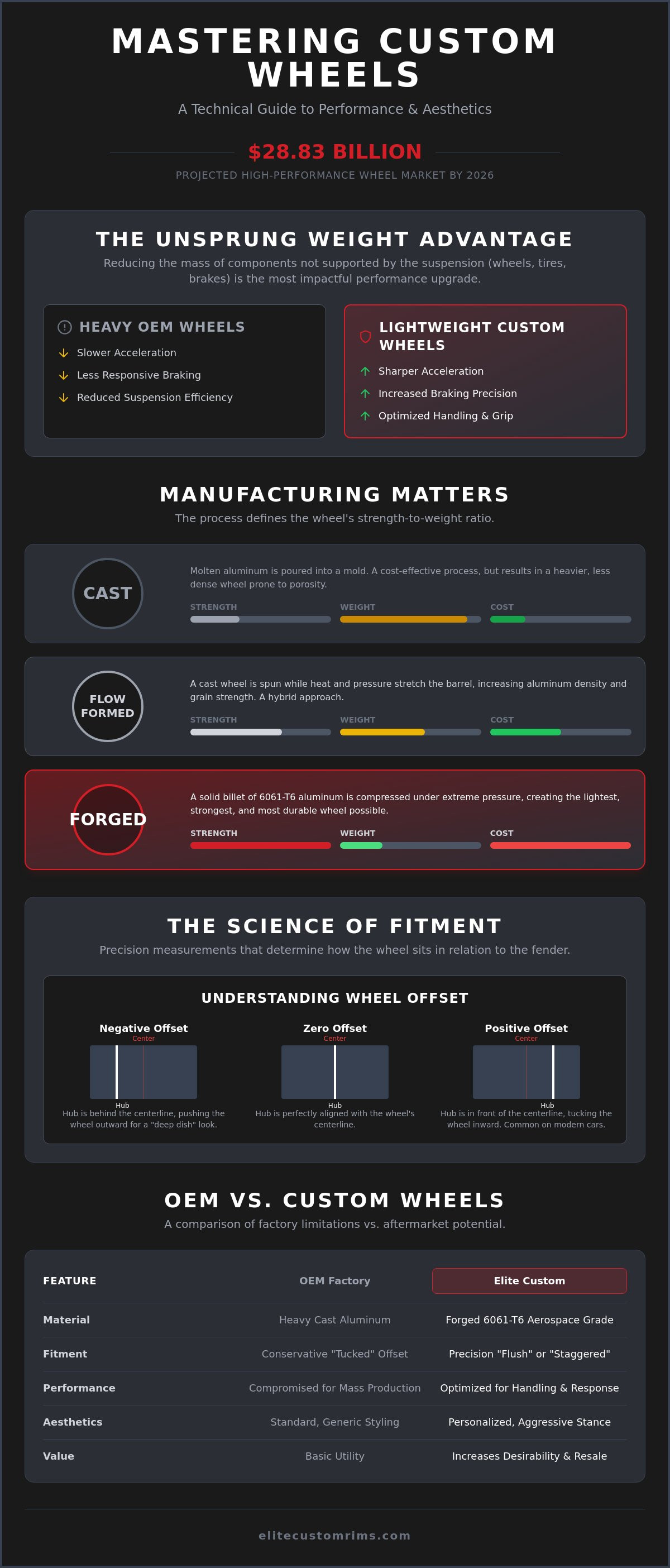
The technical advantage begins with the reduction of unsprung weight. This is the mass of the components not supported by the suspension, such as the wheels, tires, and brakes. When you lower this weight, you decrease the inertia the engine must overcome to rotate the wheels. This results in faster acceleration and more responsive braking. It's a fundamental physics upgrade that transforms how a luxury vehicle feels during spirited driving. Your suspension can react more quickly to road imperfections, keeping the tire contact patch stable and consistent.
Precision matters when dealing with elite brands like Porsche, Mercedes, or Tesla. Universal fitments often rely on hub rings or "close enough" offsets that can lead to vibrations or poor tracking. Vehicle-specific custom wheels are machined to exact tolerances. They match the factory hub bore and bolt pattern perfectly. This eliminates the guesswork. Luxury owners prioritize these upgrades because they refuse to compromise the sophisticated engineering of their vehicles for a generic, one-size-fits-all solution.
The Value Proposition of Aftermarket Rims
Personalization is the primary driver for many enthusiasts. High-production luxury models are stunning, but they can lack individuality in a crowded market. Premium rims allow you to break away from the "stock" look and create a unique presence. Performance gains follow closely. Lighter alloys improve suspension articulation, allowing the shocks and springs to work efficiently without fighting excess mass. Don't overlook the financial aspect either. High-end wheels from recognized brands often bolster resale value. They signal to future buyers that the vehicle was maintained and upgraded with premium components, increasing overall desirability.
OEM vs. Custom: Understanding the Difference
Factory wheels face significant limitations. Manufacturers typically choose "safe" but heavy cast options to keep production costs low and ensure durability across extreme, unlikely scenarios. These OEM parts are functional but rarely optimized. In this Alloy Wheels Explained overview, the structural differences between mass-produced and performance-grade materials become evident. The "Elite" advantage lies in accessing superior materials like forged 6061-T6 aluminum. These materials allow for thinner spokes and deeper concavity while maintaining incredible strength. You get an aggressive stance that sits flush with the fenders, something factory wheels simply cannot achieve due to conservative "tuck" requirements.
Custom wheels are the intersection of engineering and personal expression, a philosophy that also guides the classic vehicle projects at Restomod Academy.
Manufacturing Matters: Comparing Cast, Flow-Formed, and Forged Wheels
The way a wheel is made determines how it handles a pothole at 60 mph. While aesthetics matter, the manufacturing process dictates the safety and longevity of your vehicle. Gravity casting remains the entry-level standard for cost-effective styling. It's a simple process where molten aluminum is poured into a mold. While affordable, these wheels are often heavier and less dense. For drivers seeking a "middle ground," flow forming offers a significant leap in quality. This process involves spinning the wheel while applying heat and pressure to stretch the barrel. It results in a grain structure that mimics forged strength at a much lower price point.
Performance-driven owners of Audi, Porsche, and Tesla vehicles typically look toward forged aluminum. This is the gold standard for high-end custom wheels. These wheels start as a solid billet of aerospace-grade 6061-T6 aluminum. Under extreme pressure, the material is compressed to eliminate porosity. This creates a wheel that is both incredibly light and exceptionally strong. To ensure these products withstand real-world abuse, reputable manufacturers adhere to SAE J2530 performance requirements. These tests verify that the wheel can handle cornering fatigue and radial impact without structural failure.
The Forging Process: Strength Without the Bulk
Forged wheels are essential for modern electric vehicles. High-torque motors put immense stress on the wheel hub. Forged construction handles this torque without flexing. The weight savings are equally critical. Reducing unsprung mass can have a measurable impact on battery range for Tesla models. Because these custom wheels are finished via precision CNC machining, they allow for intricate, thin-spoke designs that casting molds simply cannot replicate. You get a stronger wheel with less material, maximizing both form and function.
Which Material Fits Your Driving Style?
Your driving habits should dictate your choice. For standard daily driving, flow-formed wheels provide the best ROI. They offer a tangible performance boost over factory cast rims without the premium price of a full forged set. However, if you frequent the track or demand high-speed stability, forged is non-negotiable. It provides the stiffness required for precise steering input. If your goal is purely showroom luxury, cast wheel collections offer a massive variety of finishes to perfect your car's look. Explore our curated selection of performance wheels to find the right match for your vehicle's persona.
The Science of Fitment: Understanding Offset, Backspacing, and Bolt Patterns
Fitment isn't a matter of opinion; it's a matter of geometry. The bolt pattern is your foundation. For Audi and Mercedes owners, the 5x112 pattern is the industry standard. It specifies the number of lug holes and the exact diameter of the circle they form. Get this wrong, and the wheel won't mount. It's the first step in ensuring your custom wheels are compatible with your chassis. Precision here prevents catastrophic failure on the road.
Wheel offset, often labeled as ET, dictates the "stance" of your vehicle. It measures the distance between the mounting surface and the wheel's centerline. A positive offset pulls the wheel inward toward the suspension. A negative offset pushes it outward toward the fender. Achieving a "flush" look requires finding the sweet spot where the wheel edge aligns with the fender without causing rub. It's a delicate balance of aesthetics and clearance.
Backspacing is equally vital. It measures the distance from the mounting surface to the back edge of the wheel. This measurement ensures your new setup clears high-performance brake calipers and suspension struts. Luxury vehicles often feature large, multi-piston brake systems. If your backspacing is incorrect, the wheel will strike the caliper. Always prioritize hub-centric designs. These wheels center themselves on the vehicle’s hub bore, eliminating the micro-vibrations common with generic lug-centric wheels. It's the difference between a shaky ride and a factory-smooth experience with custom wheels.
Mastering the Technical Specifications
Reading wheel specs is a required skill for any enthusiast. A "22x10.5 ET30" designation tells you the wheel is 22 inches tall and 10.5 inches wide with a +30mm offset. Use a professional guide to learn how to measure wheel bolt pattern before you buy. This ensures a safe, direct mount. For those building wide-body trucks or SUVs, knowing what is wheel backspacing helps prevent tires from catching on internal wheel wells during tight turns.
Staggered vs. Square Setups
Your drivetrain usually dictates your wheel configuration. High-performance models from Porsche and Mercedes AMG typically run staggered wheels. This setup uses wider rear wheels to maximize traction for power delivery. It looks aggressive and feels planted. Alternatively, a square setup uses identical sizes at all four corners. This is a practical choice for daily drivers. It allows for full tire rotation, which maximizes the lifespan of your investment. While square setups are efficient, the visual drama of a wide rear profile remains the top choice for RWD and AWD performance enthusiasts.
Aesthetic Trends: Choosing the Right Style for Your Vehicle's Persona
Style defines the build. In 2026, the visual landscape of custom wheels is shifting toward two distinct extremes: minimalist efficiency and aggressive depth. For owners of the Tesla Model Y and Model 3, minimalist aero designs are the top priority. These wheels use flat, broad surfaces to reduce turbulence and preserve battery range. They prove that aerodynamic optimization doesn't have to look boring. On the opposite end, deep concave profiles continue to dominate the luxury sedan and SUV markets. A deep concave wheel creates a three-dimensional shadow play that flat factory rims simply cannot replicate. It gives your vehicle a planted, muscular stance that commands attention.
Choosing between mesh and multi-spoke designs requires an understanding of your car's design language. Mesh patterns often complement the sophisticated, classic lines of European cars. Multi-spoke designs feel more architectural and modern, making them a perfect match for the sharp angles found on current performance models. The finish you choose is the final touch. For 2026, we're seeing a massive move away from traditional chrome. Satin black remains a staple for a "murdered out" look, but brushed bronze and tinted clears are the new favorites for enthusiasts who want to showcase the high-quality machining of their forged wheels.
Matching Style to Vehicle Category
Luxury sedans require a balance of elegance and authority. Multi-spoke Mercedes wheels offer a timeless appeal that enhances the car's prestige without looking over-the-top. For performance SUVs like the Cadillac Escalade and Land Rover, size is the primary factor. Bold, 22-inch to 26-inch rims fill the wheel wells perfectly, providing the presence these large vehicles demand. Electric vehicles face a unique challenge. You must balance aerodynamic efficiency with aggressive aftermarket styling. Look for "aero-insert" designs that allow you to customize the look while maintaining high mileage stats.
The Impact of Wheel Finish
Light interaction changes everything. A gloss finish reflects the environment, making the wheels pop under city lights. Matte finishes absorb light, highlighting the physical shape and contours of the spokes instead. Two-tone and machined faces are excellent for adding contrast to dark-colored vehicles, as the bright aluminum edges break up the silhouette. Consider your climate when choosing a coating. While polished finishes look incredible, high-quality powder coats and tinted clears offer superior durability against road salt and debris. Browse our latest collection of trend-setting wheels to find a finish that stands up to the elements.
Precision Selection: Curating Custom Wheels for Elite Brands
The Elite Custom Rims philosophy centers on absolute precision. We've eliminated the guesswork that often plagues the aftermarket industry. By focusing on a 100% fitment accuracy guarantee, we ensure your vehicle's performance remains uncompromised. Our curated collections aren't just a list of products; they're an engineering-first selection for brands like Audi, Mercedes, Porsche, and Tesla. These vehicles demand specific offsets and load ratings that generic retailers often overlook. We bridge the gap between high-end aesthetics and practical reliability.
Specialization extends to the truck and utility market. We provide heavy-duty, stylish custom wheels for Chevy, GMC, and Toyota owners who want a rugged yet refined look. For those at the pinnacle of automotive luxury, our bespoke-style options for Rolls Royce and the Cadillac Escalade deliver a presence that factory options cannot match. Every wheel in our inventory is selected to enhance the specific design language of the vehicle it was built for. We take pride in being the authoritative specialist for luxury fitments.
Brand-Specific Fitment Expertise
Electric vehicle owners face specific challenges. Tesla-optimized wheels must account for unique requirements, such as high-capacity battery packs that add significant weight. This requires wheels with superior load-bearing capacity to ensure long-term safety. Aerodynamic efficiency is also a priority to maintain battery range. For German performance icons like Audi and Porsche, we prioritize maintaining the original performance DNA. This means selecting custom wheels that support aggressive cornering and high-speed stability without adding unnecessary mass. American trucks like the Silverado and Sierra 1500 benefit from our stance-focused expertise, giving your rig the perfect profile without compromising its utility.
Why Choose Elite Custom Rims?
Choosing the right partner is about more than just finding a style you like. Elite Custom Rims operates with a specialized focus. We only sell new, premium wheels. You won't find used parts, refurbished rims, or standalone tires in our catalog. This dedication to quality ensures every customer receives a product that meets or exceeds factory standards. Our direct-to-consumer model provides fast-paced, professional service across the US, bringing elite fitment expertise directly to your door. Our team understands the nuances of luxury vehicle engineering, providing the security you need to upgrade with confidence.
Ready to upgrade? Browse our curated collection of premium custom wheels.
Transform Your Vehicle with Expert Precision
Choosing the right custom wheels is a delicate balance of engineering and high-end style. You've learned how forged materials maximize structural integrity for high-torque electric motors and how precise offsets create that perfect, flush stance. Mastering these technical nuances ensures your upgrade enhances both performance and aesthetics without any compromise to ride quality. From specialized fitments for Audi, Mercedes, and Tesla to our authoritative expertise in premium forged materials, we eliminate the guesswork from every transaction. We provide reliable national US shipping on all new wheel orders to get your vehicle road-ready quickly and efficiently.
It's time to move beyond factory limitations. Your luxury car deserves a setup that reflects your personal standards and matches its sophisticated engineering. Shop Premium Custom Wheels for Your Luxury Vehicle today and experience the transformative difference that professional curation makes. Take the next step with complete confidence. Your perfect fitment is waiting to redefine your driving experience.
Frequently Asked Questions
Will custom wheels void my vehicle's manufacturer warranty?
Installing aftermarket wheels does not void your entire vehicle warranty. Under the Magnuson-Moss Warranty Act, a manufacturer can only deny a warranty claim if they prove the aftermarket part directly caused the failure. Stick to hub-centric designs to ensure you aren't putting undue stress on suspension components. It's always smart to keep your factory wheels for service visits to avoid any potential dealer disputes.
How do I know what bolt pattern my car uses?
You can find your bolt pattern in the vehicle owner's manual or by using a verified vehicle fitment guide. On a five-lug wheel, measure from the back of one lug to the center of the second lug across the circle. Common patterns for luxury brands include 5x112 for Mercedes and Audi or 5x130 for Porsche. Accuracy here is non-negotiable for a safe mount.
What is the difference between wheel offset and backspacing?
Offset measures the distance from the wheel's mounting surface to its true centerline, while backspacing measures to the back edge of the wheel. Offset determines how the wheel sits in the fender to achieve a flush look. Backspacing ensures you have enough room for internal suspension parts and struts. Both measurements are critical to prevent rubbing on high-performance brake calipers.
Are forged wheels really worth the extra cost over cast wheels?
Forged custom wheels are absolutely worth the investment for high-performance and luxury applications. They offer superior strength-to-weight ratios compared to cast alternatives. This durability prevents bends from road hazards and reduces rotational mass for better handling. If you drive a high-torque EV or a track-focused Porsche, the performance gains and longevity justify the premium manufacturing process.
Can I use my factory lug nuts with aftermarket custom wheels?
You usually cannot use factory lug nuts with aftermarket wheels. Most factory lugs use a specific seat shape, like ball or flat, while aftermarket rims typically require a 60-degree conical seat. Using the wrong lug nuts will prevent a secure seat and can lead to wheel damage or failure. Always verify the seat type required for your new custom wheels before beginning the installation.
How does changing wheel size affect my car's speedometer and range?
Changing your wheel and tire diameter will alter your speedometer accuracy and vehicle range. A larger overall rolling diameter makes the speedometer read slower than your actual speed. For electric vehicles like the Tesla Model S, heavier wheels can also decrease total range by increasing rotational inertia. Aim for a total diameter within 3% of factory specs to maintain your vehicle's system calibration.
What is a hub-centric ring and do I need one for my custom rims?
A hub-centric ring is a spacer that centers the wheel perfectly on the vehicle's hub bore. You need them if the center bore of your aftermarket wheels is larger than your car's hub. These rings eliminate micro-vibrations and ensure the vehicle's weight is supported by the hub rather than just the lug studs. It's a small component that makes a massive difference in luxury ride quality.
How do I maintain the finish on my new black or chrome rims?
Maintain your wheel finish by cleaning them regularly with mild soap and water only. Avoid using harsh acid-based cleaners or stiff brushes that can scratch tinted clears or matte coatings. For black rims, a dedicated wheel wax can help repel brake dust and protect against UV rays. Always clean your wheels when they are cool to the touch to prevent spotting or permanent finish damage. For those seeking maximum protection between drives, In The Garage offers premium vehicle shields that safeguard your car and its new custom wheels from environmental hazards.