
Larger rims can fill the wheel wells and give a car a bolder stance, but appearance isn’t the only consideration: wheel diameter and width can affect acceleration, braking, and handling. The wheels that make a car look more aggressive work best when their size, fitment, and weight suit the vehicle, rather than simply being as large as possible.
It’s easy to see the appeal of a wider stance, deep concavity, and motorsports-inspired spokes. The key is balancing that visual impact with the way you want the car to drive. This guide covers four ways to choose a more assertive setup, including how wheel size, concavity, offset, and scrub radius influence appearance and performance. It also explains how lightweight options and racing-inspired designs can change the look while keeping everyday drivability in mind.
Key Takeaways
- Match wheel diameter and width to your tires and vehicle so the stance looks purposeful while keeping driving priorities in view.
- Understand how negative offset changes wheel position and how scrub radius can influence steering feel.
- Use concavity and flush fitment to shape a wider, more assertive look without treating deeper as automatically better.
- Consider motorsports-inspired spoke designs for a performance-focused appearance, while weighing style alongside everyday use.
1. Maximizing Wheel Concavity: How Aggressive Can My Rims Get Without Compromising Performance?
Start with the vehicle’s wheel and tire fitment, then choose concavity that complements its body. Larger wheels can fill the wheel wells and create an aggressive stance, but wheel diameter and width also affect acceleration, braking, and handling. Deep-concave rims are available in sizes from 18 to 24 inches. Bigger isn’t automatically better for daily driving.
For most vehicles, moderate concavity of 15-25 mm inset from the outer lip offers a balanced starting point. Sports cars can suit a pronounced face, while SUVs and trucks need a look that works with their larger body proportions. The safe limit depends on the vehicle’s wheel well, suspension, brakes, and tire dimensions. Choose a complete wheel-and-tire fitment that clears surrounding components through steering and suspension movement.
Match the tire profile to how you use the vehicle. A low-profile tire can emphasize a sports car’s wheel design, while a taller profile may suit an off-road vehicle. Before choosing larger wheels, consider how the tire’s overall size and sidewall affect clearance and ride comfort. A wheel that looks flush when parked still needs enough room to move without rubbing.
Finish matters, too. Gloss-black wheels create a modern, aggressive look, especially with dark paint. Matte and satin finishes create a more understated effect. On lighter paint, a darker finish adds contrast; choosing a color that picks up the vehicle’s trim can create a more cohesive look.
No single aggressive-looking wheel brand or model suits every vehicle. BBS Super RS two-piece rims and TSW Blanchimont wheels, with their six bold spokes, illustrate two distinct design directions. Use them as style references, then prioritize fitment for your vehicle.
Replica wheels aren’t automatically unsafe, and forged or flow-formed construction alone doesn’t guarantee a safe setup. Evaluate the specific wheel’s quality, condition, load suitability, and fitment. Avoid replicas with unclear specifications or visible damage.
Aftermarket wheels aren’t automatically illegal across the United States. Requirements can depend on where you drive and whether the setup creates unsafe interference. Keep the wheel-and-tire combination within the rules that apply to your vehicle.
2. Negative offset and scrub radius
Offset determines where a wheel sits relative to its hub and fender. A lower or negative offset moves the wheel outward, creating a wider stance. That can give a sports car or SUV a more planted appearance, but the wheel may extend beyond the fender or sit too close to suspension components. The right choice depends on the vehicle’s original fitment and available clearance.
Backspacing is a related measurement: the distance from the wheel’s mounting surface to its inner edge. Offset is measured relative to the wheel’s centerline. Both measurements affect how far the wheel sits inward or outward, so changing wheel width can affect clearance even when offset stays the same. Compare the full wheel dimensions, not just the offset.
Scrub radius describes the relationship between the steering axis’s point on the road and the center of the tire’s contact patch. Changing offset shifts the contact patch relative to the steering axis, which can affect steering effort and feedback over bumps. For example, moving a wheel outward can change steering behavior even when the stance looks right.
Choose fitment methodically: establish the vehicle’s current wheel position, compare the proposed wheel’s width and offset, then assess inner and outer clearance. Account for the tires, brakes, suspension, and fender space. A setup that clears while parked can still rub when steering or the suspension moves. The goal is to balance the desired stance with predictable driving.
A forged wheel may reduce weight compared with a heavier option, but construction doesn’t correct unsuitable offset or scrub radius. Treat wheel weight, width, and mounting position as separate decisions. For a vehicle-specific starting point, browse wheels matched to your vehicle, then prioritize clearance and handling alongside the visual effect.
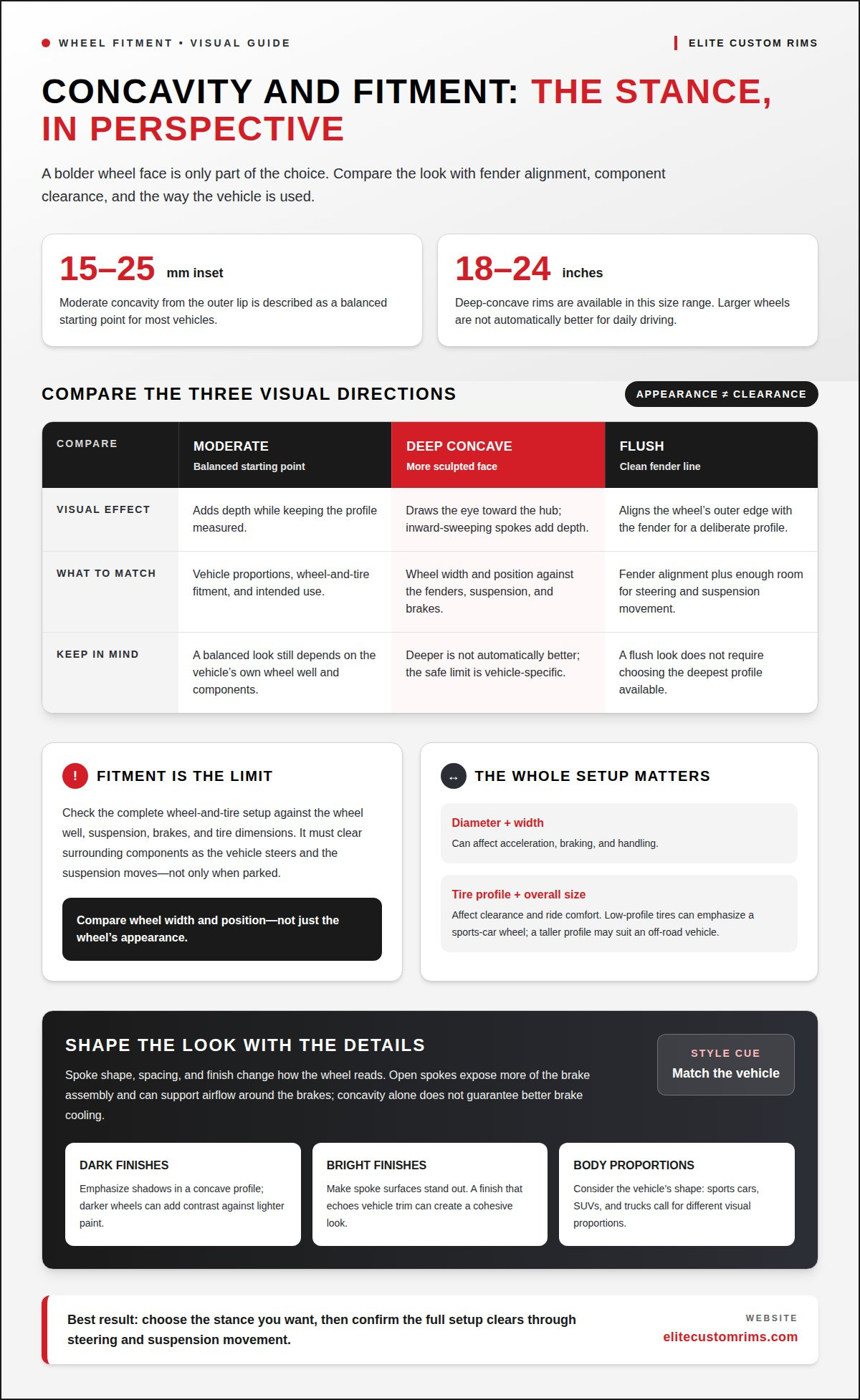
3. Wheel concavity and aggressive appearance
For an aggressive appearance, look for a concave face, distinctive spokes, and fitment close to the fender line. Deep-concave wheels draw the eye toward the hub, while inward-sweeping spokes add depth. The right style depends on the vehicle: a low sports coupe and a tall SUV have different proportions to consider.
Flush fitment aligns the wheel’s outer edge with the fender for a clean, deliberate profile. Deep-concave fitment makes the wheel face look sculpted and the stance broader. View the wheel from the front and side of the vehicle: a profile that looks dramatic in a product image may appear too pronounced with a particular body shape.
Concavity is only one part of a wheel’s appearance. Spoke shape, spacing, and finish affect how much of the brake assembly is visible. An open-spoke design, for example, exposes more of the area behind the wheel than a dense pattern. That openness can support airflow around the brakes, but concavity alone doesn’t guarantee better brake cooling.
Consider the wheel as a complete design, not a collection of isolated features. A deep face with slim spokes creates a different effect from a shallow face with broad spokes. Dark finishes emphasize shadows in a concave profile, while brighter finishes make the spoke surfaces stand out. Take the vehicle’s paint, trim, and body lines into account together.
Before choosing deep-concave wheels, compare their width and position with the vehicle’s fenders, suspension, and brakes. The wheels must clear these components as the vehicle steers and the suspension moves. A lightweight design may help reduce unsprung weight, but fitment and construction still matter. A flush setup, for example, can create a strong look without requiring the deepest profile available.
4. Motorsports-inspired wheel designs
Motorsports-inspired wheels bring a purposeful, performance-focused look to a street vehicle. Start by choosing a spoke pattern that complements its body lines and brake setup. BBS CH-R wheels, for example, use seven split spokes, creating a detailed design with clear visual movement. The pattern feels assertive without relying on oversized dimensions alone.
Spoke layout changes a wheel’s character. Split spokes add layered detail, while broad spokes create a simpler, more muscular effect. Open designs reveal more of the brake assembly; denser patterns draw attention to the wheel face. Match the pattern to the vehicle: fine, angled spokes may suit a sleek coupe, while a larger SUV can carry a bolder design.
Finish also shapes a wheel’s motorsport influence. Satin or matte surfaces have a restrained, technical feel, while gloss finishes emphasize contours. Consider the vehicle’s paint and trim as a complete palette. A dark finish can blend with dark bodywork, while a contrasting finish makes each spoke easier to see.
Construction matters beyond appearance. Lightweight wheels reduce unsprung weight, which can improve acceleration and cornering response. For track driving or spirited road use, a lightweight forged setup can enhance performance without sacrificing strength. Forged construction alone doesn’t confirm fitment: wheel dimensions, brake clearance, and vehicle requirements still matter.
Keep the goal practical. A racing-inspired design should suit the vehicle’s intended use, not merely suggest track driving. Compare spoke shape, finish, construction, and fitment together. This makes it easier to choose a wheel with a purposeful look and useful weight characteristics instead of choosing on motorsport styling alone.
Explore performance wheel options to find a motorsports-inspired look that suits your vehicle.
Elite Custom Rims
Elite Custom Rims helps you explore wheel options by vehicle and visual goal, balancing assertive style with suitable fitment. Its selection includes Audi, Chevy/GMC, Mercedes, and Porsche wheels, with options for luxury and performance vehicles.
Use this guide to define your priorities: wheel size, concavity, offset, spoke design, and how you use your vehicle. Then explore options suited to your make and the look you want. A well-matched set can bring the vehicle’s stance together without making appearance the only consideration.
For help choosing wheels for your vehicle, contact Elite Custom Rims.
Shape a wheel setup that feels like yours
Choosing wheels that make a car look more aggressive starts with a clear vision for the vehicle, not just a trend. Decide what character you want to convey: refined and purposeful, track-inspired, or bold and commanding. Then choose a design that suits the car’s body, paint, and everyday role. A distinctive setup should make the whole vehicle feel cohesive, not like a collection of unrelated upgrades.
Use that vision to guide your next step. Elite Custom Rims offers wheels for Audi, Chevy/GMC, and Mercedes, among other makes, with options for different vehicle styles. Focus on the look you want and the vehicle you drive to make a considered, personal choice.
Ready to explore your options? Contact Elite Custom Rims and take the next step toward a look that fits your vision.
Frequently Asked Questions
How do bigger rims affect performance?
Larger rims can affect acceleration, braking, and handling, so consider how you drive before sizing up. A larger wheel may require a lower-profile tire to maintain a similar overall tire diameter, changing cushioning and ride feel. Choosing wheels that make a car look more aggressive means balancing that visual change with everyday comfort and response, rather than choosing by wheel diameter alone.
Maximizing Wheel Concavity: How Aggressive Can My Rims Get Without Compromising Performance?
There’s no single maximum concavity that suits every vehicle. The workable profile depends on wheel width, offset, tire dimensions, and clearance around the suspension, brakes, and fenders. Start with the vehicle’s fitment, then compare candidate wheel dimensions and allow for clearance as the vehicle steers and the suspension moves. This approach can preserve a distinctive look while keeping the setup practical.
Do larger wheels make a car look more aggressive?
Often, yes. Larger wheels can fill more of the wheel wells and give a vehicle a more commanding appearance. When choosing wheels that make a car look more aggressive, consider proportion: a size that complements a sports coupe may look oversized on a different body style. Pay attention to the tire sidewall and surrounding wheel space, too, so the combination looks intentional and suits the vehicle’s design.
How do wheel offset and width change a car’s stance?
Offset and width work together to position the wheel relative to the hub, suspension, and fender. A lower offset generally moves the wheel outward; a wider wheel can extend farther inward and outward, depending on its mounting position. Increasing width while keeping offset the same still affects clearance at both edges. Assess the dimensions together to avoid rubbing or an awkward stance.
How much do aftermarket wheels cost in the United States?
Aftermarket wheel prices vary by design, construction, size, and vehicle application, so there’s no single price for every setup. At Elite Custom Rims, the listed price is for a complete set of four wheels unless the listing says otherwise, such as for a staggered setup or single-wheel listing. Compare the details for the wheel you’re considering, including what the listing says is included.
How do aggressive wheels affect ride comfort, handling, and fuel economy?
A larger wheel paired with a shorter tire sidewall can make the ride feel firmer over rough pavement. Wheel size, weight, and fitment can also affect handling and steering response. Extra wheel weight may affect acceleration and suspension response, while oversized wheels can increase steering effort and affect fuel economy. Consider your usual roads and driving priorities before choosing an aggressive setup.