
The finish that looks more distinctive on day one won’t necessarily look better after 50,000 miles. In a long-term review of brushed-finish wheels after 50k miles, the key factors are clear-coat condition, road salt, weather, driving conditions, and care. Brushed texture can help light scuffs blend in, but deep scratches are harder to repair because restoring the directional pattern takes more than a quick touch-up.
Both brushed and machined wheels rely on their protective clear coat to help preserve the face, so neither finish is immune to neglect or harsh conditions. This comparison explains what changes over time, how the finishes differ in appearance and upkeep, and what to consider if you drive through winter salt or want to keep brake dust and road film manageable. You’ll get a practical way to weigh long-term appearance against your climate and washing routine.
Key Takeaways
- Keep the clear coat intact with gentle, finish-compatible cleaning to help protect the wheel face over time.
- Choose brushed for directional texture and metallic depth; remember that matching its grain during repairs can be challenging.
- Match wheel-finish care to your climate and routine, especially if winter salt or brine reaches the inner barrel.
- Assess scuffs and curb rash by their depth: light marks may blend with the texture, while deeper damage needs more specialized attention.
Clear-coat protection on brushed and machined finishes
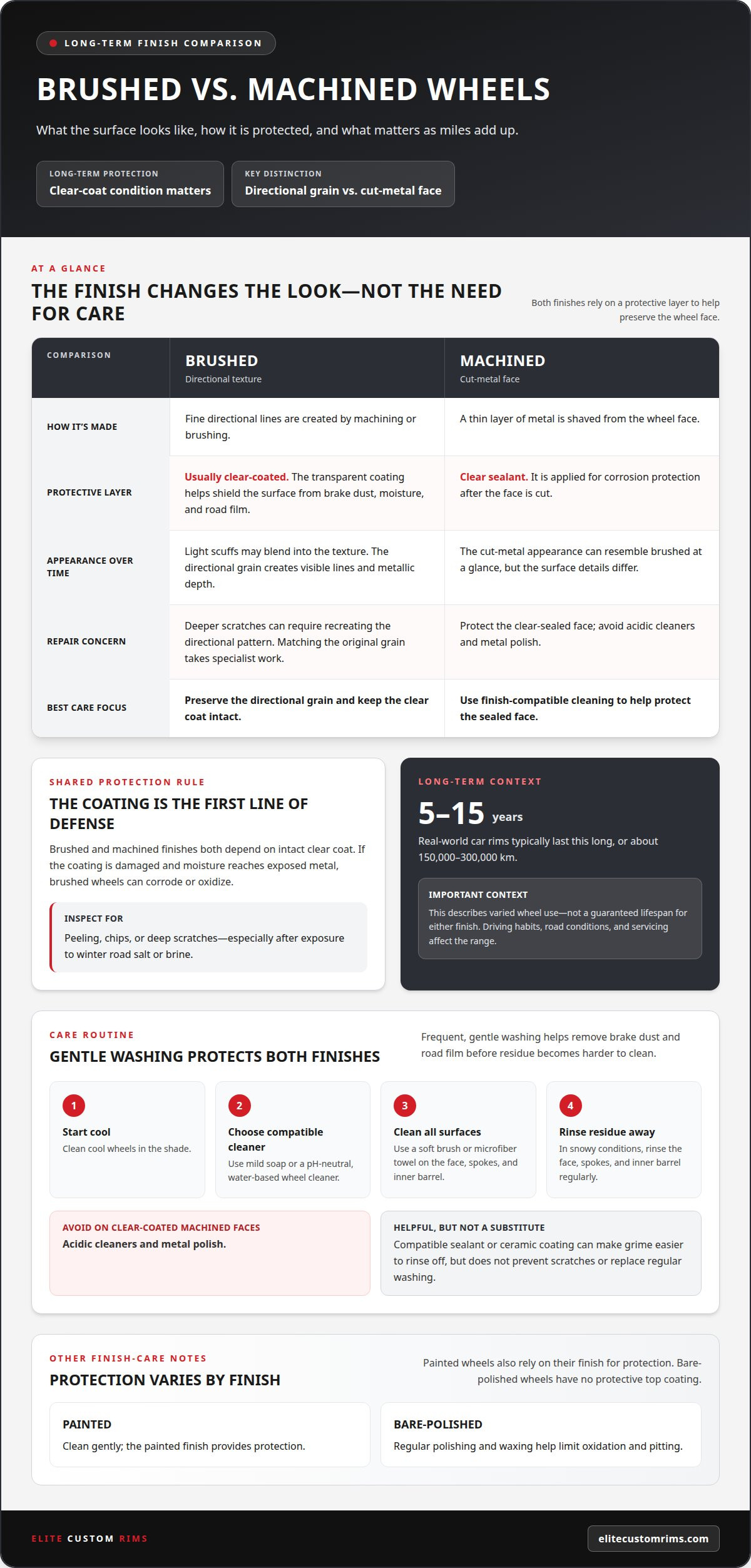
A brushed aluminum face gets its directional grain from machining or brushing, then usually receives a transparent clear coat. That protective layer helps shield the surface from brake dust, moisture, and road film. Machined wheels have a thin layer shaved from the face before clear sealant is applied for corrosion protection. With both finishes, the coating’s condition matters more than appearance alone.
Clean cool wheels in the shade. Use mild soap or a pH-neutral, water-based wheel cleaner that is compatible with the finish, along with a soft brush or microfiber towel. Clean the face, spokes, and inner barrel, then rinse away residue. Avoid metal polish and acidic cleaners on clear-coated machined faces. A compatible sealant or ceramic coating can make grime easier to rinse off, but it won’t prevent scratches or replace regular washing.
For durability, brushed and machined finishes both depend on intact clear coat. Brushing adds directional texture, while machining exposes a cut-metal face beneath its coating. Painted wheels also rely on their finish for protection. Bare-polished wheels differ because they lack a protective top coating and need regular polishing and waxing to help limit oxidation and pitting.
There’s no single cost to refinish or replace a brushed wheel. The work depends on the damage, finish, and whether repair or replacement is needed. Deep damage may require specialized refinishing, while replacement costs depend on the wheel selected.
Brake dust and road film can build up on brushed faces, spokes, and barrels. Frequent, gentle washing helps remove residue before it becomes harder to clean. A finish-compatible sealant may help grime rinse away, but it doesn’t eliminate the need to wash.
Brushed wheels can be repaired or refinished, but matching their original grain takes specialist work. Light scuffs may blend with the texture, while deeper scratches can require recreating the directional pattern.
| Finish | Protective layer | Care consideration |
|---|---|---|
| Brushed | Usually clear-coated | Preserve directional grain |
| Machined | Clear sealant | Avoid acidic cleaner and metal polish |
| Painted | Painted finish | Clean gently |
| Bare-polished | No protective top coating | Polish and wax regularly |
Choose a finish you like and can maintain: protect clear-coated faces with gentle, compatible cleaning, and plan regular upkeep for bare-polished aluminum.
Brushed wheel finish appearance and construction
A brushed wheel’s visual character comes from fine lines running in a consistent direction across its face. The lines catch light differently as the wheel turns, creating metallic depth without a mirror-like gloss. This look suits drivers who prefer a technical, industrial style to a fully polished surface. It also makes the face appear more textured than a smooth painted finish, especially across broad spokes.
Manufacturers create the grain through machining or brushing, then typically apply a transparent coating over the face. The finish may come in bronze or titanium tones, with directional texture adding depth to the color. Machined wheels also have a cut-metal appearance, but their face is made by shaving a thin layer of metal. The two finishes can look similar at a glance, yet their surface details differ.
That distinction matters when choosing a style. A glossy, polished wheel reflects sharper highlights, while brushed metal breaks reflections into visible lines. Brake dust can collect on either face, so cleaning remains part of ownership. Texture doesn’t make a wheel inherently more durable; protective coating, use, and care influence how its appearance holds up. Look at the face and spokes under different lighting to see how clearly the grain shows.
For a practical comparison, consider how the finish looks beside your vehicle’s paint and trim. A dark body color can emphasize a bright brushed face, while bronze or titanium tones create a subtler contrast. Inspect product images from several angles, since lighting can make the same grain look lighter or darker. Consider your washing routine, too: visible texture may show residue differently from a smooth, polished finish. Choose a look you’ll enjoy after routine cleaning, not only under showroom lighting.
Effects of road salt, weather, and driving conditions
Road salt and winter brine can attack wheel surfaces, especially when residue stays on the face or inner barrel. In snowy conditions, rinse both areas regularly and maintain a protective layer. Salt can collect behind spokes, where a quick rinse across the visible face won’t reach it. Painted and brushed wheels both need care through winter.
Brushed-finish wheels can corrode or oxidize if their protective coating is damaged and moisture reaches exposed metal. When the clear coat is intact, it helps protect the wheel face from corrosion. Inspect for peeling, chips, or deep scratches, clean affected areas gently, and avoid letting salt linger.
Weather affects the upkeep routine. In coastal or humid climates, moisture can remain on wheel surfaces longer, while winter roads add deicing chemicals. Reflective gloss finishes can reveal brake dust and swirl marks. Brushed texture changes how light falls across the face, but it doesn’t block grime. Choose a finish whose appearance and maintenance needs suit the climate and your realistic washing habits.
Driving conditions also shape long-term wear. Rough roads, frequent city stops, and long highway trips expose wheels to different combinations of impacts, brake dust, and road film. Real-world car rims typically last 5-15 years, or about 150,000-300,000 km, depending on driving habits, road conditions, and servicing. That range describes varied wheel use, not a guaranteed life for one finish.
Use this seasonal routine to limit residue buildup:
- After winter-road exposure, rinse the wheel face, spokes, and inner barrel.
- Use a finish-compatible cleaner and avoid letting residue dry on the surface.
- Maintain a protective layer suited to the coating and your washing routine.
For a brushed wheel used year-round, regular rinsing is especially important during snowy months. When winter salt is present on the roads, clean the inner barrel to remove deposits that can remain out of sight.
What do long-term owners report about brushed aluminum wheel scratches and curb rash?
Over time, the type of mark often matters more than mileage on brushed aluminum. Light scuffs may blend into the existing grain, making them less obvious than a scratch across a smooth, reflective face. Curb rash is different: contact can scrape away clear coat and disrupt the directional texture. The mark’s depth and location matter more than mileage alone.
Deep scratches are harder to disguise because restoring the original brush pattern takes more than filling or touching up a small spot. A repair must recreate the grain and align it with the surrounding face. Matching that texture is more demanding than matching a gloss color, so brushed-finish repairs call for experience with the finish. An uneven grain may remain visible after refinishing.
One owner account described wheels looking good for about a month before pitting started. That experience shows why a polished appearance at installation doesn’t reveal how a finish will respond to later exposure. It isn’t a universal timeline. For your own wheel, note whether damage is a surface scuff, a chip through the coating, or deeper metal damage. Inspect the spokes and rim edge in clear light.
Use these observations to describe the damage before arranging a repair:
- A faint scuff that follows the grain may blend into the brushed face.
- A curb scrape that breaks the grain needs a texture-matched repair.
- Pitting or a coating breach calls for closer assessment than routine cleaning.
Don’t treat every mark as cosmetic. Cracks indicate structural damage, and a cracked wheel isn’t safe to drive on. A qualified wheel shop can assess damage and refinish a wheel; the right process depends on the current finish and desired result. Photograph the affected area and note whether the mark reaches the wheel edge or spokes. A clear description helps distinguish a surface blemish from damage that needs closer attention.
Elite Custom Rims
Elite Custom Rims helps drivers move from finish research to choosing wheels suited to their vehicle. If you’re weighing brushed-wheel upkeep against appearance, start with vehicle fit and the look you want to maintain. The selection includes Audi Wheels, BMW Wheels, Mercedes Wheels, and Porsche Wheels.
Use the comparison above to decide what matters most: brushed texture, clear-coat care, or how visible marks may look over time. Then narrow your choices by vehicle make and model. Elite Custom Rims offers dedicated fitment options for its vehicle ranges. For confirmation, provide your year, make, model, and trim so a specialist can verify fitment before purchase. This is a useful next step when replacing damaged wheels or choosing a different look.
For help choosing wheels for your vehicle, contact Elite Custom Rims.
Choose a finish that fits your next miles
A long-term review of brushed-finish wheels after 50k miles is most useful as a planning tool, not a verdict on every wheel. Think about the roads you drive, the weather your wheels face, and the care you can realistically maintain. Then choose a finish that still feels right for your vehicle and routine.
When selecting wheels for a new vehicle or a replacement, begin with the vehicle’s make and model, then narrow the choice by appearance and upkeep. Elite Custom Rims offers Audi Wheels, Chevy/GMC Wheels, and Mercedes Wheels.
Contact Elite Custom Rims to take the next step toward a wheel choice that suits your vehicle. Make your decision with confidence, and enjoy the look you choose.
Frequently Asked Questions
What Affects How Long Rims Last?
Wheel longevity depends on construction, road conditions, driving habits, and maintenance. Repeated impacts on rough roads can add physical stress, while city driving brings frequent braking and more brake dust. Moisture and road chemicals also affect the finish. Regular cleaning and attention to visible damage help preserve a wheel’s condition, but appearance and structural integrity are separate considerations.
How do brushed-finish wheels hold up after 50,000 miles?
A long-term review of brushed-finish wheels after 50k miles should consider coating condition, care routine, and exposure to impacts and road grime. A wheel used mainly on smooth highways may show different wear from one driven over rough streets or through harsh winters. Look for clear-coat damage, pitting, or scratches crossing the grain. Mileage alone cannot show whether a wheel remains structurally sound.
How do winter road salt and harsh weather affect brushed wheels?
Salt and winter brine can contribute to corrosion when they reach exposed metal, particularly where the coating has been chipped or scratched. Salt trapped behind spokes or inside the barrel may remain even after the visible face looks clean. Rinse these areas after exposure to winter roads, then inspect the coating for damage. Coastal moisture and humid conditions also make regular cleaning important.
Do brushed wheels need a clear coat, and how does it wear over time?
Brushed wheel faces are usually sealed with a transparent clear coat, which protects the finish and should remain intact. A long-term review of brushed-finish wheels after 50k miles also considers abrasion, curb contact, harsh cleaners, and road debris that can damage this layer. Watch for peeling, chips, or exposed metal. Use gentle, finish-compatible products, and avoid abrasive polishing that could alter the directional grain.