
Ceramic coating can make wheels glossier and easier to clean, but it won’t make them maintenance-free or protect them from every kind of damage. The ceramic coating wheels pros and cons come down to a practical trade-off: water repellency and less stubborn grime on one side, ongoing care and wear from heat and road debris on the other.
It’s easy to expect a hard coating to act like armor. In reality, it won’t prevent rock chips, deep scratches, or dents, and coated wheels still need regular washing. This guide separates real benefits from common myths, compares ceramic coating with other wheel finishes, and helps you decide whether it suits your driving habits and expectations.
Key Takeaways
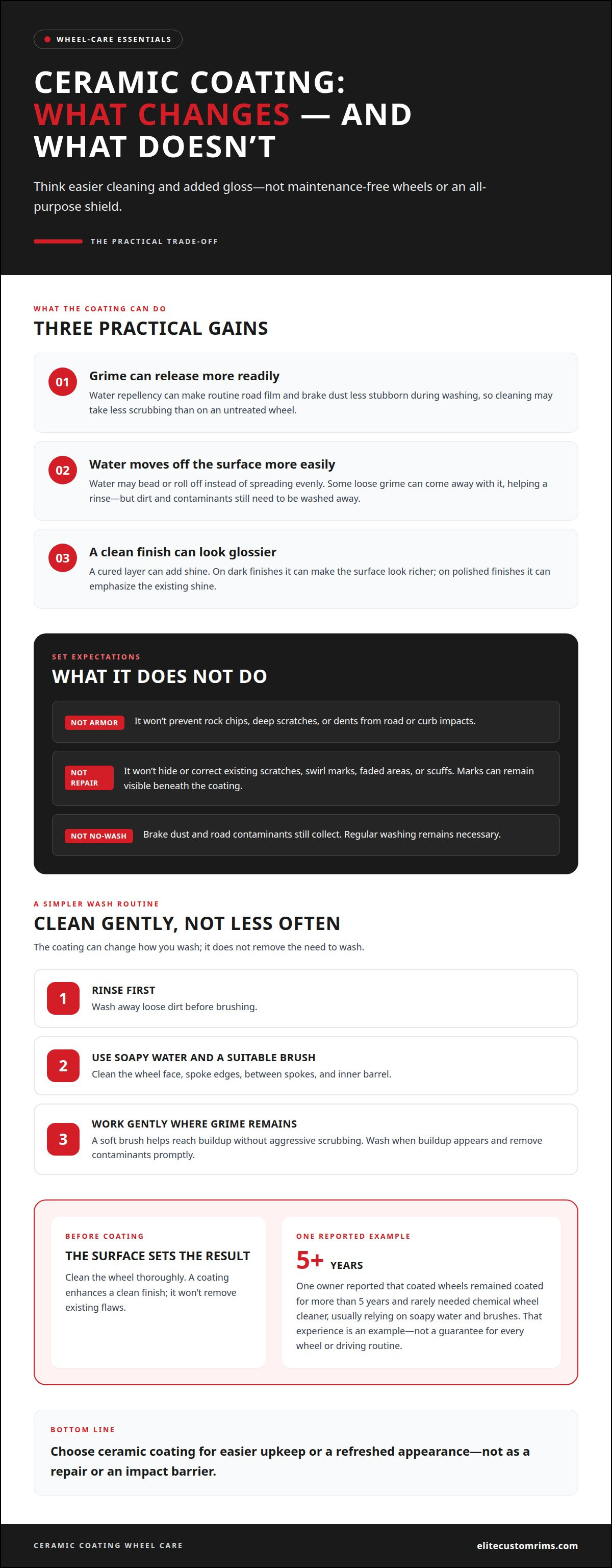
- Expect easier cleaning, not maintenance-free wheels. Regular washing still matters, even when grime releases more readily.
- Use the coating’s water-repellent finish and added gloss as appearance benefits, not as protection from chips, dents, or deep scratches.
- Good preparation matters: a coating won’t hide existing flaws, so the wheel’s condition affects the final look.
- Choose a finish based on the upkeep you’re comfortable with and how your wheels are used; the article compares ceramic coating with wax, sealant, and powder coating.
Easier cleaning and reduced scrubbing
Ceramic coating can make wheel cleaning less labor-intensive by repelling water and reducing dirt buildup. It changes how you wash, not the need to wash.
Less Scrubbing During Cleaning
Compared with an untreated wheel, a coated surface can release grime more readily during washing. Water repellency helps dirt cling less stubbornly, so routine road film may take less scrubbing to remove. That can make cleaning intricate spokes and inner barrels more manageable, especially when brake dust has collected between washes.
One reported example describes ceramic-coated wheels that remained coated for more than 5 years. During that time, the owner rarely needed chemical wheel cleaner, usually relying on soapy water and brushes. That experience shows the potential cleaning advantage, but it isn’t a guarantee for every wheel or driving routine.
Start with a rinse, then use soapy water and a suitable brush on the wheel face and between the spokes. If grime remains, work gently rather than scrubbing aggressively. The coating can ease routine cleaning, but it won’t make stuck-on dirt disappear without washing.
Simpler Washing and Maintenance
A ceramic coating supports a simpler wash routine, but it doesn’t replace one. Regular washing still removes dirt and brake dust from wheels. Compared with leaving a wheel uncoated, the benefit is easier maintenance during a wash, not permission to skip it.
For example, rinse away loose dirt before brushing, then clean the wheel with soapy water. Pay attention to spoke edges and the inner barrel, where road grime can accumulate. A soft brush helps reach those areas without heavy scrubbing.
Driving conditions affect how quickly wheels get dirty. Brake dust builds up with regular use, while road debris adds more grime. Wash when buildup appears and remove contaminants promptly. A coating helps water and dirt release more easily, but consistent care keeps cleaning straightforward.
Gloss and water-repellent properties
Ceramic coating can add gloss and help water roll off wheel surfaces. These benefits affect appearance and washing, but serve different purposes.
Added Gloss and Shine
A cured ceramic layer adds gloss, giving a clean wheel face a brighter, more reflective look. On a dark finish, that sheen can make the surface look richer; on a polished finish, it can emphasize the existing shine. Unlike water repellency, gloss is primarily visual. It won’t correct faded areas or hide scratches that remain visible beneath the coating.
Preparation influences the result. Clean the wheel thoroughly before applying a coating, since trapped dirt can interfere with an even finish. If the wheel already has visible marks, coating won’t remove them. The final appearance depends on the underlying surface, so a glossy layer enhances a clean finish rather than restoring damaged areas.
Water-Repellent Properties
Water repellency means the coating makes water bead or move off the wheel more readily. That differs from gloss: it changes how water behaves on the surface, rather than how the wheel reflects light. As water releases, some loose grime may come away with it, making a rinse more effective.
For example, after driving through rain, water may bead across a coated wheel instead of spreading evenly over the finish. That can help keep routine washing manageable, but it won’t keep wheels clean by itself. Brake dust and road contaminants still collect during normal driving and need to be washed away.
Think of these properties as two separate gains: gloss improves the wheel’s appearance, while water repellency helps water release from the surface. Neither removes the need for regular care. Rinse away loose debris, wash the wheel, and assess the finish in good light. This helps you judge whether shine or easier water release matters more for your wheel-care priorities.
Ceramic coating myths
Ceramic coating has clear limits, and understanding them helps set realistic expectations. The ceramic coating wheels pros and cons debate often centers on protection, but the layer is not an all-purpose shield. Three common myths can lead owners to expect results a coating cannot deliver.
Myth: A coating prevents chips, deep scratches, and dents. It doesn’t. A ceramic layer won’t stop stones kicked up on the road or damage from curb contact. For example, a rock strike can still chip a wheel’s finish, while a deep scratch or dent needs a different remedy. Think of coating as a surface treatment, not impact protection. That distinction matters if your main goal is preventing physical damage.
Myth: A coating hides existing marks. Ceramic coating won’t repair scratches, swirl marks, or faded paint. If a wheel face already has visible scuffs, a glossy layer won’t erase them. Surface preparation and correction must address those flaws first. Otherwise, existing marks may remain visible beneath the finish. Inspect the wheel in clear light before choosing a coating. The result depends on the underlying surface, not just the product applied.
Myth: Coated wheels never need washing. Brake dust and road contaminants still collect, so regular washing remains necessary. Remove contaminants promptly instead of letting them build up. For example, rinse away loose debris, then clean the surface with an appropriate brush and wash solution. A coating can make routine care easier, but it doesn’t replace washing.
A practical way to assess ceramic coating wheels pros and cons is to match the product to your goal. Choose it for easier upkeep or a refreshed appearance, not as a repair or impact barrier. If your priority is correcting existing damage, address the wheel’s condition first. Clear expectations make it easier to decide whether coating fits your maintenance routine and desired finish.
How does ceramic coating compare with wheel wax, sealant, and powder coating?
These options differ in purpose, upkeep, and effect on a wheel’s existing finish. Compare what each offers before choosing an approach to protection or appearance.
| Option | Main role | Key upkeep or distinction |
|---|---|---|
| Ceramic coating | Surface layer with gloss and water repellency | Can last for years with proper care; wheels may need earlier reapplication. |
| Wheel wax | Temporary surface protection | Traditional car wax needs reapplication every few months. |
| Sealant | Surface protection | Choose it for protection without changing the wheel’s underlying finish. |
| Powder coating | A finish applied to the wheel | Consider it when changing the finish itself, rather than adding a surface layer. |
Ceramic coating versus wax: Ceramic coating is the longer-term option of the two, though heat and abrasive debris can wear it down on wheels. Wax offers a simpler, temporary layer, but traditional car wax needs reapplication every few months. That recurring upkeep may suit owners who prefer to refresh protection regularly.
Ceramic coating versus sealant: Both are applied over a wheel’s existing finish. Ceramic coating is valued for water repellency and gloss, while a sealant is another surface-protection option. The practical distinction is the finish and maintenance routine you want, not an assumption that either option prevents chips or deep scratches.
Ceramic coating versus powder coating: Ceramic coating adds a layer over the wheel’s existing finish. Powder coating changes the finish itself, making it a different type of project. If the existing finish is the problem, ceramic coating won’t correct it. Apply ceramic coating after tire installation, since it can prevent wheel weights from sticking properly to the inner barrel.
If you’re considering a different wheel look rather than another protective layer, explore wheel options to find a style that suits your vehicle.
Elite Custom Rims
Elite Custom Rims helps drivers explore wheel options when coating can’t address the issue they’re facing. If a wheel is damaged or its finish no longer suits your vehicle, choosing a different wheel may make more sense than adding another surface layer. The right choice depends on your vehicle and the look you want.
Browse options for Audi, Chevy/GMC, Mercedes, and Porsche vehicles to consider a fresh style or replacement. This is a practical next step when weighing coating against changing the wheel itself. Ceramic coating can support routine care, but it won’t repair chips, deep scratches, or dents.
For help with your wheel options, contact Elite Custom Rims.
Choose the Right Next Step for Your Wheels
Before deciding, identify what you want to change: the care routine, the wheel’s appearance, or the wheel itself. That distinction helps you avoid treating a coating as a substitute for another solution. The pros and cons of ceramic coating wheels are most useful when weighed against your priorities, not treated as a one-size-fits-all verdict.
You can keep your current wheels and focus on their care, or explore a different setup that better reflects your vehicle and style. Elite Custom Rims offers Audi Wheels, Chevy/GMC Wheels, and Mercedes Wheels. Consider your desired look and vehicle fit as you decide which direction makes sense for your next step.
Ready to explore wheel options? Contact Elite Custom Rims and move forward with a clearer plan.
Frequently Asked Questions
Cost to ceramic coat wheels: Expensive, reasonable, cheap, or …free?
Wheel coating has a cost: DIY application involves buying coating and preparing the wheel surface. Professional application adds labor, so the total depends on the approach and preparation required. Whether it feels worthwhile depends on how much you value easier ongoing care and the finish. Compare the upfront expense with your maintenance priorities, rather than expecting coating to eliminate future wheel-care costs.
What are the benefits of ceramic coating wheels?
The main benefits are easier routine cleaning, a glossy appearance, and water repellency. Weighing ceramic coating wheels pros and cons means deciding which benefit matters most for your routine. For example, an owner with intricate wheel designs may value easier access during cleaning. The coating supports care and appearance; it doesn’t change the wheel’s shape, design, or existing condition.
What are the drawbacks of ceramic coating wheels?
The main drawbacks are ongoing washing, preparation, and wear from driving conditions. Heat and abrasive road debris can wear a wheel coating faster, so it may need attention sooner than a coating on paint. Assessing ceramic coating wheels pros and cons also means recognizing that coating won’t repair existing finish flaws or prevent impact damage. Consider those limits if your priority is fixing a marked or damaged wheel.
How long does ceramic coating last on wheels?
Wheel coatings can last for years with proper care, but their lifespan depends partly on exposure to heat and abrasive debris. In real-world experience, a good-quality wheel coating lasted at least 2 years on a vehicle driven year-round through all four seasons. Treat that as an example, not a fixed service life. Regular washing and driving conditions affect how long the coating remains effective.
How much does professional wheel ceramic coating cost in the United States?
That figure is a starting point, not a universal quote for every vehicle or wheel condition. Preparation and the work required can affect the job. Use the amount as general budgeting context, then weigh professional application against the time and care required for DIY. This estimate is for coating work, not wheel pricing.
Is DIY ceramic coating for wheels worth it, and what does it cost?
DIY coating may suit owners comfortable with careful preparation and application. The work requires a clean, decontaminated surface and careful coverage; rushing can affect the finish. Consider whether the product cost and time fit your priorities, especially if you’re unfamiliar with applying coatings evenly.