
Gloss can look sharp, but it also makes brake dust, water spots, and fine scratches easier to see. If you’re deciding how to choose a wheel finish that hides brake dust, matte and bronze are strong options. Satin and silver can also make everyday dust less noticeable than deep gloss black.
It makes sense to want wheels that look clean between washes. Finish affects more than style: texture, reflectivity, and color all influence how brake dust and road grime show up. Matte can disguise dust well, while gloss is easy to wipe clean but tends to reveal buildup sooner.
Here’s how matte, gloss, satin, and bronze compare for brake dust, dirt, and trail grime, along with the care each finish needs. Weigh the look you want against how often you’re willing to clean your wheels, then choose a finish that suits your driving and vehicle.
Key Takeaways
- Choose matte or satin when you want brake dust and light grime to stand out less than they do on glossy finishes.
- Consider bronze for a distinctive look that can help disguise brake dust and trail grime.
- Weigh appearance against upkeep: reflective and polished surfaces can show dust or spots, while matte finishes call for gentle cleaning.
- Keep brake dust from lingering on the finish; the right cleaning approach helps protect the wheel’s appearance.
1. Is matte or gloss better for wheels?
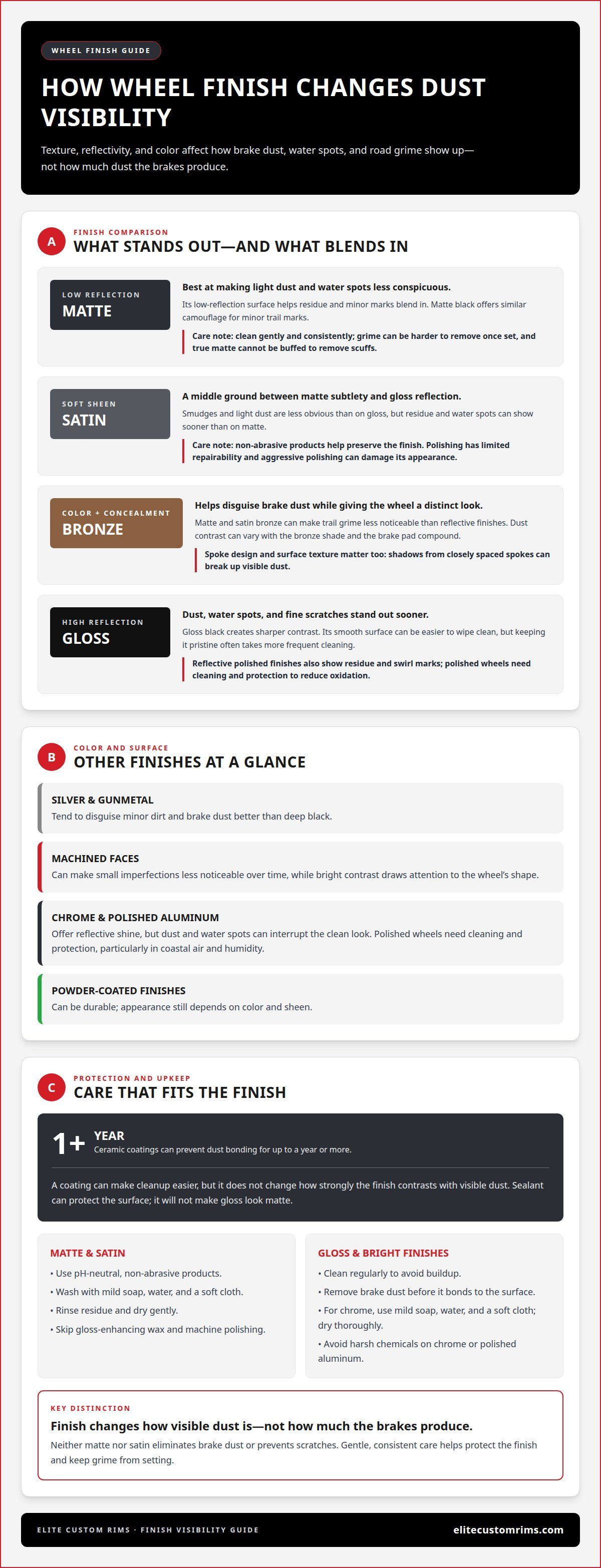
Matte usually hides brake dust better than gloss, especially in black. Its low-reflection surface makes light dust and water spots less conspicuous. Gloss black creates sharper contrast, so dust, water spots, and fine scratches stand out sooner. Gloss can be easier to wipe clean because dirt has fewer places to grip, but keeping it pristine often takes more frequent cleaning.
Satin black offers a middle ground. Its softer sheen makes smudges and light dust less obvious than on gloss, while remaining more reflective than matte. Satin can still show dust and water spots more readily than matte. Choose satin if you want some sheen without the high contrast of gloss black, or matte if hiding dust matters more. To choose a wheel finish that hides brake dust, weigh the sheen against the upkeep.
Color and surface detail also affect how visible dirt is. Silver and gunmetal tend to disguise minor dirt and brake dust better than deep black. Machined faces can make small imperfections less noticeable over time, while their bright contrast draws attention to the wheel’s shape. Chrome and polished aluminum offer reflective shine, but dust and water spots can interrupt that clean look. Polished wheels need cleaning and protection to reduce oxidation, particularly in coastal air and humidity. Powder-coated finishes can be durable, but appearance still depends on color and sheen.
Ceramic coatings can prevent brake dust from bonding to a wheel’s surface for up to a year or more, making cleanup easier; they don’t change how strongly the finish contrasts with visible dust. Sealant can help protect the surface, but it won’t make gloss look matte. If you’re considering how to choose a wheel finish that hides brake dust, match the finish to your cleaning routine. For gloss wheels, clean regularly to avoid buildup. For matte wheels, use gentle, consistent care to preserve their even appearance.
2. Bronze finishes and the visibility of trail grime
Bronze balances color and contrast, helping disguise brake dust while giving the wheel a distinct look. On dirt roads, matte and satin bronze can also make trail grime less noticeable than reflective finishes. Matte black offers similar camouflage, especially for minor marks. Choose bronze for warmth and useful concealment, or a darker color for a more subdued appearance.
Finish changes how visible dust is, not how much the brakes produce. Gloss reflects light, making dust, water spots, and fine scratches easier to notice. Matte scatters reflections, so residue and minor damage blend in more readily. A protective coating can help keep grime from bonding, but it won’t erase the visual contrast between dust and wheel color.
Spoke design and surface texture also affect what you see. Open spokes expose more of the wheel face and brake area, while closely spaced spokes create shadows that can break up visible dust. Textured or matte surfaces diffuse reflections; smooth, polished surfaces emphasize residue and swirl marks. For example, a satin-bronze wheel with sculpted spokes can make light dust less prominent than a bright, smooth face.
Brake pad compounds affect the amount and color of dust reaching the wheel, so the same bronze finish can look different on different vehicles. Dust may contrast more against one bronze shade than another. Compare the wheel color with the brake dust you typically see on your vehicle instead of assuming all dust looks alike.
For trail use, consider how washing fits your routine. Matte finishes can be harder to clean once grime sets in, and aggressive cleaners may leave uneven patches. Use gentle, consistent care to protect the coating and reduce visible scratches. For a vehicle-specific starting point, explore bronze wheel styles that suit your preferred look.
3. How matte and satin finishes conceal brake dust and dirt
Matte and satin reduce reflections, so light brake dust and dirt blend into the wheel instead of standing out as they can on a mirror-like surface. Matte usually conceals water spots and dust better than satin. Satin keeps a restrained sheen but can show residue sooner. Compared with gloss black, both offer a less reflective look: matte prioritizes subtlety, while satin balances sheen with concealment.
Keep matte and satin wheels looking even with pH-neutral, non-abrasive products. Harsh cleaners and abrasive tools can leave streaks or uneven patches. Use mild soap and water with a soft cloth rather than a rough scrubber, then rinse away residue and dry the surface gently. Consistent cleaning prevents grime from setting and becoming harder to remove.
Skip gloss-enhancing wax on matte or satin finishes. Wax and machine polishing can create permanent glossy spots that disrupt the intended look. True matte finishes can’t be buffed to remove scuffs. Satin offers limited repairability through polishing, but aggressive polishing can damage its appearance. Gentle maintenance matters especially after trail driving or exposure to road grime.
Choose based on the look and upkeep you prefer. Matte suits drivers who want a subdued appearance and can clean gently and consistently. Satin suits someone who wants a little reflected light without a gloss-black shine. Neither finish eliminates brake dust or prevents scratches; both simply make light residue less conspicuous. Use non-abrasive products for either option, and avoid polishing that could change the finish.
4. Brake dust and wheel-finish damage
Brake dust is more than a visibility issue: buildup can harm a wheel’s finish. Regular cleaning helps prevent residue from bonding to gloss black and powder-coated surfaces. Remove buildup before it becomes difficult to lift rather than scrubbing harder later. Bonded grime can also make a wheel look dull or uneven.
Chrome shows how surface damage can progress. If moisture gets beneath damaged chrome plating, the finish can pit or peel. Clean chrome regularly with mild soap, water, and a soft cloth, then dry it thoroughly to limit water spots. Avoid harsh chemicals that can damage chrome or polished aluminum. These bright, reflective finishes reward careful washing but need more attention to retain their shine.
Machined and brushed faces need their clear coat intact. This transparent layer protects the exposed metallic surface, so abrasive tools or unsuitable cleaners can compromise it. Use mild soap and water or a water-based wheel cleaner. Avoid metal polish and acidic wheel cleaner on machined, clear-coated wheels. The clear coat also helps preserve the contrast between the bright face and darker sections.
Finish affects how damage appears, not whether cleaning matters. Gunmetal hides dust better than black and makes minor scuffs less noticeable. Gloss black can reveal fine scratches and swirl marks, while matte may disguise small marks but cannot be buffed to remove scuffs. Choose based on both your preferred appearance and the care each surface needs.
Let wheels cool before washing, and use a soft cloth or brush with a suitable wheel cleaner. Avoid abrasive sponges on gloss-black or polished faces, where they can leave swirl marks. For machined finishes, protect the clear coat by avoiding metal polish and acidic products. Gentle, regular cleaning is a practical way to limit brake-dust buildup and preserve the finish.
Elite Custom Rims
Elite Custom Rims helps you narrow wheel choices around your vehicle and the look you want, including a finish that makes brake dust less noticeable. Its selection includes wheels for Audi, Chevy, Mercedes, and Porsche vehicles. Use your priorities to guide the decision: a darker, less reflective appearance can make dust less prominent, while a brighter finish creates more contrast and may call for closer upkeep. The right choice balances appearance, driving conditions, and the cleaning routine you’re comfortable maintaining. Explore the wheel options for your vehicle, then focus on a finish that suits both its style and your day-to-day use. For help choosing, contact Elite Custom Rims.
Make your next wheel choice with confidence
Think beyond how a finish looks in a showroom. Picture your vehicle after a commute, a rainy drive, or a dusty weekend. That everyday view can clarify your priorities: dramatic shine, subdued style, or less visible residue between washes. Choose a finish you’ll enjoy seeing on your vehicle and feel comfortable maintaining.
A practical way to choose a wheel finish that hides brake dust is to match it to your driving routine and preferred appearance. Then narrow your search to wheels suited to your vehicle. Elite Custom Rims offers Audi Wheels, Chevy/GMC Wheels, and Mercedes Wheels, giving drivers of those vehicles relevant options to explore as they refine their choice.
Ready to take the next step? Contact Elite Custom Rims to discuss your wheel choice. Choose a look that feels right for your vehicle, and enjoy making it your own.
Frequently Asked Questions
Is matte or gloss better for wheels?
Matte is a strong pick if your priority is keeping light brake dust less noticeable. Gloss suits drivers who prefer a reflective look and are comfortable cleaning more often to keep it pristine. Consider your routine: frequent stop-and-go driving may mean visible dust builds up sooner, while a weekend vehicle may let you prioritize shine. Choose a finish that fits both your style and upkeep habits.
What are the main types of wheel finishes?
Common wheel finishes include matte, satin, and gloss, along with metallic, chrome, polished, brushed, and machined surfaces. These terms describe different appearances and surface treatments, not just colors. A brushed face has directional grain, while a machined face can pair bright metal with a clear-coated surface. Powder-coated and PVD finishes describe application methods. Knowing the finish type helps you choose suitable cleaning products and avoid care that could harm its appearance.
Which wheel finish is the most durable and easiest to maintain?
No single finish is the most durable and easiest to maintain in every driving situation. Powder-coated finishes are described as durable and corrosion-resistant, while gloss surfaces are easy to wipe clean. However, gloss shows dust and marks readily, so keeping it pristine can require more frequent cleaning. For a practical balance, consider road conditions, preferred appearance, and willingness to clean regularly rather than choosing by durability alone.
Should you pay extra for a custom wheel finish?
Consider a custom finish if a specific color or appearance matters enough to justify its added cost. It can create a more tailored look, but a distinctive finish won’t necessarily hide dust better or need less care. First decide whether your priority is personal style, less visible grime, or simpler maintenance. If appearance is your main goal, weigh that preference against the cleaning routine the finish may need.
Which wheel colors and finishes hide brake dust best?
Matte black and bronze are strong choices for making brake dust less conspicuous, while silver and gunmetal can disguise minor dirt better than deep black. Bronze is a useful choice if you want a colored finish that also suits trail use. Consider dust color and wheel contrast: a finish that blends with residue will look less marked between washes than a highly reflective face.
Do matte, satin, gloss, or metallic wheel finishes show brake dust differently?
Yes. Matte tends to conceal light dust well, satin shows more residue than matte, and gloss makes dust and water spots more apparent. Metallic finishes vary with color and reflectivity, so the label alone doesn’t determine visibility. A bright metallic face can emphasize contrast, while a darker gunmetal tone can make minor dust less noticeable. Compare both color and sheen when selecting a finish.