
Could a wheel with replaceable sections still be unsafe to drive with a crack? Absolutely. In the multi-piece vs monoblock wheels comparison, construction affects customization and which components may be replaceable, but it doesn’t determine whether a damaged wheel is safe to use.
A visible crack can raise an immediate question: can it be repaired, or does the whole wheel need replacing? The answer depends on the damage’s location and extent, as well as the wheel’s design and condition. A qualified assessment is more useful than judging by appearance alone.
This guide explains how one-piece monoblock wheels differ from two- and three-piece designs, including the trade-offs in customization, upkeep, and repairability. You’ll learn what matters when a crack is assessed, why some structural damage makes replacement the safer option, and which fitment details to compare when choosing a new wheel. Product listings show wheel size, bolt pattern, offset, and compatible vehicle models. A specialist can verify fitment when you provide your vehicle’s year, make, model, and trim.
Key Takeaways
- Monoblock wheels are made as one piece, while multi-piece designs combine two or three sections. The construction can affect design options and which components may be replaceable.
- In the multi-piece vs monoblock wheels comparison, construction is only one factor. Crack location, extent, material, and prior damage all matter in a qualified assessment.
- Don’t judge a wheel’s safety or repairability by appearance alone. Have visible damage professionally assessed before deciding whether repair or replacement is appropriate.
- If replacement is recommended, compare wheel size, bolt pattern, offset, and vehicle compatibility to find a suitable match.
- For fitment or brake-clearance questions, provide your vehicle’s year, make, model, and trim to an Elite Custom Rims specialist at 855-222-1223 or Info@EliteCustomRims.com.
Multi-Piece vs. Monoblock Wheels: What Changes in Their Construction?
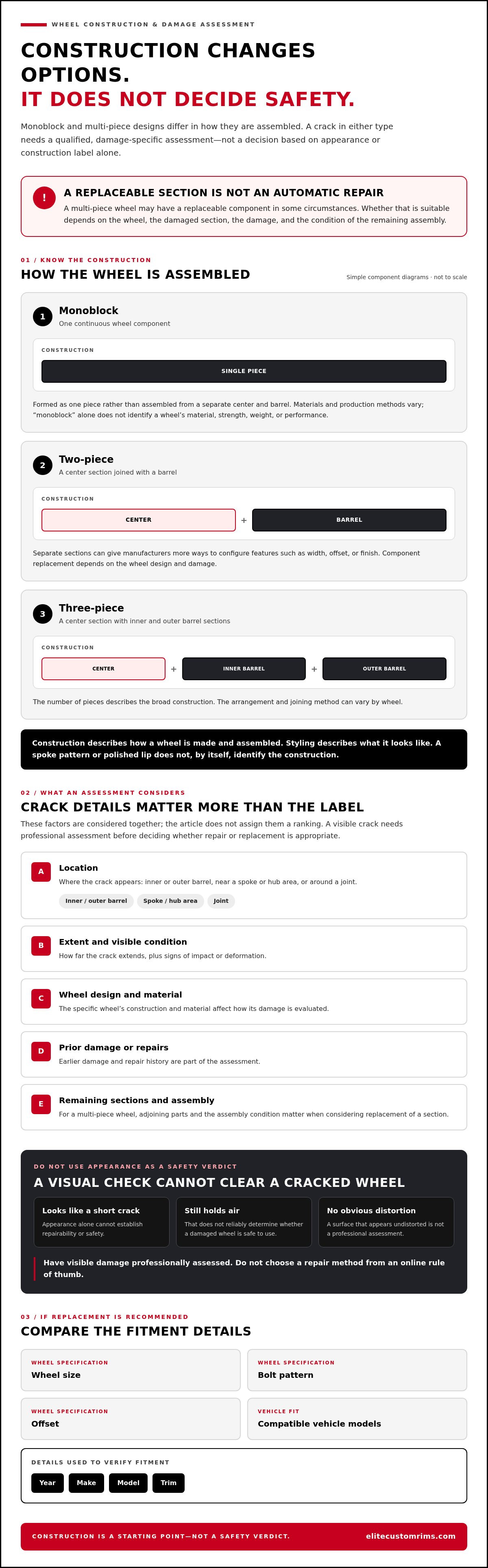
A monoblock wheel is made as one continuous piece, while a multi-piece wheel is assembled from separate sections. Multi-piece designs are commonly described as two-piece or three-piece, depending on how many main components form the wheel. These terms describe construction, not a particular spoke pattern, finish, or brand style. A mesh design, for example, could be offered in different constructions, so appearance alone won’t tell you how the wheel is assembled. The overview of alloy wheel construction also illustrates the distinction between one-piece and multi-piece designs.
The structural difference is straightforward: a monoblock is one wheel component, while a multi-piece wheel joins two or more main sections into an assembly. This can shape manufacturing and design options, but doesn’t establish a wheel’s strength, quality, or suitability for a specific vehicle. Materials and production methods vary from one wheel to another.
How a monoblock wheel is made
A monoblock wheel is formed as a single piece rather than assembled from a separate center and barrel. Manufacturers use different production methods and materials, so “monoblock” doesn’t mean every wheel is forged, cast, or made from the same alloy. Its one-piece construction means the wheel’s overall shape is created as a single component, with no separate sections joined during final assembly.
This can make the construction more direct, but the design has to be achieved within that single-piece form. Available shapes and specifications depend on the specific wheel’s engineering and manufacturing process. Don’t use the monoblock label alone to infer weight or performance. Those depend on the wheel’s design and construction.
How multi-piece wheel sections fit together
Multi-piece wheels combine a center section with barrel components. In a two-piece design, the wheel typically has a center and a barrel section. In a three-piece design, the center is paired with separate inner and outer barrel sections. The arrangement and joining method can vary, so the number of pieces describes the broad construction rather than every assembly detail.
Separate sections can give manufacturers more ways to configure features such as width, offset, or finish. In some circumstances, a component may also be replaceable. That depends on the wheel, the damaged section, and the manufacturer’s specifications. Separate parts don’t make every crack repairable, and they don’t automatically mean a damaged wheel can safely return to use. The specific wheel still needs a qualified assessment.
Keep the categories clear. Construction is about how the wheel is made and assembled; styling is about what it looks like. A polished lip or distinctive spoke pattern doesn’t prove a wheel is multi-piece, and a multi-piece design isn’t defined by a specific finish. For a useful comparison, identify the wheel’s actual construction first, then consider its design and specifications. In the multi-piece vs monoblock wheels decision, that’s the practical starting point, not a verdict on durability or crack repair.
How Wheel Construction Affects Crack Assessment and Repairability
A wheel’s construction can influence which components are involved in damage, but it can’t answer the repair question on its own. A cracked wheel requires damage-specific assessment, not a design-type shortcut. A monoblock crack involves a single-piece wheel; a multi-piece crack may affect one section, a joint, or another part of the assembly. In either case, the wheel’s condition and specifications matter more than its label.
Don’t assume that a replaceable outer section makes every multi-piece wheel crack a simple component swap. Replacement depends on the specific wheel design, the location and extent of damage, and whether the remaining components are suitable for use. Damage involving the center or a connection between sections may call for a different decision than damage limited to a replaceable section. The actual wheel needs a qualified assessment.
Which crack details matter during an inspection?
Note where the crack appears and what you can see, but treat those details as observations, not a diagnosis. An assessment considers whether damage is on the inner or outer barrel, near a spoke or hub area, or around a joint. It also considers how far the crack extends and whether there are signs of impact, deformation, or earlier repairs. Location can affect how the damage is evaluated.
Material and wheel-specific construction matter, too. Don’t infer roadworthiness from a crack that looks short, a wheel that still holds air, or a surface that appears undistorted. Appearance alone can’t reliably clear a damaged wheel for use. A visual check is not a safety verdict.
Why a repair decision needs qualified assessment
Repair suitability depends on the wheel and the specific damage. An assessment considers the crack’s position and extent alongside the material, construction, and any prior damage or repair history. A visible separation in a multi-piece wheel doesn’t automatically mean one section can be replaced safely; the condition of adjoining parts and the wheel’s assembly also matter.
Don’t choose a repair method based on an online rule of thumb. Welding or other work may be unsuitable for some damage or wheel designs, and no construction type guarantees a safe repair. A visible crack needs a qualified assessment before anyone decides whether the wheel should return to use or be replaced.
If an assessment indicates replacement is appropriate, explore new replacement wheel options and have fitment verified. Provide the vehicle’s year, make, model, and trim. For fitment or other verification questions, call 855-222-1223 or email Info@EliteCustomRims.com.
Multi-Piece vs. Monoblock Wheels: Compare Customization, Upkeep, and Trade-Offs
The right choice depends on your priorities, how you use your vehicle, and which wheel specifications fit it. A monoblock design has one-piece construction; multi-piece designs can provide more ways to configure sections. Neither is automatically the best fit for every driver. Compare the options based on design flexibility and ownership needs, not a blanket claim that one type is lighter, stronger, or more durable.
| Consideration | Monoblock | Multi-piece |
|---|---|---|
| Construction | Formed as one wheel component. | Assembled from two or more main sections. |
| Design flexibility | Design is achieved within a single-piece form. | Separate sections can offer more configuration options, depending on the wheel. |
| Inspection | Assessment focuses on the wheel as a single structure. | Assessment may also consider section interfaces and assembly, as well as the wheel overall. |
| Ownership considerations | There are no separate wheel sections to account for. | Care and service considerations depend on the wheel’s specific design and manufacturer guidance. |
Which design suits your priorities?
If you prefer a straightforward one-piece design, a monoblock may suit that priority. If you’re drawn to a wider range of configuration possibilities, a multi-piece wheel may be worth considering. Start with the look you want, then weigh intended use and vehicle compatibility. For more planning around wheel choices and fitment, the custom wheels reference guide offers related guidance.
Keep the decision grounded in the actual wheel. Construction alone doesn’t establish weight, strength, or durability, since specifications and manufacturing vary. Prioritize fitment for your vehicle, then compare design options that meet those requirements. For fitment or brake-caliper clearance questions, provide your vehicle’s year, make, model, and trim for specialist verification. Call 855-222-1223 or email Info@EliteCustomRims.com.
What to consider for ownership and upkeep
Care isn’t one-size-fits-all. Follow the wheel manufacturer’s instructions for cleaning and finish maintenance, since the right approach depends on the product and finish. Keep cosmetic care separate from structural checks: cleaning can help preserve appearance, but it can’t determine whether a wheel is safe after an impact or whether damage is present.
For multi-piece designs, follow the inspection and service guidance for that specific assembly, including its joined sections. Don’t assume every multi-piece wheel needs extra maintenance or that a monoblock requires none. Compare the manufacturer’s recommendations, your driving conditions, and the upkeep you’re comfortable with. Explore new wheel options with fitment verified against your vehicle details.
What to Do for Cracks in Multi-Piece or Monoblock Wheels
A visible crack calls for a careful next step, not a quick verdict based on wheel type or appearance. Whether you’re comparing multi-piece vs monoblock wheels, the process is the same: record what you’ve noticed, arrange a qualified assessment, then decide whether the wheel can remain in use or needs replacement. A visual check alone can’t prove a wheel is safe or repairable.
- Take the concern seriously. If you suspect a crack, don’t rely on the wheel until it has been assessed. Don’t assume it’s safe because the tire still holds air or the crack looks small. Arrange a safe way to have the wheel inspected.
- Record what you can observe. Note the wheel’s construction type, where the visible damage appears, and any relevant history, such as an impact or previous wheel work. Describe what you see without trying to diagnose the crack.
- Arrange a qualified wheel-damage assessment. The actual wheel needs to be assessed, taking into account the damage, construction, material, and history. Clear photos can help communicate what you’ve observed, but they can’t replace an in-person inspection or determine roadworthiness.
- Follow the assessment. The assessment can indicate whether repair may be suitable, further evaluation is needed, or the wheel should be replaced. Don’t assume a multi-piece wheel can be fixed by swapping a section, or that a monoblock wheel always requires the same outcome.
- Choose a replacement only if needed. If the assessment finds the wheel unsuitable for continued use, compare replacement options against the vehicle’s required specifications before purchasing.
What to document before an expert assessment
A few clear details can make the assessment more useful. Keep your notes factual. Photographs are supporting evidence, not a safety clearance or repairability test.
Assessment notes: wheel construction; visible damage location; vehicle year, make, model, and trim; known impact or prior repair history; clear photos showing the damage and the whole wheel.
When replacement becomes the practical next step
Replacement may be appropriate if an assessment finds the wheel shouldn’t remain in use. Start with the vehicle’s requirements, not a guess based on appearance or a wheel that seems close in size. Compare wheel size, bolt pattern, offset, and compatible vehicle models. The right match depends on the specific vehicle and its configuration.
Product listings show wheel size, bolt pattern, offset, and compatible vehicle models. An Elite Custom Rims specialist can verify fitment when you provide your year, make, model, and trim. For fitment, brake-clearance, or other verification questions, call 855-222-1223 or email Info@EliteCustomRims.com. If replacement is the decision, explore new replacement wheels with your vehicle details ready.
Choose a Properly Matched Replacement Wheel With Fitment Verified
A new wheel is the next step only after the damage has been assessed and replacement is considered appropriate. Then match the replacement to the vehicle’s fitment requirements, not just the damaged wheel’s appearance. A similar spoke design or diameter doesn’t prove compatibility. Accurate specifications help narrow the options, and specialist verification helps reduce guesswork before purchase.
Match wheel specifications to the vehicle
Start with the details that determine how the wheel fits: size, bolt pattern, and offset. The bolt pattern must align with the vehicle’s mounting points. Wheel size and offset also need to suit the vehicle’s fitment requirements. A mismatch can affect how the wheel sits and whether it clears surrounding components.
Brake-caliper clearance is a separate consideration. A wheel may match basic specifications and still need clearance verification for the vehicle’s brake setup. Don’t rely on visual similarity, a familiar brand, or an assumption that the original wheel’s numbers apply to every replacement option. Compare the vehicle-specific requirements with the product information, then have a specialist verify fitment.
Elite Custom Rims listings show wheel size, bolt pattern, offset, and compatible vehicle models. For specialist fitment verification, provide your vehicle’s year, make, model, and trim before purchase. Those details allow a specialist to assess the match. For questions about fitment, brake-caliper clearance, or other specifications, call 855-222-1223 or email Info@EliteCustomRims.com.
Shop replacement wheels with confidence
Use the vehicle-specific information in each listing to compare possible replacements. Check the listed dimensions and compatibility, then have fitment verified using your full vehicle details. If you’re also weighing construction or style, treat those as selection preferences after fitment needs are addressed. A wheel that looks right still needs to meet the vehicle’s requirements.
Review what the listing says is included before ordering. Wheels are sold without tires unless a specific listing explicitly states otherwise. TPMS sensors and factory center caps are included only where the listing says so; floating caps are included only where noted. Don’t assume these items are part of every wheel listing. Prices are for a complete set of four wheels unless the listing explicitly states otherwise, such as a staggered setup or single-wheel listing.
Once the damaged wheel has been assessed and your replacement specifications are clear, shop wheels by vehicle. Share your year, make, model, and trim for specialist fitment verification, and resolve any brake-clearance questions before choosing. A well-matched replacement supports the look you want while keeping the decision grounded in your vehicle’s actual requirements.
Make Your Next Wheel Choice With Confidence
Once you know what matters in the multi-piece vs monoblock wheels decision, turn that knowledge into a choice that suits your vehicle and the look you want. Start with fitment, then explore designs that meet your needs. A confident purchase is about more than choosing a construction style. It’s about selecting a wheel that’s properly matched to your vehicle.
Vehicle-specific listings show wheel size, bolt pattern, offset, and compatible models, helping you compare options with useful details in view. Share your year, make, model, and trim so an Elite Custom Rims specialist can verify fitment before you buy. If you have questions about brake-caliper clearance or another fitment detail, call 855-222-1223 or email Info@EliteCustomRims.com.
Ready to take the next step? Shop wheels by vehicle and verify your fitment. Compare options for your vehicle, then provide your details for specialist verification before ordering.
Frequently Asked Questions
Can you repair a cracked multi-piece wheel?
Sometimes, but a multi-piece design doesn’t make every crack repairable. If damage is limited to a section designed to be replaced, a qualified assessment may determine whether that component can be changed. A crack near the center, a joint, or another structural area can lead to a different recommendation. The wheel’s exact design and condition matter, so don’t order a section or reuse the wheel based on appearance alone.
Are multi-piece wheels stronger than monoblock wheels?
Neither construction type is automatically stronger. Strength depends on the individual wheel’s design, material, manufacturing, and condition, not simply whether it has one piece or several. For example, a multi-piece wheel with a damaged connection and a monoblock wheel with a crack need separate, wheel-specific assessments. Compare the specifications and intended fit for your vehicle rather than treating construction type as a strength rating.
What is the main difference between monoblock and multi-piece wheels?
A monoblock wheel is formed as one component; a multi-piece wheel joins separate sections into an assembly. In the multi-piece vs monoblock wheels comparison, that structural distinction can affect available design configurations and what components an assessment considers. It doesn’t tell you the finish, material, or exact manufacturing method. If the construction isn’t clear from a listing or marking, use the wheel’s documentation rather than guessing from its appearance.
Can a cracked monoblock wheel be welded?
It depends on the crack, wheel material, and manufacturer guidance, so welding shouldn’t be treated as a routine fix. Some manufacturers prohibit welding or heating their aluminum wheels because it can affect material properties. Damage in a spoke or hub area is particularly concerning. Have the specific wheel assessed by a qualified wheel specialist to determine whether it should be removed from use or replaced.
Is it safe to drive with a cracked wheel?
Don’t assume a cracked wheel is safe to drive on. A crack can affect the wheel’s ability to support the vehicle, and a visual check can’t establish that it’s roadworthy. If you notice suspected cracking, avoid driving on that wheel and arrange a qualified assessment. A tire that still holds air or a crack that appears small doesn’t confirm the wheel is safe.
How do I choose a replacement wheel that fits my vehicle?
Use your vehicle’s exact year, make, model, and trim to have fitment verified. Compare the listing’s wheel size, bolt pattern, offset, and compatible vehicle models; appearance alone isn’t enough. Brake-caliper clearance may need separate verification. An Elite Custom Rims specialist can review these details before purchase. For fitment, clearance, or other verification questions, call 855-222-1223 or email Info@EliteCustomRims.com.