
Black wheels can make a black car look strikingly cohesive, but they can also disappear against the paint. That’s why choosing the right wheel color for a black car starts with more than picking a favorite shade. Contrast, finish, and the appearance of your paint all influence whether the result feels sleek, sporty, or too subtle.
If you’re torn between a coordinated look and a color that stands out, start by comparing the visual effect you want. Silver and gunmetal add definition, bronze brings warmer contrast, and gloss or satin black creates a stealthier profile. Finish matters, too: it changes how the wheels catch light and can affect how visible dust, water spots, and light scratches are.
This guide compares popular wheel colors and finishes so you can narrow your options based on style and upkeep. Keep the visual choice separate from fitment: wheel size, bolt pattern, offset, and brake-caliper clearance need to suit your specific vehicle. Choose a look you like, then use your vehicle details to guide the final wheel selection.
Key Takeaways
- Decide whether you want the wheels to blend with black paint or create stronger contrast before narrowing your options.
- Compare black, silver, bronze, and chrome by the visual effect each can create on a black car.
- Consider color and surface finish separately, then weigh gloss, satin, and machined appearances against your preferred upkeep.
- Make choosing the right wheel color for a black car easier by considering the paint and trim, then comparing full-wheel images rather than swatches alone.
- Once you’ve settled on a look, compare wheel size, bolt pattern, offset, and compatible vehicle models before ordering.
Choosing a wheel color for a black car starts with the look you want
Start with one decision: should the wheels blend into the car, or stand out? A coordinated wheel-and-body look can feel sleek and understated. A brighter or warmer wheel creates contrast and draws attention to the car’s stance and design. Neither approach is automatically better. Choose based on the effect you want and the details already on your vehicle.
Color and finish work together, but they’re different choices. Color is the wheel’s hue, such as black, silver, or bronze. Finish describes how its surface looks, such as gloss, satin, or machined. A silver wheel with a bright face can attract the eye more than a muted silver surface. Compare both qualities when reviewing options.
Contrast is the visual difference between the wheel and the bodywork around it. High contrast makes the wheel a focal point; low contrast lets it sit more quietly within the overall design. These color theory principles are a useful starting point, but a wheel’s shape, surface, and lighting also affect how strong that contrast appears.
What does wheel color change on a black car?
Wheel color affects the visual weight of the lower part of the car. A dark wheel close in tone to the paint can create a unified impression, especially from a distance. A brighter face, such as silver, outlines the wheel more clearly and can balance other bright details. Bronze adds warmth and contrast without the sharpness of a very bright finish.
Think about where you want the eye to go. If you want the wheel design to be noticed, choose a color that visibly separates it from the body. If you prefer the car’s shape and trim to take the lead, a subtler contrast may suit it better. The same color can look bold on a large, intricate wheel face and restrained on a simpler design.
Start with the black paint and the car’s existing details
Black paint can look different from one car to another. In daylight, check whether yours appears solid or shows metallic flecks and reflections. Notice how it changes in shade and direct light. Reflections can pick up surrounding colors, while nearby trim affects how bright or dark a wheel looks against the body.
Take stock of the whole palette before settling on a direction:
- Trim and badges: Note whether they’re dark, silver-toned, or another visible color.
- Windows and grille: Consider how their dark or bright details relate to the wheel face.
- Lighting: Compare references in daylight and shade, not just under showroom or screen lighting.
- Whole-car balance: View complete-wheel images where possible. A small color swatch won’t show how the wheel’s shape and brightness work with the car.
Use these observations to set a direction, not to lock in a choice too early. Choosing the right wheel color for a black car is easier when you consider the whole vehicle, then compare shades and finishes with its paint and details.
Black, silver, bronze, or chrome: compare wheel colors for black cars
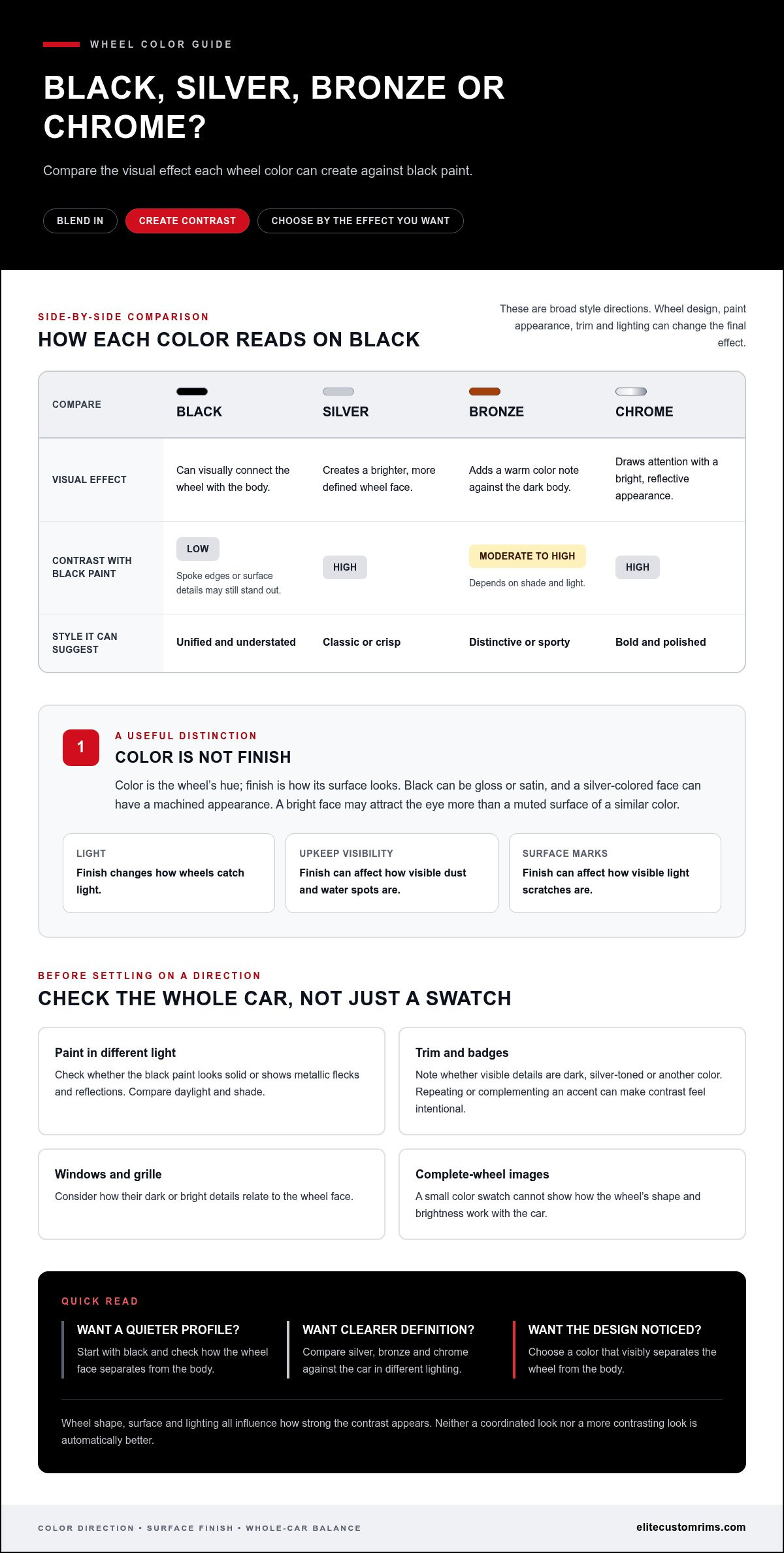
Each color creates a different relationship with black paint. Dark wheels can visually merge with the body, while lighter or warmer tones make the wheel face easier to distinguish. Use the comparison below to narrow down the look you want. Wheel design, paint appearance, and surrounding trim all influence the final effect.
These are broad style directions. Color describes the hue; finish describes the surface appearance. Black, for example, can be glossy or satin, and a silver-colored face can have a machined appearance. Compare both when reviewing a specific wheel rather than assuming its color tells the whole story.
| Color direction | Visual effect | Contrast with black paint | Style it can suggest |
|---|---|---|---|
| Black | Can visually connect the wheel with the body | Low, though spoke edges or surface details may stand out | Unified and understated |
| Silver | Creates a brighter, more defined wheel face | High | Classic or crisp |
| Bronze | Adds a warm color note against the dark body | Moderate to high, depending on shade and light | Distinctive or sporty |
| Chrome | Draws attention through a bright, reflective appearance | High | Bold and polished |
When does black-on-black create a coordinated look?
Black wheels can give a car a continuous, low-key appearance, especially when the body and wheel surfaces are similar in tone. The trade-off is definition: against black paint, spoke edges and intricate shapes may be less noticeable at a glance. If you like the coordinated look but want the design to remain visible, compare wheels with clearly defined spokes or a distinct surface sheen.
How do brighter and warmer colors change the contrast?
Silver and chrome both create a brighter statement, but they aren’t identical. Silver can read as a defined metallic tone, while chrome’s reflective appearance may draw more attention. Bronze adds warmth rather than a cool, bright contrast. Consider the car’s badges, grille, and other visible accents; repeating or complementing one of those tones can help a contrasting wheel feel intentional.
There’s no universal winner. If you want the wheel design to stand out, compare silver, bronze, and chrome against the car in different lighting. If you want a quieter profile, start with black and look at how the wheel face separates from the body. For choosing the right wheel color for a black car, judge the complete-wheel image when possible, then explore wheel options for your vehicle that match your preferred look.
Wheel finish and upkeep: what to consider beyond color
Color tells you the wheel’s general appearance; finish describes how its surface reflects light and shows its design. That distinction matters on a black car. Two wheels in a similar color can look quite different if one has a highly reflective surface and the other a softer sheen. Evaluate color and finish together, but treat them as separate choices.
Finish is part of the ownership decision, not just the styling one. Consider how you’ll care for the wheels and whether you prefer a polished, understated, or visibly dimensional surface. Read the product description and care guidance for the specific wheel instead of assuming every finish can be cleaned or maintained in the same way.
How gloss, satin, and machined appearances differ
A gloss finish is more reflective and can make the wheel face feel bright and prominent. Satin offers a softer appearance, with less of a mirror-like impression. A machined face introduces a distinct surface treatment that can create visible contrast within the wheel design. Compare the full wheel, since spokes, recesses, and edges affect how each finish reads.
Use these differences to narrow your preference:
- Gloss: Choose this visual direction if you like a pronounced shine.
- Satin: Consider it for a more subdued surface appearance.
- Machined: Look for the contrast created by the treated face within the design.
How to think about care and warranty coverage
Before settling on a finish, consider the cleaning routine you’re comfortable following. Use care instructions appropriate to the specific wheel surface, and don’t assume a cleaner or method suited to one finish is right for another. Following the product’s guidance helps you care for its appearance as intended.
Painted, machined, and chrome wheels carry a 12-month warranty covering normal wear and care. Corrosion caused by road salt or chemicals is excluded. Factor your driving conditions and maintenance habits into your decision rather than treating warranty coverage as a substitute for care.
Review the exact finish description and care guidance before ordering. Wheels that have been altered are not returnable, so make your choice deliberately. For choosing the right wheel color for a black car, settle on the overall look first, then compare finish details and care expectations before selecting a specific wheel. Considering both helps you look beyond the first impression of color.
A practical way to choose a wheel color for your black car
Turn inspiration into a decision with a simple sequence: define the look, assess the car’s details, compare complete-wheel references, then verify fitment. This keeps the styling choice clear without letting a favorite color distract from whether a wheel suits your vehicle. Shortlist one coordinated option and one contrasting option before deciding on a finish.
- Choose the effect. Decide whether you want the wheels to blend into the body or become a noticeable feature. This gives your search a clear direction.
- Inspect the vehicle. Look at the paint, trim, badges, grille, and windows. Note which details are dark or bright, and whether the paint looks solid or reflective.
- Compare complete wheels. Review images of full wheel designs in lighting similar to your everyday driving conditions. Compare spoke shape and face details, not just a color chip.
- Check fitment. Once you have a visual favorite, narrow the options to wheels compatible with your vehicle. Color inspiration comes first; vehicle-specific specifications determine which choices can work.
Match the color choice to your preferred style
For subtle coordination, start with a dark wheel and judge whether its face remains defined against the body. For more contrast, compare brighter or warmer colors and see how they relate to the car’s existing accents. Finish can shift the effect, too, so keep it as a separate choice while you shortlist. The goal is a combination that feels cohesive to you, not a rule tied to a particular make.
Preview the look before narrowing your options
Screen images can vary in brightness and color, so compare more than one reference and view each in different lighting where possible. Pay attention to the full design: spoke pattern, darker recesses, and the shape of the wheel face can change its visual weight. For a vehicle-specific example, the Tesla Model Y wheel guide provides a focused reference for considering wheel choices on that model.
As you move from visual research to specific options, use the custom wheels reference guide for broader wheel-selection context. Then compare listings by wheel size, bolt pattern, offset, and compatible vehicle models. Those details help distinguish an appealing image from a suitable selection. A wheel specialist can verify fitment and brake-caliper clearance when you provide your year, make, model, and trim.
Ready to turn your shortlist into a vehicle-specific selection? Explore wheel options for your vehicle, then use the listing specifications and specialist fitment verification to guide your final choice.
Make your final wheel choice with color and fitment both in view
Let your visual preference guide the shortlist, then make vehicle compatibility the deciding step before ordering. A wheel can suit the look you want and still be the wrong choice if its specifications don’t match your vehicle. Keep the decisions in sequence: choose the style, compare eligible listings, and verify fitment using your vehicle details.
Wheel listings include key specifications, and each matters. Wheel size describes the dimensions; bolt pattern and offset also affect whether a wheel is appropriate for the vehicle. Compatible vehicle models provide another useful reference. Treat these details as part of your selection, not fine print to skim after settling on a color.
What to check on a wheel listing
Review each listing and compare its specifications with your vehicle. This checklist keeps the final choice grounded in more than appearance:
- Bolt pattern: Compare the listed pattern with your vehicle’s requirements.
- Offset and wheel size: Review both specifications alongside the compatible vehicle models.
- Tires and TPMS: Wheels are sold without tires unless the specific listing says otherwise. TPMS sensors are not included unless noted.
- Center caps: Read the listing notes for cap details. Floating caps are included only where noted, and don’t assume factory center caps come with every wheel.
Compatibility involves more than finding a familiar vehicle name in a listing. Your year, make, model, and trim help narrow down the right application. Don’t rely on appearance or a similar vehicle as a substitute for fitment verification.
When a wheel specialist can help
Provide your year, make, model, and trim so a specialist can verify fitment before you order. This is also the time to raise questions about brake-caliper clearance or other vehicle-specific details. A preferred color doesn’t establish clearance or compatibility, so keep those checks separate from styling decisions.
For fitment, brake-caliper clearance, or other verification questions, contact a wheel specialist at 855-222-1223 or Info@EliteCustomRims.com. Share your vehicle details and the wheel you’re considering. The specialist can use that information to verify fitment; don’t treat compatibility as settled until the review is complete.
Once your color shortlist and vehicle details are ready, you can move forward with less guesswork. Explore suitable wheel listings, compare the specifications with your vehicle, and submit your details for specialist fitment verification before ordering. The right choice brings together the look you want and a fit suited to your vehicle.
Turn your shortlist into a confident choice
The best wheel color is the one that feels right on your car, not simply the one that looks appealing on its own. Trust your eye, take time with your shortlist, and choose a style you’ll enjoy seeing every day. That’s the practical heart of choosing the right wheel color for a black car: make the look personal, then move forward with care.
As you explore, use each listing’s fitment specifications and compatible vehicle models to guide your comparison. A specialist can verify fitment after you provide your vehicle details, helping you take the next step with confidence. Keep your favorite visual direction in mind while narrowing your options to wheels suited to your vehicle.
Ready to find a style that brings your vision together? Explore wheel styles for your vehicle and take the next step toward a look that feels distinctly yours.
Frequently Asked Questions
Is black or silver better for wheels on a black car?
Neither is universally better; choose based on how much you want the wheels to stand out. Black can create a coordinated, understated look, while silver gives the wheel face a brighter outline. For choosing the right wheel color for a black car, compare the options with your trim and wheel design in mind. Check references in different lighting, since screens and product photos may not show the exact appearance on your vehicle.
Do bronze wheels look good on a black car?
Bronze can look distinctive against black paint by adding warmth and giving the wheels more visual presence. The result depends on the bronze shade, spoke design, and other visible details on your car. Compare different bronze shades against the same vehicle reference. Looking at the full wheel alongside your paint and trim is more useful than relying on a color label alone.
Will black wheels disappear on a black car?
They can look less defined against black paint, but they won’t necessarily disappear. A wheel with a clear spoke pattern or a different surface appearance may still show its shape, especially up close or in brighter light. If you want stronger definition, compare silver or bronze with your car’s trim. Think about whether you want the wheel design noticed from a distance or mainly at close range.
Does wheel finish matter as much as wheel color?
Yes, finish can change the impression of a color. A reflective surface may make a wheel look brighter, while a more subdued surface can appear quieter, even when the colors are similar. Spoke shape and face details also affect what you notice first. Compare images of complete wheels, not just color samples, and review care guidance for the specific finish before making your choice.
How can I preview wheel colors on my black car?
Start with images of your exact vehicle if you can find them, then compare complete-wheel references in lighting similar to where you usually see the car. Look at the spokes, wheel face, and finish as well as the color. A digital preview can help narrow your shortlist, but it can’t promise an exact match in every setting. Treat images as a styling guide, not a guarantee of the final appearance.
Can I return wheels if I change my mind about the color?
Eligible returns or exchanges must be requested within 15 days, and wheels must be uninstalled, unaltered, and in original condition. Wheels mounted on tires, installed on a vehicle, or altered aren’t returnable. Before sending anything back, email Info@EliteCustomRims.com with your order number and obtain an RMA. Review these conditions before ordering, especially if you’re still deciding between colors or finishes.
How do I make sure the wheels will fit my vehicle?
Review the listing’s bolt pattern, offset, wheel size, and compatible vehicle models, then submit your year, make, model, and trim for specialist fitment verification before ordering. Similar model names alone don’t establish fitment, since vehicle details matter. For brake-caliper clearance or other verification questions, contact a wheel specialist at 855-222-1223 or Info@EliteCustomRims.com. Complete this step after settling on a color, but before placing your order.