
What if the most effective way to sharpen your vehicle's soul isn't a software tune or a new exhaust, but the unsprung weight at your wheel wells? Many drivers believe that upgrading to performance wheels is purely a cosmetic move. That is a mistake. The right set of rims dictates how your car breathes, turns, and reacts to every inch of the road.
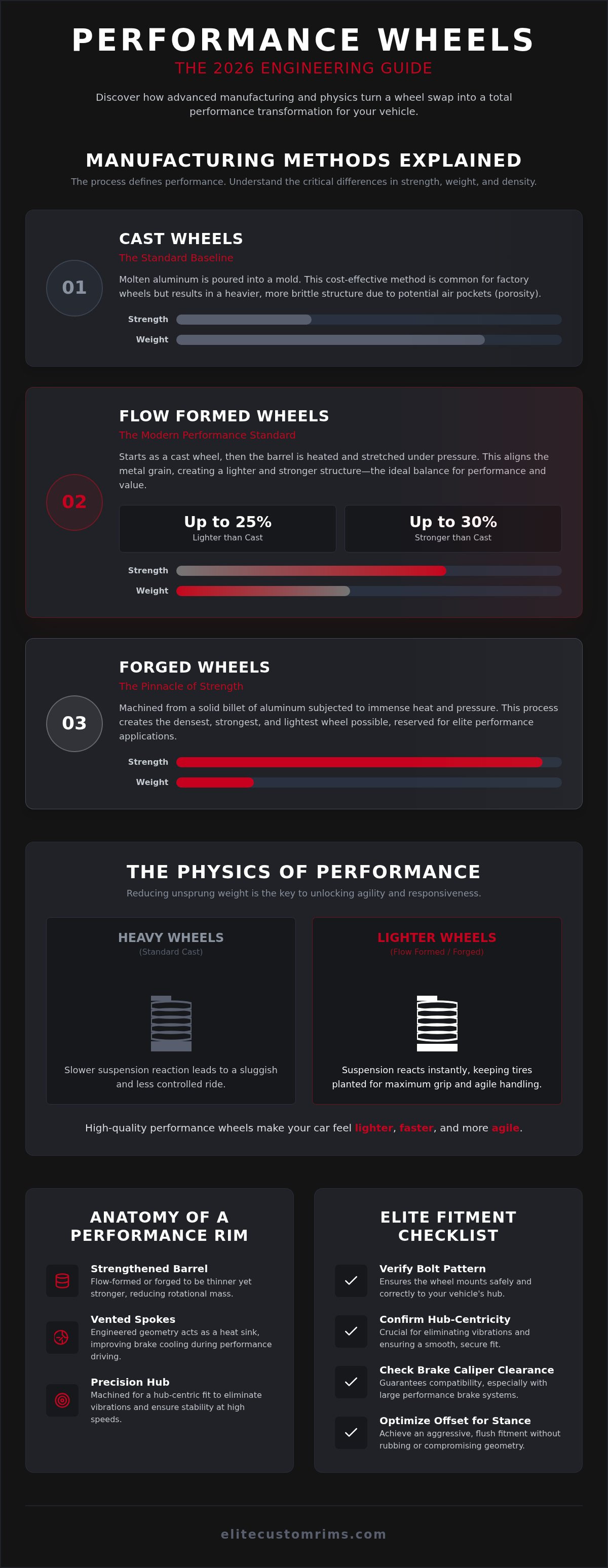
It's natural to feel overwhelmed by technical jargon like offset, bolt patterns, and flow-forming. You want an elite aesthetic for your Porsche or Mercedes without the fear of buying something that degrades your ride quality. We're here to eliminate that guesswork. This definitive 2026 guide unlocks the engineering secrets that turn a simple wheel swap into a total performance transformation. You'll learn how flow-formed technology creates wheels that are up to 25% lighter and 30% stronger than standard cast options. From mastering fitment for luxury SUVs to choosing the boldest finishes of the season, we're giving you the blueprint for a smarter, faster, and more stylish investment.
Key Takeaways
- Learn the critical differences between forged, flow-formed, and cast manufacturing to maximize your vehicle's structural integrity.
- Master the physics of unsprung weight to drastically improve suspension response. High-quality performance wheels make your car feel lighter, faster, and more agile.
- Get expert fitment insights tailored for elite platforms like Tesla, Audi, and Porsche. Achieve an aggressive stance while maintaining perfect factory compatibility.
- Use our professional technical checklist to verify bolt patterns and hub-centricity. Eliminate the stress of fitment guesswork for a guaranteed, high-value upgrade.
- Stay ahead of the curve with 2026’s most influential aesthetic trends. Transform your vehicle into a high-end masterpiece that balances engineering with elite style.
What are Performance Wheels? Defining the Elite Standard
Performance wheels are not merely round pieces of metal. They are critical engineering upgrades. Most factory vehicles roll off the lot with standard cast wheels. These units are designed for mass production and low cost, not peak dynamics. A true performance wheel is a different breed. It prioritizes the strength-to-weight ratio. By utilizing advanced materials and manufacturing, these units reduce mass without sacrificing the structural integrity needed for aggressive maneuvers. Speed follows weight reduction. Integrity matters most.
Modern performance options often leverage a specialized Alloy wheel construction. This provides a significant weight advantage over traditional steel or basic cast aluminum. When you reduce the weight of the wheel, you reduce unsprung mass. This allows your suspension to react with lightning speed. It changes how a Porsche or Tesla handles a sharp corner. It turns a sluggish response into crisp, immediate action. You feel the road, but you control the car.
We define "Elite Fitment" as the perfect intersection of clearance and stance. For luxury platforms like the Audi RS series or the Mercedes-AMG line, "close enough" is a failure. High-end performance wheels are engineered with specific offsets and bolt patterns. They clear massive brake calipers while sitting perfectly flush with the fender. This removes the guesswork. It ensures your high-value vehicle performs exactly as the engineers intended. No rubbing. No vibrations. Just pure performance.
The Core Components of a Performance Rim
A wheel is more than its face. The barrel provides the structural foundation. In performance sets, the barrel is often flow-formed or forged to be thinner yet stronger. The spokes aren't just for looks. They act as heat sinks. Specialized spoke geometry pulls hot air away from the rotors. This improves brake cooling during spirited drives. The hub must be precision-machined for a hub-centric fit. This prevents vibrations at high speeds. High-grade aluminum alloys ensure the unit remains rigid under extreme load.
Performance vs. Style: Why You Need Both
Don't believe the myth that performance wheels belong only on the track. While they excel under pressure, they also provide an aspirational, high-end aesthetic for daily driving. A well-fitted set of wheels transforms the spirit of a Cadillac Escalade or a Land Rover. It signals a commitment to quality and technical savvy. A performance wheel is a precision engineering solution designed to minimize rotational mass while maximizing visual impact.
This fusion of performance and aesthetics is a hallmark of high-end custom builds, where specialists like Elite Restomods apply these principles to elevate vintage vehicles to modern standards.
Manufacturing Methods: Forged vs. Flow Formed vs. Cast
The manufacturing process is the single most important factor in a wheel's performance. It determines the final density of the metal and how it handles stress. Most factory wheels are made through gravity casting. Molten aluminum is poured into a mold and left to cool. It's a simple, cost-effective method, but it has a major flaw. Casting often leaves tiny air pockets, known as porosity, within the structure. This makes the wheel heavier and more brittle. To compensate for the lack of density, manufacturers must use more material, which adds unnecessary weight to your vehicle.
High-quality performance wheels solve this by using pressure to manipulate the metal's grain structure. This creates a denser, more resilient unit that can withstand high-torque loads. This is especially critical for modern EVs like Tesla, where instant torque can put immense strain on a wheel's hub and spokes. Choosing the right manufacturing method depends on your budget, your vehicle's power, and how you intend to drive. You can find the perfect balance of strength and style in our new performance inventory.
Forged Wheels: The Pinnacle of Strength
Forged wheels are the gold standard for elite platforms like Porsche and Mercedes. They start as a solid billet of high-grade aluminum. This block is subjected to immense heat and thousands of tons of pressure. This crushing force aligns the metal's grain structure, making it incredibly dense. Because the material is so strong, engineers can design thinner spokes and deeper lips without risking a failure. This results in the highest weight savings possible. If you demand the absolute peak of engineering and structural integrity, forged is the only answer.
Flow Formed Wheels: The Modern Performance Standard
Flow forming is the perfect middle ground for Audi and Tesla daily drivers. This process starts with a specialized cast wheel that is placed on a spinning mandrel. As it spins, hydraulic rollers apply heat and pressure to the barrel. This "stretches" the metal, increasing its tensile strength and refining its grain structure. The result is a barrel that is approximately 30% stronger than a standard cast wheel. Flow-formed performance wheels are typically 15-25% lighter than their cast counterparts. They offer about 80% of the strength of a fully forged wheel at a fraction of the cost. It's an efficient, results-driven choice for the modern enthusiast.
The Physics of Performance: Unsprung Weight and Handling
Unsprung weight is the mass of every component not supported by your vehicle's springs. This includes tires, brakes, and wheels. It's a critical metric for handling. When you reduce this weight, you allow the suspension to track road imperfections with much higher frequency. Heavy factory wheels act like anchors. They slow down the reaction time of your shocks and struts. Upgrading to performance wheels removes this dead weight. It allows your tires to maintain better contact with the pavement. This isn't just for the track. It improves safety and stability on every street corner.
Steering precision also relies on wheel rigidity. High-performance alloys resist the lateral flexing that plagues cheaper cast rims. When you turn the wheel of an Audi or Porsche, you want a direct connection. Stiffer wheels provide that feedback. They ensure that every steering input translates directly to the road. You feel more connected to the machine. A reduction in unsprung mass can feel like a much larger reduction in the vehicle's overall weight. It transforms the fundamental balance of the car.
Improving Acceleration and Braking
Reducing weight at the wheel is far more impactful than stripping weight from the interior. This is due to rotational inertia. Heavy wheels create a "flywheel effect" that resists any change in speed. It takes more engine power to get them spinning and more braking force to slow them down. Lighter wheels reduce the energy required to start and stop rotation. This makes your car feel significantly faster off the line. It also preserves your brake pads. Better airflow through open spoke designs also aids heat dissipation. This prevents brake fade during spirited driving and keeps your system within its optimal temperature range.
Suspension Longevity and Ride Quality
Many drivers fear that performance wheels lead to a punishing ride. The opposite is often true. Because the suspension has less mass to move, it can damp vibrations more effectively. Your shocks and springs work in their optimal range rather than struggling against heavy unsprung mass. This reduces wear on bushings and ball joints over time. It's a smart investment for long-term vehicle health. For more on optimizing your specific setup and understanding the nuances of luxury fitment, check out Custom Wheels: The Definitive Reference.
Platform-Specific Selection: Optimizing Your Vehicle
Performance wheels aren't universal. A wheel that excels on a lightweight sports car might fail on a 6,000-pound luxury SUV. Selecting the right set requires understanding your vehicle's unique physics. For high-torque electric vehicles, you need structural density. For German sedans, you need precision offset. We take the guesswork out of these technical variables. Your vehicle deserves a setup tailored to its specific engineering constraints.
Staggered setups are a hallmark of high-performance BMW and Mercedes platforms. By running wider wheels in the rear, you maximize the contact patch for better traction under acceleration. Conversely, a square setup provides more neutral handling and allows for regular tire rotation. For heavy luxury SUVs like the Cadillac Escalade or Land Rover, load-rating is the non-negotiable priority. These vehicles require performance wheels engineered for massive weight capacities without compromising on style. Don't settle for generic options that ignore these critical requirements.
Tesla Efficiency and Aero-Performance
Range is the primary concern for any Tesla owner. Heavy, non-aerodynamic wheels can slash your mileage and increase charging frequency. Choose wheels that prioritize a balance of lightweight construction and air-flow management. Load ratings are equally vital. EV battery packs add significant weight to the chassis. Your wheels must be rated to handle these constant high-stress loads without deformation. For a deep dive into optimizing your electric crossover, see our Tesla Model Y Wheels Guide.
Audi and Mercedes: Precision Fitment
Achieving the perfect "flush" stance on an Audi S-Line or Mercedes-AMG is a matter of millimeters. The wheel offset determines how far the rim sits from the hub. Too much, and you'll rub against the fender. Too little, and you lose that aggressive street presence. Clearance for multi-piston brake calipers is another factor. High-performance braking systems require specific spoke geometry to avoid interference. Whether you're upgrading an Audi Q7 or searching for the perfect Mercedes S-Class set, precision is the only standard. Explore our full range of specialized luxury fitments to find your guaranteed match.
Selecting Your Performance Set: The Professional Path
The transition from factory cast rims to elite performance wheels is the most significant upgrade you can make for your vehicle's dynamics. You've moved past the surface-level focus on "looks" and embraced the engineering reality of unsprung weight and structural density. Now, it's time to finalize your selection. Choosing the right set involves balancing technical specs with a clear aesthetic vision. Whether you're aiming for a track-ready Porsche or a refined Mercedes, the final choice should reflect a commitment to both form and function.
Aesthetic finishes define the final character of your build. Gloss black remains the gold standard for a stealthy, aggressive appearance, especially on Tesla and Audi models. Satin finishes offer a sophisticated, low-sheen look that highlights the intricate spoke geometry of flow-formed designs. For those seeking a high-impact, classic luxury statement, modern chrome provides a mirror-like depth that complements the lines of a Cadillac Escalade or Rolls Royce. These aren't just colors. They are the final layer of your vehicle's identity.
The Final Fitment Checklist
Accuracy is everything. Even the highest quality wheel is a liability if the fitment is off by a few millimeters. Use this technical checklist to ensure a perfect installation every time:
- Bolt Pattern: Verify your vehicle's specific layout. Most Audi and Mercedes platforms utilize a 5x112 pattern, while Tesla and BMW often vary by model.
- Center Bore: Confirm the wheel is hub-centric. A perfect match between the wheel's center bore and the vehicle's hub is the only way to guarantee a vibration-free ride at highway speeds.
- Offset (ET): Select the correct offset to position the wheel perfectly within the well. This ensures you clear high-performance brake calipers while achieving a flush, professional stance.
Why Elite Custom Rims is Your Performance Partner
Buying performance wheels shouldn't be a gamble. We've built our reputation on eliminating the guesswork from the luxury wheel market. At Elite Custom Rims, we specialize in new, premium inventory only. We don't deal in used or refurbished units. Our focus is on providing the latest 2026 styles for the world's most demanding platforms, including Porsche, Land Rover, and Chevy/GMC trucks.
We understand the unique requirements of high-value vehicles. From specialized fitments for the Tesla Model Y to aggressive stances for the Audi Q7, our expertise ensures your investment is protected. We provide national shipping and professional support to guide you through every technical hurdle. Don't settle for a generic retail experience. Browse our curated collection today and find the exact match for your make and model. Precision engineering is just a click away.
Transform Your Drive with Precision Engineering
Upgrading your vehicle is about more than just a fresh look. It's about reclaiming the handling and acceleration that heavy factory components take away. By mastering the physics of unsprung weight and selecting the right manufacturing method, you've taken the first step toward a superior driving experience. Whether you're optimizing a Tesla for efficiency or an Audi for an aggressive street presence, the right set of performance wheels is the ultimate catalyst for change. It's a technical investment that pays dividends in every corner and every straightaway.
Don't let technical anxiety or fitment guesswork hold you back from the elite aesthetic your vehicle deserves. We offer a curated selection of new-only inventory with precision fitment guaranteed for Mercedes, Porsche, and Audi. You can rely on our national shipping and expert support to ensure your upgrade is both seamless and high-value. Shop Elite Performance Wheels for Your Luxury Vehicle today. It's time to give your car the spirit and style it was always meant to have. We're ready to help you make it happen.
Frequently Asked Questions
Do performance wheels actually make a car faster?
Yes, they improve acceleration by significantly reducing rotational inertia. Lighter wheels require less energy to begin spinning, which allows your engine to transfer power to the ground more efficiently. This often results in faster 0 to 60 times and more responsive throttle input. It's a functional upgrade that yields measurable gains in vehicle dynamics and overall agility on the road.
What is the difference between forged and cast wheels?
The primary difference lies in the grain structure and density of the metal. Forged wheels are crushed into shape under thousands of tons of pressure, creating an incredibly dense and strong unit. Cast wheels are made by pouring molten metal into a mold, which can lead to porosity and weaker structural integrity. Forged options are lighter, stronger, and significantly more durable under extreme stress.
Will performance wheels affect my Tesla's driving range?
Yes, the weight and aerodynamic profile of your performance wheels directly impact EV range. Heavier wheels increase energy consumption during stop and go driving. Choosing a lightweight, aero efficient design can help maintain or even slightly improve your Tesla's mileage. Always prioritize load rated options designed specifically for the weight of electric battery packs to ensure safety and efficiency.
How do I know if a wheel will fit my car's brake calipers?
You must verify the X factor, which is the distance from the mounting pad to the back of the spokes. High performance vehicles like Audi RS or Mercedes AMG models often have massive multi piston calipers that require specific spoke geometry. We specialize in precision fitment to ensure your new wheels clear your braking system perfectly without the need for spacers or risky modifications.
Are lighter wheels more prone to bending or breaking?
Not if they are high quality forged or flow formed units. While basic cast wheels become brittle if they are too thin, high quality performance wheels use advanced manufacturing to stay strong. Forged and flow formed wheels are actually more resistant to bending than heavier, standard cast rims. The refined grain structure allows the metal to absorb impacts more effectively without cracking.
What is a staggered wheel fitment and do I need it?
Staggered fitment means the rear wheels are wider than the fronts. This setup is common on rear wheel drive and some all wheel drive platforms like BMW or Porsche to increase rear traction and stability. You don't always need it, but it's a popular choice for drivers who want a more aggressive stance and improved power delivery during spirited driving maneuvers.
Why should I buy new wheels instead of used or refurbished ones?
New wheels offer guaranteed structural integrity that you won't find with used or refurbished units. Used wheels can have hidden hairline cracks or bends that compromise safety at high speeds. Refurbished wheels often have compromised finishes that peel or corrode quickly. Buying new ensures you receive a pristine product with a full manufacturer's backing and perfect fitment for your luxury vehicle.
Do I need to buy new tires when I upgrade to performance wheels?
It depends entirely on the size of your new wheels. If you maintain the factory diameter and width, you can often reuse your existing tires. However, if you upgrade to a larger diameter or a wider rim, you'll need new tires to match the updated specs. Always ensure your tire's load rating matches your vehicle's requirements for a safe, balanced, and high performing setup.