
What if the best way to remove water spots is to stop them from forming in the first place? If mineral marks appear after a wash or a rainy drive, you’re not alone. Preventing water spots on polished aluminum wheels starts with controlling the water and residue left behind, not reaching for a stronger cleaner or scrubbing harder.
As water evaporates, minerals such as calcium and magnesium can remain on the wheel’s surface. On uncoated polished aluminum, stubborn deposits may contribute to a dull or chalky appearance, so careful washing and drying matter. A consistent routine helps protect the finish and avoid unnecessary abrasion.
This guide explains why spots form and walks you through a practical wash-and-dry process, from choosing a suitable cleaner and rinse water to using soft tools and drying thoroughly. You’ll also learn when a fresh mark may come off with a gentle wash, when a more careful treatment may be needed, and why extra pressure can put the polished surface at risk.
Key Takeaways
- Preventing water spots on polished aluminum wheels starts with a repeatable process that controls residue and keeps rinse water from drying on the surface.
- Wash cool wheels gently, and check that your cleaner suits the specific finish and follows the wheel maker’s care guidance.
- Choose rinse water and a drying method with conditions in mind. Water quality, heat, weather, and drying speed can all affect spotting.
- Make preparation, careful cleaning, thorough rinsing, and prompt drying separate steps in your routine.
- If marks remain after a gentle wash, pause before scrubbing harder. Persistent spots may need careful assessment and a finish-compatible treatment.
Why Do Water Spots Form on Polished Aluminum Wheels?
A polished wheel’s bright, reflective face makes even a faint mark easy to see. The mark often forms after water dries, rather than while the wheel is being washed. A water spot is visible residue left when a droplet evaporates, often because dissolved minerals or other material remain on the surface. Understanding this process is the first step toward preventing water spots on polished aluminum wheels without reaching for harsher cleaners.
As a droplet evaporates, the water disappears but the substances it carried can remain. The residue may dry as a ring, speck, or cloudy patch. On a reflective surface, that uneven deposit scatters light differently from the surrounding metal, making it visible even when the residue is thin.
What leaves visible marks after wheel washing?
Water can contain dissolved minerals, including calcium and magnesium. Water with a higher mineral content is commonly called hard water, but its exact composition varies by source. Minerals aren’t the only possible residue: leftover wash solution, loosened road film, or contaminants carried into a rinse can also leave marks. A spot’s appearance alone doesn’t identify what caused it.
Why polished aluminum needs finish-aware care
“Polished aluminum” describes an appearance, not necessarily a complete finish specification. A wheel may have exposed polished metal, a clear-coated face, or another finish. Chrome is different again. Aluminum also develops a thin oxide layer as part of its natural corrosion resistance, as described in the properties of aluminum. That doesn’t mean every polished wheel responds the same way to cleaners or correction methods.
Identify the wheel’s finish before choosing a cleaner, spot remover, or polish. Look for the wheel maker’s care guidance or finish information, and use it to guide your approach. A product suitable for one surface may be inappropriate for another. Don’t assume a mark is harmless mineral residue, but don’t assume it’s permanent damage either.
A surface deposit may come off with finish-compatible cleaning. Etching or oxidation involves a change to the surface itself and may not disappear with an ordinary wash. A cloudy patch, ring, or dull area can’t be reliably diagnosed from appearance alone, especially if dirt or product residue is still present. Consider what you know about the finish and how the wheel was cared for before deciding what to do next.
- Residue: Material remains on the surface after water or cleaning products dry.
- Possible finish damage: The surface itself may have changed, so repeated scrubbing could make matters worse.
- Uncertain marks: Pause before escalating to abrasive or acidic treatments.
That distinction matters. Water spots aren’t all identical, and polished aluminum isn’t a one-cleaner-fits-all surface. Identifying the likely issue helps you choose a sensible next step while protecting the wheel’s finish.
How to Wash Polished Aluminum Wheels Without Leaving Residue
A careful wash is a sequence, not just a quick rinse and wipe. Work on cool wheels, remove loose grit before touching the surface, and don’t let cleaner or rinse water dry in place. The right method also depends on the wheel’s finish, so follow the manufacturer’s care guidance and use a cleaner labeled as compatible with that finish.
Prepare the wheel before applying cleaner
Wash the wheels before the vehicle body. This helps keep loosened brake dust and road grime from splashing onto freshly cleaned paint. Start only when the wheels are cool to the touch. Hot surfaces and direct sun can make water or cleaner dry quickly, leaving residue before you have time to rinse it away.
Rinse each wheel thoroughly first. This lifts loose dirt and brake dust, reducing the chance that a cleaning tool will drag grit across the finish. Direct water across the wheel face and around the spokes before reaching for a brush. Cleaner should loosen remaining grime, not replace the removal of loose debris.
Clean gently and rinse every area
Choose a wheel cleaner labeled for the exact finish, and follow its directions. Polished aluminum, clear-coated surfaces, and chrome can require different care. Use a soft microfiber cloth or a soft-bristle brush intended for delicate finishes. Avoid abrasive pads and stiff brushes, which can mar a reflective surface. Gentle contact is enough; don’t press harder to compensate for a cleaner that isn’t suitable.
Work across the face in manageable sections, reaching around spoke edges and into crevices. Don’t let the product sit longer than its label directs. Then rinse thoroughly. Pay special attention to spoke backs, the area around the valve stem, and tight corners where cleaner and loosened grime can collect. Residue left in those spots may dry into marks of its own.
Safe wash sequence: Cool the wheels, rinse away loose dirt, clean gently with a finish-compatible product, rinse every area thoroughly, then dry promptly with a clean, soft microfiber towel.
- Cool and prepare: Choose a shaded spot and wait until the wheels are cool.
- Pre-rinse: Remove loose grit and brake dust before wiping or brushing.
- Clean: Apply a compatible cleaner as directed and use a soft tool.
- Rinse: Clear cleaner and loosened residue from faces, edges, and crevices.
- Dry: Use a clean microfiber towel before droplets evaporate.
Drying is part of the wash, not an optional finishing touch. If water or cleaning solution evaporates on the wheel, dissolved material or product residue may remain. Aluminum care also involves protecting the surface from corrosion; AMPP discusses approaches to preventing aluminum corrosion. For a consistent finish, follow the wheel maker’s care instructions rather than adding an unverified treatment.
This measured routine supports preventing water spots on polished aluminum wheels without promising that any wash method can eliminate every mark in every condition. If you’re considering a different look for your vehicle, explore vehicle-specific wheel options.
Which Water and Drying Methods Help Prevent Wheel Water Spots?
Rinse water is only part of the equation. Mineral content, wheel temperature, sun, wind, and drying speed all affect whether droplets leave visible marks. A lower-mineral final rinse can reduce mineral residue, but it won’t make up for leftover cleaner or water drying in hot, breezy conditions. Choose a method you can use carefully and consistently.
Does filtered or deionized water reduce spots?
Tap water is convenient, but its mineral content varies, and dissolved minerals can remain after evaporation. “Filtered” water can mean different things: some filters mainly reduce particles or other substances and may not remove dissolved minerals. Deionized water removes mineral ions, making it useful for a final rinse. Neither option replaces thorough rinsing or prompt drying, and results depend on the water and technique.
Rinse-aid products may help water sheet or drain from a surface, but they don’t all work the same way. Use one only if its directions and the wheel maker’s care guidance support it. An incompatible product, or one left behind, can add its own film. Compare the practical trade-offs:
| Method | Practical benefit | Limitation |
|---|---|---|
| Tap water | Easy to access for washing and rinsing. | Mineral content varies, and dissolved minerals may remain as droplets dry. |
| Filtered water | May reduce some unwanted material, depending on the filter. | Not every filter removes dissolved minerals. |
| Deionized water | A lower-mineral choice for the final rinse. | It doesn’t remove cleaner residue or make drying unnecessary. |
| Rinse aid | May help water drain or sheet, depending on the product. | Compatibility and directions matter; residue can remain if misused. |
How to dry wheels without scratching the finish
Use a clean, soft microfiber towel reserved for wheels. Blot or wipe gently, turning to a clean section as the towel picks up moisture. A towel used on wheels can collect brake dust and grit, so keep it separate from paintwork towels to avoid transferring contamination. Don’t use a cloth that has fallen on the ground or feels gritty.
Move deliberately across the wheel face, then dry spoke edges, lug areas, and crevices where droplets can hide. If the towel becomes saturated, switch to a dry one rather than pushing moisture around. Prompt drying matters most when the wheel is warm or the air is sunny, dry, or windy, because water can evaporate faster in those conditions.
For preventing water spots on polished aluminum wheels, match the rinse water to your setup, then finish with careful towel drying. A deionized final rinse can lower mineral residue, while a clean, dedicated microfiber towel helps remove remaining water without grinding wheel grime into the finish.
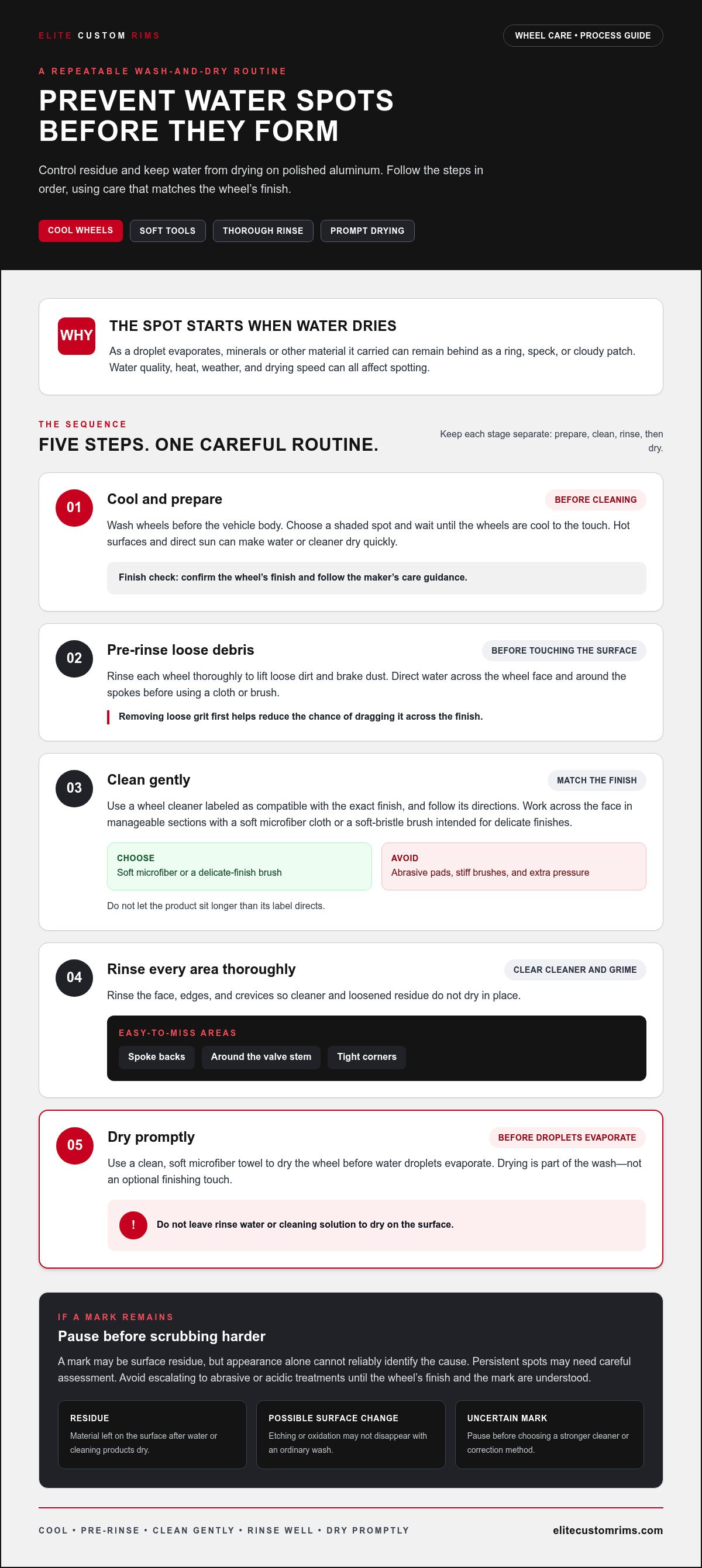
A Repeatable Routine for Preventing Water Spots on Polished Aluminum
A reliable routine makes the finish easier to care for and reduces the chance that rinse water or cleaner will dry on the wheel. Prepare first, clean in a controlled way, and finish each wheel before moving on. This keeps wet surfaces manageable, especially on warm or breezy days.
Set up the wash to control drying
Choose a shaded area and wait until the wheels are cool. Direct sun and hot metal can speed evaporation, leaving less time to rinse and dry properly. Before starting, set out the finish-compatible cleaner, rinse water, soft cleaning tools, and clean wheel-only drying towels. Having everything close at hand helps prevent a freshly rinsed wheel from sitting unattended.
Work on one wheel at a time, or only as many as you can fully rinse and dry without rushing. If you wash every wheel before drying any of them, droplets on the first wheel may evaporate while you’re still cleaning the last. Keep the routine simple and controlled.
Finish each wheel before moving on
Follow the same sequence on each wheel. Don’t let cleaner sit longer than its directions allow, and make sure the rinse reaches the full face, spoke edges, recesses, and lug areas. Then dry promptly with a clean, soft microfiber towel. Inspect in good light and catch any remaining droplets before they evaporate.
Use this checklist after each wheel wash:
- Prepare: Move into shade, let the wheels cool, and gather compatible cleaner, soft tools, rinse water, and clean towels.
- Rinse: Wash away loose soil before cleaning, so grit is less likely to be dragged across the finish.
- Clean: Work gently over one wheel with a product suited to its finish.
- Rinse thoroughly: Clear away cleaner and loosened grime from the face, edges, and recessed areas.
- Dry and inspect: Use a dedicated microfiber towel, check for trapped droplets, and finish the wheel before moving on.
Easy reminder: Cool wheel, shade, gentle clean, complete rinse, immediate dry, quick inspection. No special equipment is required; consistency and timing do the important work.
If you spot a bead of water during your final inspection, blot or gently wipe it with a clean section of the towel. Check around spoke junctions and lug openings, where water can linger out of sight. If the towel becomes damp or picks up grime, switch to a clean one rather than spreading residue across the surface.
That repeatable sequence is the practical core of preventing water spots on polished aluminum wheels. For a different look on your vehicle, explore vehicle-specific wheel options.
What to Do If Water Spots Are Already on Polished Aluminum
Don’t start by scrubbing harder. First, wash the wheel gently using a cleaner and soft tool suited to its specific finish, then rinse and dry it fully. This clears ordinary surface residue and gives you a better view of what remains. A mark that survives cleaning calls for caution, not an automatic escalation to stronger chemicals or more abrasive tools.
How to tell residue from possible finish damage
Loose mineral or product residue may lift during careful cleaning. A mark that remains could involve a change to the surface, but appearance alone can’t confirm etching, oxidation, or coating damage. Lighting, dirt, and the wheel’s finish can all affect what you see. Use the wheel maker’s finish information and care guidance to decide what steps are appropriate.
Pay attention to how the surface responds during cleaning. If it develops haze, changes appearance, or reacts unexpectedly, stop and rinse away the product as directed. Continuing could make a finish problem worse, especially if you’re unsure whether the surface is bare polished aluminum, clear-coated, or another finish.
When to stop rather than scrub harder
If a gentle wash doesn’t remove the mark, pause before trying a spot treatment. Check that any product is labeled for the specific finish and follow its instructions closely. Test it first on a small, inconspicuous area, then inspect for an unwanted change before treating a more visible section. A test spot can help reveal an adverse reaction, but it doesn’t make an incompatible product safe to use.
Avoid abrasive pads, aggressive acids, and unverified home remedies. These may affect the surface differently depending on the wheel’s construction and finish. Don’t assume a method that worked on one aluminum wheel will suit another. If the manufacturer recommends a particular polish or finish-specific correction method, follow that guidance rather than improvising or repeating a treatment with increased pressure.
Use a careful escalation path:
- Wash gently: Remove dirt and possible surface residue with finish-compatible products.
- Inspect when dry: See whether the mark remains after cleaning, without treating its appearance as a diagnosis.
- Check care guidance: Confirm that a proposed treatment matches the wheel finish.
- Test and stop if needed: Try a compatible treatment in an inconspicuous area and stop if the surface hazes or changes.
For preventing water spots on polished aluminum wheels, consistent washing and prompt drying are safer bets than aggressive correction after marks appear. If careful cleaning doesn’t resolve a stubborn spot, protect the finish by avoiding further experimentation. If you’re considering a replacement instead, browse vehicle-specific wheel options for your vehicle.
Make Your Next Wheel Wash Count
Let each wash reinforce a simple habit: protect the finish through care, not force. Pay attention to the conditions around your wash, and notice whether marks tend to appear after rain, a particular rinse, or a delay before drying. That observation can help you adjust your routine without jumping to harsher products or treatments.
Consistent care is the practical foundation of preventing water spots on polished aluminum wheels. If a mark persists despite gentle cleaning, pause and use the wheel maker’s finish guidance before attempting correction. Protecting the surface now can help preserve the crisp look you chose.
If a new set is your next step, browse vehicle-specific wheel options. Listings provide wheel size, offset, bolt pattern, and compatible vehicle models. For fitment questions, brake-caliper clearance, or other verification, contact a wheel specialist before ordering with your vehicle’s year, make, model, and trim. Call 855-222-1223 or email Info@EliteCustomRims.com. Wheels are sold without tires unless a listing explicitly says otherwise.
Frequently Asked Questions
Can rainwater cause water spots on polished aluminum wheels?
Yes. Rain can leave visible marks as droplets evaporate, especially if they pick up dust or other residue on the way down or from the wheel. The result depends on the water and what’s already on the surface. If you notice droplets after a storm, rinse and dry the wheels gently when practical. Don’t assume a mark is permanent or reach for a strong cleaner before identifying the finish.
Are water spots on polished aluminum permanent?
Not always. Some marks are surface residue and may lift with careful, finish-compatible cleaning. Others can remain if the wheel’s surface or finish has changed. A mark’s shape or color alone can’t confirm what caused it, so avoid treating appearance as a diagnosis. Follow the wheel maker’s care guidance, and stop if cleaning creates haze, discoloration, or another unexpected reaction.
Can I use vinegar to remove water spots from polished aluminum wheels?
Don’t assume vinegar is safe for every polished aluminum wheel. Finishes and coatings vary, and an acidic household treatment may cause an unwanted reaction. Identify the finish and review its care instructions before trying any spot treatment. Choose only a product labeled compatible with that surface, test cautiously where appropriate, and never mix cleaners. If the mark remains, don’t escalate to harsher chemicals or abrasive scrubbing.
Should I wash polished aluminum wheels in direct sunlight?
Shade is usually easier to work in because sunlight and heat can make water and cleaner dry quickly. If the wheels are hot after driving, let them cool before washing. Clean a manageable area at a time, follow the product directions, and allow enough time to finish rinsing and drying without rushing. These choices can lower residue risk, but no routine can promise spots will never appear.
Do touchless car washes prevent water spots on aluminum wheels?
Not necessarily. A touchless wash reduces direct contact with the wheel, but rinse water and drying still affect whether droplets leave residue. Cleaning chemicals may also be unsuitable for a particular finish. Follow the wheel maker’s care guidance, then inspect the wheels after the wash. If droplets remain, gently dry them with a clean microfiber towel rather than letting them evaporate in place.
Why do water spots return after I clean my wheels?
Spots may reappear if rinse water dries on the wheel, cleaning product remains, or droplets collect in recessed areas. Heat and breezy conditions can make it harder to finish before water evaporates. For preventing water spots on polished aluminum wheels, review your routine for missed areas, especially around spokes and lug openings. If a mark remains after careful cleaning, it may be more than removable surface residue.