
Did you know that the "tried and true" wheels from your previous truck are now completely incompatible with the newest generation? It is a hard lesson many owners learn too late. Toyota’s 2022 pivot to a 6x139.7mm bolt pattern changed the landscape for Toyota Tundra wheels, leaving many enthusiasts confused about what actually fits. You want an aggressive, wide-track stance that commands the road. However, you don't want to deal with the nightmare of tires rubbing against your wheel wells or compromising your truck's functionality.
We understand that choosing the right rims is an investment in your vehicle’s value and your own peace of mind. This 2026 guide is designed to give you total confidence in your purchase. You will master the technical specs required for a perfect fitment and discover how to balance aesthetics with real-world performance. We are going to break down the specific offsets that create that flush look, explain the 95mm hub bore requirements for the latest models, and help you choose a setup that stays rub-free. Get ready to transform your Tundra into a high-performance machine with zero guesswork.
Key Takeaways
- Understand the critical shift to the 6x139.7mm bolt pattern for 2022+ models to avoid costly purchasing mistakes.
- Master the math behind wheel offsets to achieve a perfectly flush stance while eliminating the fear of tire rub.
- Identify which premium finishes offer the best protection against road salt and off-road debris for your new Toyota Tundra wheels.
- Navigate fitment requirements for stock, leveled, and lifted trucks to ensure your new setup is both functional and aggressive.
- Learn how specialized, new-only inventory preserves your vehicle’s resale value and ensures towing reliability.
The Evolution of Toyota Tundra Wheels and Performance
The Tundra has come a long way since its debut. Looking back at the History of the Toyota Tundra, you can see a clear trajectory from a simple utility vehicle to a high-tech powerhouse. Today, Toyota Tundra wheels do more than just hold rubber. They are the foundation of your truck’s performance profile. Upgrading your rims is the fastest way to bridge the gap between a standard work truck and a high-end custom rig. It's about transforming the driving experience while maintaining the rugged reliability you expect.
Modern truck culture is moving fast. We see a massive shift toward larger, more aggressive diameters across the board. While older generations often stuck to smaller rims with more sidewall, today's owners favor 20 and 22-inch setups that fill out the wheel wells perfectly. But style is only half the story. If you tow or haul, load ratings are your top priority. You need wheels that match the Tundra's massive towing capacity to ensure safety on the highway. Never sacrifice structural integrity for a specific look. Our curated inventory focuses on new alloys that meet strict weight requirements for heavy-duty use.
Impact of Wheel Weight on Truck Handling
Weight matters more than most owners realize. Choosing premium aluminum alloys over heavy steel wheels transforms how your truck feels on the road. Lighter wheels reduce the energy needed to get your truck moving. You'll notice sharper acceleration and more responsive braking immediately. Unsprung weight refers to the mass of components not supported by the vehicle's springs; reducing this weight significantly increases the longevity of your Tundra's suspension components. It is a smart investment that pays off in both performance and reduced wear and tear.
From Workhorse to Luxury Cruiser Aesthetics
The visual impact of a wheel upgrade is immediate. Swapping basic 18-inch stock rims for 20 or 22-inch options changes the entire silhouette of the truck. The Tundra features bold, muscular body lines that demand a wheel with presence. The right design complements these features, turning a standard pickup into a head-turning luxury cruiser. For those seeking the ultimate in high-end style, check out our guide on custom wheels to see how luxury fitment can redefine your vehicle. It's about achieving a cohesive, premium look that reflects your personal style.
Critical Technical Specs: Bolt Patterns and Offsets
Don't make the mistake of assuming your old gear will work on a new rig. The 2022 model year marked a massive engineering shift for the Tundra. If you try to reuse wheels from a 2021 or older model, you'll find they simply won't bolt up. This isn't just about style; it's a fundamental change in the truck's architecture. Understanding these technical requirements is the only way to ensure your Toyota Tundra wheels arrive ready for a perfect installation.
One critical detail often overlooked is the difference between hub-centric and lug-centric wheels. Toyota trucks are designed to be hub-centric. This means the wheel's center bore fits precisely over the 95mm hub of the truck. The hub carries the weight of the vehicle, not the lug studs. Choosing a hub-centric design ensures a vibration-free ride and prevents unnecessary stress on your hardware. It's a small technical detail that makes a world of difference at highway speeds.
Before you finalize your order, verify these specific lug requirements for your truck:
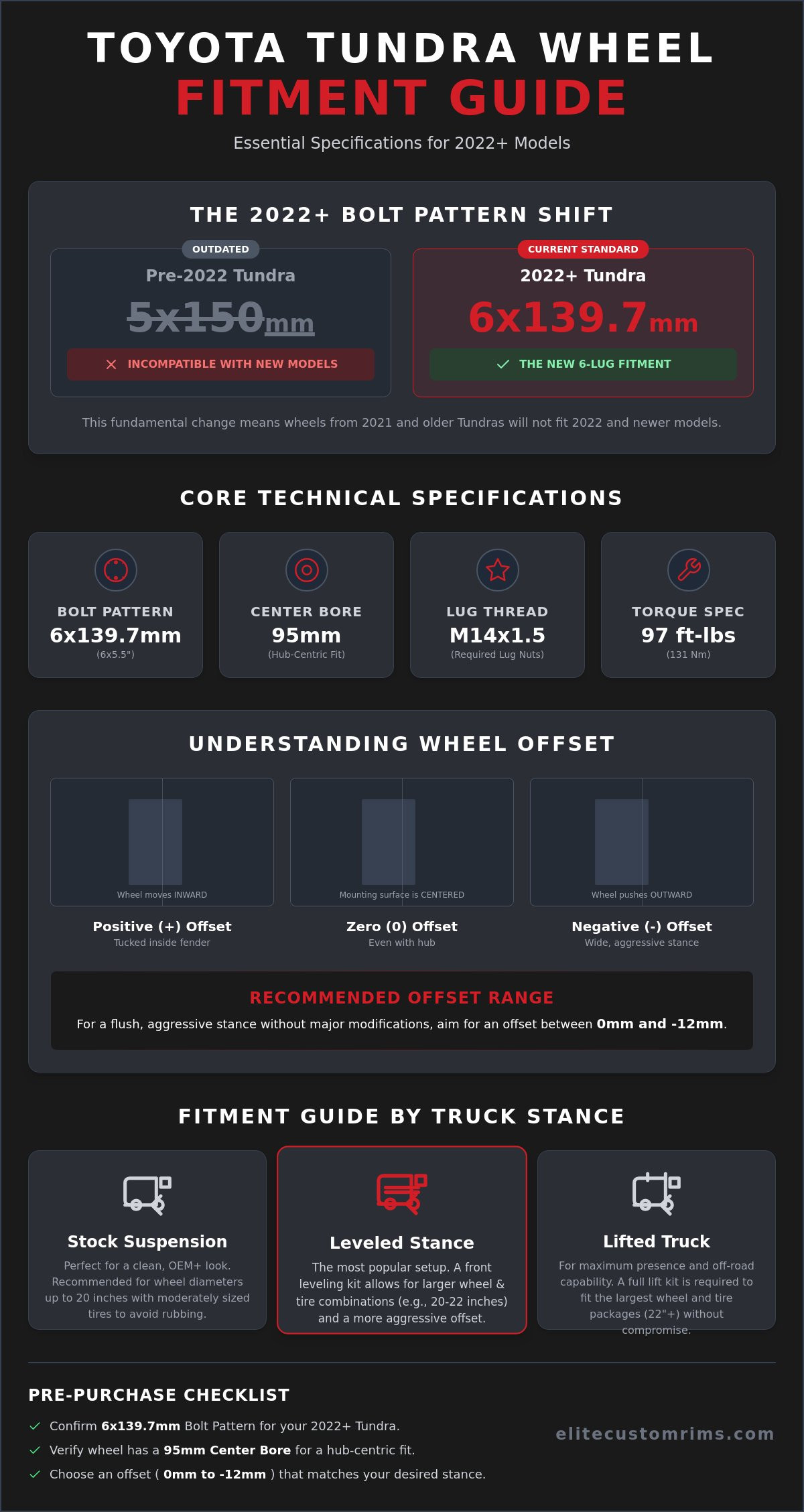
- Bolt Pattern: 6x139.7mm (also known as 6x5.5 inches).
- Thread Pitch: M14x1.5 lug nuts are required.
- Torque Spec: Always tighten to 131 Newton-meters (97 foot-pounds).
- Center Bore: 95mm for a true hub-centric fit.
The 2022+ Shift: Understanding the 6-Lug Pattern
Toyota transitioned from the traditional 5x150mm pattern to the more universal 6x139.7mm bolt pattern. This move aligns the Tundra with the Tacoma and other global Toyota platforms. It's a win for owners because it increases structural integrity and opens up a much larger catalog of aftermarket wheel options. You now have access to the most popular truck fitments in the industry without needing adapters or custom drilling. It makes finding a style you love much easier than it was for previous generations.
Calculating the Perfect Offset to Avoid Rubbing
Offset determines where the wheel sits relative to the fender. A positive offset moves the wheel inward, while a negative offset pushes it outward for a wider stance. For most Tundras, a 0 to -12 offset provides a clean, aggressive look without heavy modification. However, if you go too deep into negative territory, you risk the tires hitting the brake calipers or suspension arms. If you're unsure which spec fits your specific build, browse our curated selection of Toyota wheels to see confirmed fitments that eliminate the guesswork.
Selecting the Right Style and Finish for Your Tundra
Style is subjective, but quality is not. Your choice in Toyota Tundra wheels dictates whether your truck looks like a rugged weekend warrior or a refined executive cruiser. It's about more than just picking a color. You must choose a finish that complements your specific trim level and survives your local environment. A Platinum or 1794 Edition demands a different visual weight than a base SR5. We focus on providing high-end aesthetics that remain grounded in practical reliability.
Think about your daily terrain. If you're battling winter road salt or navigating rocky trails, your rims need a coating that can take a beating. Satin Black, Anthracite, and Machined finishes all offer distinct personalities. Satin Black projects a "no-nonsense" attitude. Anthracite provides a sophisticated, technical look. Chrome or high-polish options lean into the Tundra’s luxury potential. Matching the wheel color to your truck’s trim ensures a cohesive, professional build that looks intentional rather than pieced together.
TRD-Inspired Designs vs. Modern Custom Rims
The classic 6-spoke TRD design is a staple for a reason. It offers a "factory-plus" appearance that feels integrated with the Toyota DNA. It's the safe, stylish choice for those who want an upgraded look without going too far off the rails. On the other hand, modern multi-spoke aftermarket designs offer a more aggressive, custom edge. These styles work exceptionally well on the TRD Pro, emphasizing its off-road pedigree. If you're tracking the latest industry shifts, you'll see similar patterns in Chevy Silverado wheels, where intricate, technical spoke patterns are currently dominating the market.
Black Rims vs. Machined Finishes: Durability and Aesthetics
Maintenance requirements vary wildly between finishes. Matte black rims are fantastic for hiding brake dust, but they can be sensitive to certain harsh chemicals. High-gloss finishes are easier to wipe clean but show every swirl mark if handled poorly. The "machined face" look is a perfect middle ground. It adds a premium touch by exposing the raw aluminum under a clear coat, creating a two-tone effect that highlights the wheel's geometry. Always protect your rim finish from environmental hazards by using a dedicated wheel sealant. This prevents brake dust from pitting the surface and keeps your Tundra looking like a showroom centerpiece for years to come.
Fitment Guide: Stock, Leveled, and Lifted Tundras
Achieving the perfect stance is a precise science. Your suspension height dictates exactly how much room you have to play with before you encounter the dreaded sound of rubber hitting the fender liner. While the 2022+ models offer generous wheel wells, choosing the wrong Toyota Tundra wheels can quickly lead to clearance issues. You need a roadmap that balances aggressive looks with daily drivability. Whether you're staying at factory height or going for a full 6-inch lift, the relationship between wheel width and offset is the key to a rub-free experience.
Leveling kits are the most popular modification for a reason. By raising the front 2 to 3 inches, you eliminate the factory rake and open up possibilities for wider wheel and tire combinations. This setup easily accommodates 33-inch tires, and with the right offset, many owners successfully run 35-inch tires. However, clearance becomes a major factor here. If you choose an offset of -18 or lower, you will likely need to trim the fender liners or modify the body mount. Precision is everything when you're pushing the limits of your wheel wells. Find your perfect fitment by browsing our verified inventory of truck-specific setups.
Don't forget about your speedometer. When you increase the overall diameter of your wheel and tire package, your truck's computer still thinks you're running stock sizes. A jump from a 32-inch stock tire to a 35-inch tire will cause your speedometer to read slower than your actual speed. It's a simple fix with a calibration tool, but it's a necessary step to keep your safety systems and odometer accurate. Toyota Tundra wheels perform best when the entire vehicle system is in sync.
Optimal Wheel Sizes for Stock Tundra Suspensions
If you aren't ready to touch your suspension, stick to the "no-hassle" fitment. The largest tire you can safely run on a stock 2022+ Tundra is generally a 33-inch diameter. For daily drivers, 18-inch and 20-inch wheels are the sweet spot. They provide a great balance of aesthetic appeal and enough sidewall to maintain a comfortable ride. To ensure zero rubbing on a stock setup, look for an offset range between 0 and +25. This keeps the wheel tucked slightly inside or flush with the fender, avoiding contact with the suspension components during full-lock turns.
Upgrading to 20-Inch and 22-Inch Rims
Larger diameters are the go-to choice for street-focused builds and luxury trims like the Capstone. Moving to 20 or 22-inch rims provides a sharp, modern look that fills the wheel arches with metal rather than rubber. This "big wheel, big tire" aesthetic often requires at least a leveling kit to look proportional. While these sizes excel on the pavement, they require more attention to detail regarding load ratings and tire pressure. You can see how these high-end fitment principles apply to other premium vehicles in our guide to mercedes s-class wheels, where precision and style are equally paramount.
Why Professional Fitment at Elite Custom Rims is Essential
Investing in Toyota Tundra wheels is a significant decision that impacts your truck’s safety, performance, and resale value. You don't want to leave your fitment to chance. The transition to the 2022+ platform introduced complexities that many general retailers overlook. We take a different approach. Our commitment to "no-guesswork" fitment means we don't just sell you a part; we provide a guaranteed solution tailored to your specific build. By focusing exclusively on new-only inventory, we ensure that every rim meets the highest standards of structural integrity and aesthetic perfection. You deserve the peace of mind that comes with knowing your wheels are built for the long haul.
Our authoritative specialists act as your partner throughout the entire process. We understand that a Tundra is more than a commuter vehicle; it is a tool for towing, hauling, and exploring. That is why we prioritize technical accuracy over a quick sale. Whether you are navigating the new bolt patterns or trying to calculate the perfect offset for a leveled stance, our team provides the professional assurance you need to buy with confidence. We eliminate the technical anxiety that often accompanies aftermarket upgrades.
Curated Selection for Precise Tundra Compatibility
We don't believe in "universal" solutions for heavy-duty trucks. Our team meticulously filters our inventory to ensure every option matches the rigorous load ratings required for Tundra ownership. We focus on high-quality alloys that can withstand the stress of heavy towing and off-road debris without compromising on style. This curated approach means you won't have to worry about whether a wheel can handle your payload. We invite you to explore the latest styles and finishes in our full Toyota wheel collection to find the perfect match for your trim level.
Fast National Shipping and Expert Support
Shipping a set of large truck wheels requires specialized logistics. We have perfected a national delivery network that ensures your order arrives quickly and in pristine condition. Every wheel is inspected and securely packaged to prevent damage during transit. More importantly, our team performs a final fitment verification before any order leaves our warehouse. We double-check your truck’s specifications against our data to catch potential issues before they reach your driveway. If you have questions about a specific offset or finish, reach out to us today. Contact our specialists for a personalized fitment consultation and take the first step toward a rub-free, aggressive stance for your Tundra.
Dominate the Road with the Perfect Tundra Setup
Your truck is a powerful investment in both utility and personal style. Mastering the 2022+ technical shift ensures your build remains functional, safe, and aggressive. You now have the knowledge to navigate the 6x139.7mm bolt pattern and choose offsets that eliminate the headache of tire rub. Selecting the right Toyota Tundra wheels means matching Toyota's legendary towing capacity with high-performance alloys that are built for the long haul. It is about achieving a cohesive, premium look that reflects your personal standards.
Don't leave your vehicle's transformation to chance or generic retailers. We provide precision fitment guaranteed and maintain a strict focus on brand new inventory only. Our team offers expert national support to guide you through every technical specification, from hub bore requirements to load ratings. It's time to turn your vision into a reality with a stance that commands respect on any terrain. Upgrade Your Tundra: Shop Our Curated Wheel Collection Now. Your perfect build is just a click away; let's get your truck the performance it deserves.
Frequently Asked Questions
What is the bolt pattern for a 2026 Toyota Tundra?
The bolt pattern for a 2026 Toyota Tundra is 6x139.7mm, which is also commonly known as the 6x5.5 inch pattern. This six-lug configuration is the standard for all third-generation Tundras. It represents a major shift from the five-lug design used on older models. When you are browsing for new Toyota Tundra wheels, verifying this specific pattern is the first step to ensuring a flawless installation on your vehicle.
Will 18-inch wheels fit a Tundra with the TRD Off-Road package?
Yes, 18-inch wheels are a perfect fit for a Tundra equipped with the TRD Off-Road package. Many enthusiasts prefer this size because it allows for a larger tire sidewall, which provides better cushion and traction during off-road use. You just need to ensure the specific wheel design offers enough clearance for the brake calipers. Most high-quality 18-inch alloys are engineered to clear these components without any technical issues.
Can I put 2021 Tundra wheels on a 2022 or newer model?
No, you cannot install 2021 Tundra wheels on a 2022 or newer model. The 2021 and older generations used a 5x150mm bolt pattern, while the current generation utilizes a 6x139.7mm pattern. Since the number of lugs and the spacing have completely changed, the wheels are not interchangeable. You'll need to select rims designed for the six-lug architecture to maintain the safety and structural integrity of your truck.
What is the best offset for a Tundra with a 2-inch leveling kit?
The best offset for a Tundra with a 2-inch leveling kit usually falls between +25mm and 0mm. An offset in this range pushes the wheel slightly outward, creating a more aggressive, flush look with the fenders. If you plan on running 33-inch tires, a +18mm offset is often the sweet spot for a clean fit. Going into negative offset territory may require you to trim the inner fender liners to prevent rubbing.
Do I need hub-centric rings for my aftermarket Tundra wheels?
You only need hub-centric rings if the center bore of your aftermarket Toyota Tundra wheels is larger than the truck's 95mm hub. Toyota builds the Tundra with a hub-centric design, meaning the hub carries the vehicle's weight. If your new rims have a larger 106mm or 110mm bore, a hub-centric ring fills that gap. This ensures the wheel stays perfectly centered, which eliminates high-speed vibrations and reduces stress on your lug studs.
Are 22-inch wheels practical for a Toyota Tundra that tows regularly?
Yes, 22-inch wheels are practical for towing as long as they meet the required load ratings for your specific Tundra trim. The Capstone edition actually comes from the factory with 22-inch rims, proving they can handle heavy-duty tasks. You'll have a shorter tire sidewall, which can result in a firmer ride, but high-quality alloys provide the structural strength needed for hauling trailers. Always verify the wheel's weight capacity before you start towing.
How do I maintain the finish on my black Tundra rims?
Maintaining black rims requires using pH-neutral wheel cleaners and avoiding harsh chemicals or acidic sprays. These aggressive cleaners can dull the finish or cause spotting over time. Use a soft microfiber mitt to wash away brake dust and road grime. Applying a high-quality wheel sealant or ceramic coating every few months creates a protective layer. This simple step makes future cleaning much easier and keeps your rims looking showroom-fresh.
Does changing my wheel size affect the Toyota Safety Sense features?
Changing your wheel size can affect Toyota Safety Sense features if the overall tire diameter is significantly larger or smaller than the factory setup. These systems rely on accurate speed and ride height data to function correctly. If your new Toyota Tundra wheels and tires change the truck's height or speedometer reading by more than 3%, the sensors might need recalibration. Keeping your total diameter close to stock ensures your safety tech remains reliable.