
The wheel finishes that are hardest to keep clean aren’t all difficult for the same reason. Chrome and gloss black can quickly reveal dust, water spots, and fingerprints, while matte finishes may hide everyday grime but leave less room for the wrong cleaning method. A finish that looks low-maintenance at a glance may still need careful care.
If brake dust and road grime seem to spoil your wheels soon after you’ve cleaned them, you’re not alone. The key is to consider both what a finish shows and what its surface can safely tolerate. That makes finish names alone a poor guide to upkeep.
This guide compares chrome, polished aluminum, matte and textured finishes, and gloss black. You’ll learn why each may demand extra attention, which marks tend to show, and how their care needs differ. Before choosing a look, consider your driving conditions and cleaning routine, then check the wheel manufacturer’s guidance for the specific finish you’re considering.
Key Takeaways
- The wheel finishes that are hardest to keep clean vary in what they reveal and how carefully they must be cleaned.
- Compare finishes by visible dust, water marks, and cleaning sensitivity to find the trade-offs that matter to you.
- A simple wash routine can help maintain wheel surfaces, but check the wheel or finish maker’s care instructions before choosing a cleaner.
- Consider your driving conditions, parking, and willingness to wash regularly before settling on a finish.
- Use the comparison to narrow your preferences, then verify the finish available for the vehicle-specific wheels you’re considering.
Why some wheel finishes are harder to keep clean than others
A wheel can look dirty for two different reasons: its finish may make grime easy to see, or its surface may need extra care during cleaning. Those aren’t the same problem. A glossy wheel can reveal every water mark, while a textured finish may disguise dust but make residue harder to reach or require gentler cleaning.
A wheel finish is its visible surface appearance and the coating or other protective treatment applied to the wheel. That surface sits over the wheel’s underlying material. For background on common materials and how alloy wheels are made, see Alloy wheels.
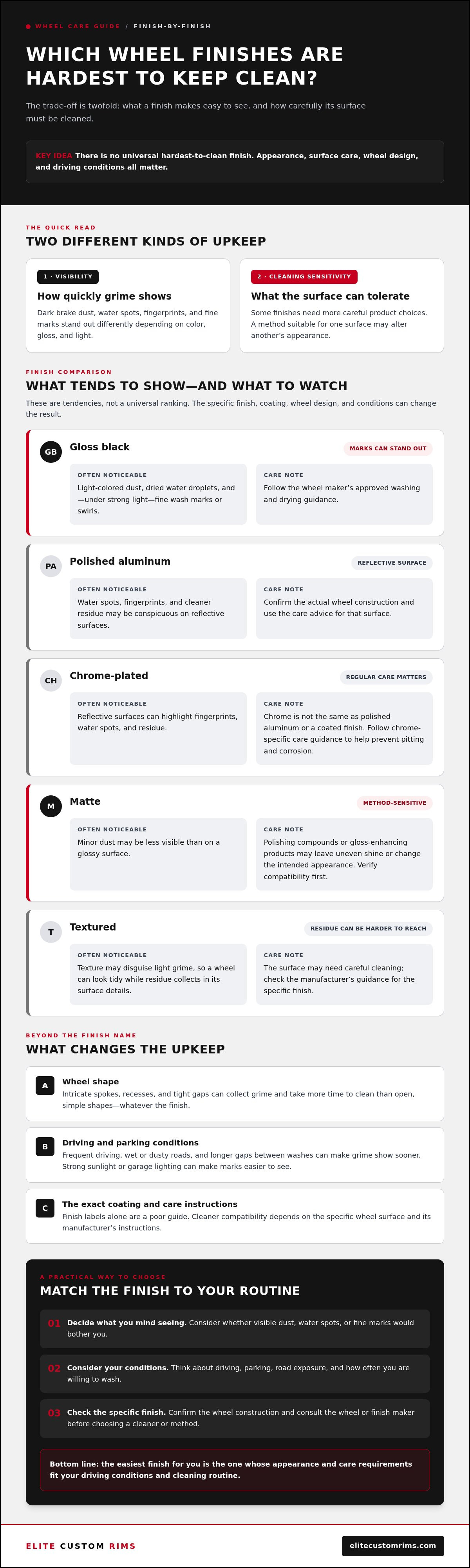
Several factors shape day-to-day upkeep. Color contrast affects how clearly dark brake dust stands out. Gloss can reflect light and draw attention to spots, fingerprints, or fine marks. Texture may disguise light grime, but can make residue harder to remove. Wheel design matters too: intricate spokes and narrow gaps can take more time to clean than open, simple shapes, whatever the finish.
Quotable takeaway: No single finish is hardest to keep clean for every driver; the answer depends on what it shows, what its surface tolerates, and the conditions it faces.
What makes brake dust and road grime stand out?
Brake dust is often dark, so it can contrast strongly against light or reflective surfaces. On shiny finishes, water spots and fingerprints may also catch the light. Glossy dark surfaces can reveal fine marks and dust against their smooth, reflective appearance. A wheel’s shape adds another factor: grime can collect around spokes, recesses, and tight details, where it may be harder to spot until it builds up.
What owners notice depends on use. Frequent driving, wet or dusty roads, and longer gaps between washes can change how quickly grime becomes visible. The same finish may look tidy after a short commute and noticeably dirty after harsher conditions.
Does showing dirt mean a finish is harder to clean?
No. Visual cleanliness describes how readily a wheel reveals dirt; cleaning difficulty is about the effort and risk involved in removing it. A finish that hides dust might still need careful handling, while a surface that looks dirty quickly may clean up readily with a compatible product and gentle technique.
Coatings and care instructions matter. Cleaners and methods suitable for one surface may be unsuitable for another, so check the wheel or finish maker’s guidance before washing. Treat finish comparisons as tendencies, not guarantees. The best choice depends on the specific surface, wheel design, driving conditions, and upkeep routine.
Which wheel finishes are hardest to keep clean in everyday use?
In daily use, gloss black, polished or chrome-like surfaces, and matte finishes can each demand extra attention, but for different reasons. Some make dust and marks easy to spot. Others require more careful product choices to avoid changing the surface’s appearance. The wheel’s construction and spoke layout can add to the work.
Why gloss black wheels can look dusty quickly
Gloss black creates a sharp, reflective look, but that same finish can make light-colored dust and dried water droplets stand out. Under strong sunlight or garage lighting, fine wash marks and swirls may also be easier to see. This doesn’t mean every black wheel will show marks equally; the coating, design, and conditions all matter. Check the wheel maker’s approved washing and drying guidance before cleaning.
Why polished, chrome, and matte finishes need different care
Polished and chrome-like surfaces reflect light, so fingerprints, cleaner residue, and water spots can be conspicuous. Chrome-plated wheels are not the same as polished aluminum or a coated finish, even if they look similarly bright. Confirm the wheel’s actual construction and follow care advice for that surface. This guide to wheel finishes outlines common finish types and notes that chrome needs regular care to help prevent pitting and corrosion.
Matte finishes create a different challenge. They can disguise minor dust, but ordinary polishing compounds or gloss-enhancing products may leave an uneven shine or alter the intended appearance. Don’t assume a product safe for glossy wheels is suitable for matte surfaces. Verify compatibility with the wheel or finish maker.
Common tendency: Gloss black often reveals dust and fine marks; polished or chrome-like finishes can highlight spots and residue; matte finishes may be less forgiving of the wrong cleaning method. These are tendencies, not a universal ranking.
Regardless of finish, intricate spokes and recessed areas take extra time because grime can collect in tight spaces. If you’re weighing appearance against upkeep, explore vehicle-specific wheel options and confirm the finish and care requirements for each wheel you’re considering.
Wheel finish comparison: visibility, cleaning effort, and care trade-offs
Use this comparison as a starting point, not a promise about every wheel. “Visible dust” describes how readily typical brake dust may stand out; “water marks” reflects how noticeable dried droplets can be; “cleaning sensitivity” indicates how carefully you may need to choose products and methods. Actual results vary with the wheel’s coating, condition, lighting, road grime, and care instructions.
| Finish | Visible dust | Water marks | Cleaning sensitivity |
|---|---|---|---|
| Gloss black | High | High | Moderate |
| Matte | Low to moderate | Moderate | High |
| Polished | Moderate to high | High | Moderate to high |
| Chrome-like | Moderate to high | High | High |
| Machined-face | Moderate | Moderate to high | Moderate to high |
These qualitative ratings describe common tendencies, not laboratory results or universal outcomes. Dark brake dust may contrast strongly against a bright polished or chrome-like surface, while light-colored dust can be easier to spot on a dark wheel. Reflectivity is a separate factor: glossy and metallic faces can catch light and make dried droplets or residue more noticeable. Lighting, road conditions, brake-dust color, and how often you wash the wheels can all change the comparison.
Which surfaces need the most care during cleaning?
Cleaning sensitivity depends on the surface treatment, not just its color or shine. Matte finishes may be altered by polishing or gloss-enhancing products. Polished, chrome-like, and machined-face wheels can also have different constructions and protective coatings, so don’t assume one cleaner is safe for all of them. Check the wheel maker’s instructions before choosing products or tools.
Design matters just as much. Dense spokes, narrow gaps, and recessed details give grime more places to collect and can take longer to reach than an open-spoke layout. A damaged or worn surface may also need more cautious care than one in good condition. Explore this custom wheel fitment reference as you consider how design choices affect your priorities. Among the wheel finishes that are hardest to keep clean, the toughest option for you depends on both how readily it shows dirt and the care its specific surface requires.
How to clean high-maintenance wheel finishes without damaging them
Careful cleaning starts before the brush touches the wheel. Heat, loose grit, and an incompatible cleaner can all increase the risk of marks or finish damage. Since wheel coatings and surface treatments vary, follow the wheel or finish maker’s instructions first.
Compatibility check: A wheel cleaner is only a suitable choice when its instructions match the specific wheel finish and construction.
A careful wash routine for wheels that show marks easily
Use this sequence as a general starting point, and adjust it to the manufacturer’s guidance:
- Let the wheels cool. Avoid applying cleaner to hot surfaces.
- Rinse away loose grit. A thorough rinse helps remove particles before contact cleaning.
- Apply an approved cleaner. Check the label and wheel maker’s instructions for compatibility, and follow the stated use directions.
- Clean gently. Use a clean, soft brush or microfiber tool only if it’s suitable for that finish. Work carefully around spokes and recessed areas.
- Rinse thoroughly and dry. Remove cleaner residue, then use a clean, non-abrasive cloth to help reduce water spotting.
Keep tools clean as you work. Grit caught in a brush or cloth can scratch a surface, even if the tool itself feels soft.
Cleaning mistakes that can dull or mark a wheel finish
Don’t scrub dry brake dust. Particles on the surface can drag across it and leave fine marks. Rinse first, then use gentle contact cleaning. Avoid abrasive pads, harsh chemicals, and automatic polishing unless the wheel maker explicitly approves them for that finish.
Be especially cautious with matte and coated surfaces. Metal polish or wax may change their appearance, add unwanted gloss, or leave uneven residue. A product that works on one wheel may not suit another because coatings and wheel construction differ. General advice can’t replace the specific care instructions for your wheels.
The wheel finishes that are hardest to keep clean may need different products and techniques, so check compatibility before you start rather than relying on appearance alone. If you’re comparing wheel options, explore vehicle-specific wheels and verify the care guidance for the finish you’re considering.
Choose a wheel finish that fits your driving and cleaning routine
The right finish should suit more than your vehicle’s look. Think about how often you drive, the roads you use, where you park, and how much time you want to spend keeping the wheels presentable. Regular commuting, dusty roads, or frequent exposure to road grime can make visible marks more noticeable. Covered parking and less frequent driving may change what you notice, but no finish stays clean on appearance alone.
A dramatic reflective or dark look can make a strong visual statement, but it may also mean more frequent cleaning or closer attention to product compatibility. Before you decide, check the wheel specifications and care instructions. Finish names don’t always explain the surface treatment or its cleaning needs.
A quick decision framework for busy drivers
Use these questions to narrow your priorities:
- How often is the vehicle on the road? For frequent commuting or harsh road conditions, prioritize a finish whose upkeep feels manageable for your routine.
- How much do visible marks bother you? Consider how dark dust, water spots, and fingerprints may appear against the color and reflectivity you prefer.
- How much cleaning time can you spare? Compare the finish’s care requirements with the wheel design. Intricate spokes and recessed details can add cleaning time, regardless of color.
There’s no universal winner among the wheel finishes that are hardest to keep clean. Choose the look you enjoy, then make sure its care demands match your habits. If you’re considering a Tesla Model Y, this Tesla Model Y wheel guide offers a vehicle-specific style reference.
Explore wheels by vehicle before choosing a finish
Confirm vehicle fitment first, then compare the finishes shown on the product pages. Elite Custom Rims lists wheel options for Audi, Chevy and GMC, Mercedes, Porsche, Tesla, Land Rover, Toyota, Cadillac Escalade, and Rolls Royce. Finish availability can vary, so check each listing and its care guidance before choosing.
Browse the wheel options for your vehicle and weigh the style against your preferred upkeep routine. Check the product details before deciding so the finish and fitment suit your needs.
Choose a look you’ll enjoy maintaining
The wheel finishes that are hardest to keep clean aren’t difficult for one universal reason. Glossy and reflective surfaces can make dust, water spots, and fingerprints stand out, while matte finishes may require more careful product choices. Wheel design matters too: intricate spokes and recessed details can add cleaning time regardless of finish.
Choose with both appearance and upkeep in mind. Consider your driving conditions, how often you’re willing to wash, and the manufacturer’s care guidance. Before buying, check wheel specifications and confirm fitment for your vehicle. Finish names alone don’t tell the whole story, so verify the specific finish and its care requirements on the product page.
Elite Custom Rims offers dedicated wheel options for Audi, Chevy and GMC, Mercedes, Porsche, Tesla, Land Rover, Toyota, Cadillac Escalade, and Rolls Royce vehicles. Explore the selections for your vehicle and compare the available product details before deciding.
Explore wheels for your vehicle and compare the fitment and finish details before choosing a style that suits your upkeep routine.
Frequently Asked Questions
Which wheel finish is hardest to keep clean?
There isn’t one finish that’s hardest for every driver. Gloss black often makes dust, water spots, and fine wash marks easy to see, while polished or chrome-like surfaces can reveal fingerprints and residue. Matte finishes may disguise some grime but can be more sensitive to unsuitable cleaners or polishing. The wheel finishes that are hardest to keep clean depend on the specific coating, driving conditions, wheel design, and care routine.
Are black wheels harder to keep clean than silver wheels?
Black wheels can look dirty sooner because dust and dried water spots may contrast strongly with the dark surface, especially on gloss finishes. Silver wheels may make dark brake dust or residue more noticeable instead. Neither color is automatically easier to maintain: reflectivity, coating, lighting, road conditions, and spoke design all affect what you see. Compare the finish’s care instructions and how readily it shows marks before choosing.
Are matte wheels difficult to clean?
Matte wheels can be cleaned safely, but they may need more careful product selection. Polishes, waxes, or gloss-enhancing products can change the appearance or leave uneven patches if they aren’t approved for the surface. Rinse away loose grit first, use only a compatible cleaner, and clean gently. Check the wheel maker’s instructions for the exact finish, since matte surfaces and protective treatments can differ.
Do chrome wheels show water spots and fingerprints?
Yes, water spots and fingerprints can stand out on chrome because its reflective surface catches light. Brake dust and residue may also be noticeable, particularly before cleaning. Care requirements depend on the wheel’s construction and condition, so confirm whether the surface is chrome-plated or another polished or coated finish. Follow the maker’s cleaning guidance and use only products approved for that specific surface.
How often should I clean wheels that show brake dust?
Clean them when dust and grime begin to build up, and adjust the interval to how often you drive and the roads you use. Frequent driving, wet or dusty conditions, and longer gaps between washes can make residue more noticeable. Don’t wait until heavy buildup requires forceful scrubbing. Rinse loose dirt before contact cleaning, and follow the wheel maker’s care guidance to protect the finish.
Can I use the same wheel cleaner on matte and polished wheels?
Not necessarily. A cleaner suitable for one finish may be unsuitable for another because coatings and surface treatments vary. Matte wheels may be marked or altered by products that polish or add gloss, while polished surfaces may have their own care limitations. Check both the cleaner label and the wheel or finish maker’s instructions before use. If compatibility isn’t clear, don’t assume the product is safe.
Are intricate wheel designs harder to keep clean?
Often, yes. Dense spokes, narrow openings, and recessed details give brake dust and road grime more places to collect, and they can take longer to reach during washing. The finish still matters, but design can add cleaning effort regardless of color or surface. Rinse thoroughly and use a clean, suitable soft brush or microfiber tool only if the wheel maker’s care instructions allow it.