
The boldest-looking wheel isn’t always the one that makes the strongest impression. The right wheels that make a statement without being too flashy sharpen your vehicle’s character while staying true to its design. A considered finish, clean spoke pattern, and balanced proportions can do more than bright chrome or an oversized look.
It’s understandable to hesitate before choosing aftermarket wheels. A finish that looks subtle on one vehicle may feel bold on another, and style alone can’t confirm fitment. The goal is a distinctive upgrade that complements your vehicle rather than overwhelming it.
This guide compares understated options, from gunmetal and satin bronze to brushed finishes, as well as multi-spoke, split-spoke, and mesh designs. It explains how diameter and proportions affect the look, and which details to check before choosing: your vehicle’s year and trim, plus the wheel specifications required for fitment. With the right combination, a small change can feel deliberate, polished, and unmistakably yours.
Key Takeaways
- Wheels that make a statement without being too flashy rely on thoughtful design, not overpowering contrast.
- Compare how finish and spoke density affect a wheel’s visual weight before settling on a style.
- Match the design to your vehicle’s character so the upgrade feels distinctive and cohesive.
- Check vehicle-specific fitment details, including bolt pattern, offset, diameter, and width, before choosing wheels.
- Use a clear selection order to narrow your options, then confirm the exact vehicle application and current product details.
How to Choose Wheels That Make a Statement Without Being Too Flashy
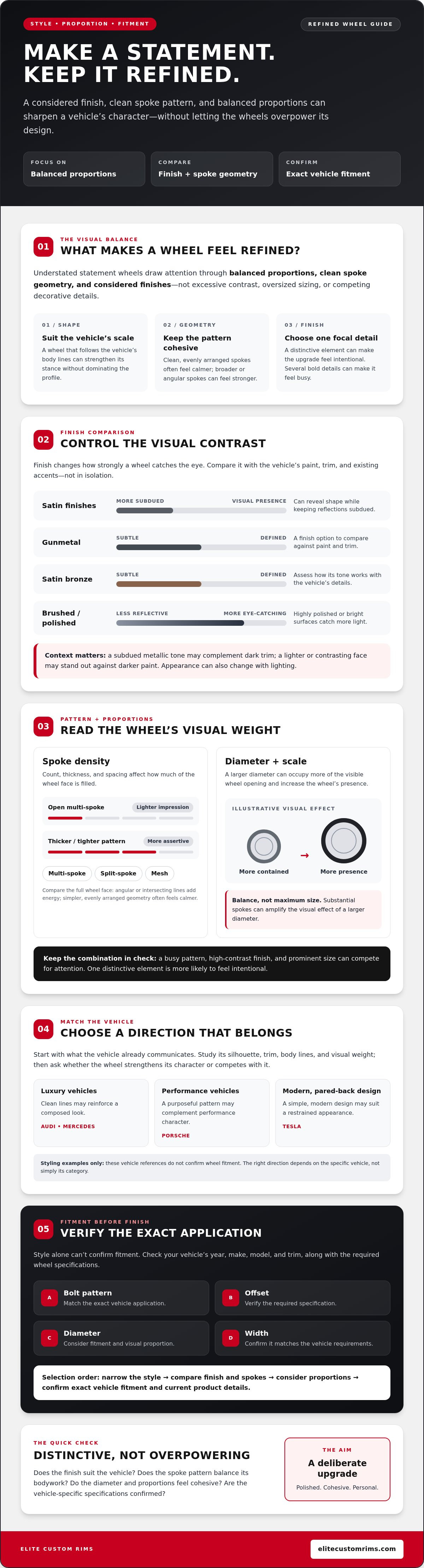
Understated statement wheels draw attention through balanced proportions, clean spoke geometry, and considered finishes rather than excessive contrast, oversized sizing, or ornament. They add a point of difference while keeping the vehicle’s design in focus. The right choice feels integrated, not added for attention alone.
How can wheels stand out while keeping a refined look?
Start with proportion. A wheel that suits the vehicle’s scale and body lines can give it a stronger stance without making the wheel the only thing people notice. A dramatic size change or complex design can dominate the profile, especially when several bold details compete at once.
Next, consider spoke geometry. Slim, evenly spaced spokes can look precise and open. Broader or more angular spokes often feel stronger and more performance-focused. Neither is automatically too bold. The key is whether the pattern suits the vehicle and balances its bodywork.
Finish brings the design together. A restrained metallic or satin appearance can reveal spoke contours without the high contrast of a highly reflective surface. Usually, one distinctive detail is enough. Pairing a complex spoke pattern with a strong finish and prominent decorative details can make the overall look feel busy. Alloy wheels come in a range of shapes and designs, giving drivers options to personalize a vehicle while keeping the styling controlled.
Which vehicles suit an understated wheel upgrade?
Restrained styling can suit luxury, performance, and utility vehicles. The right direction depends on what the vehicle already communicates, not simply on its category. Clean lines may reinforce the composed look of an Audi or Mercedes, while a purposeful pattern can complement a Porsche’s performance character. A simple, modern design may also suit a Tesla’s pared-back appearance.
These are styling examples, not proof of fitment. Study the vehicle’s silhouette, trim, and visual weight. A sharply creased body may pair well with defined spokes, while softer lines can work with a smoother, less intricate pattern. Ask whether the wheel strengthens the vehicle’s character or competes with it. That distinction helps separate wheels that make a statement without being too flashy from a change that feels out of place.
How Finish, Spoke Pattern, and Wheel Proportions Shape the Look
A refined wheel design depends on balance, not one particular finish or spoke style. Evaluate each detail against the vehicle’s paint, trim, body lines, and scale. The same wheel can look quiet on one vehicle and more prominent on another.
Which wheel finishes feel refined rather than attention-grabbing?
Low-contrast finishes reveal a wheel’s shape without making its surface the main event. Neutral tones, satin surfaces, and restrained two-tone contrast can add definition while keeping reflections subdued. Highly polished or bright finishes catch more light, so they naturally draw the eye. That doesn’t make them wrong, but they can push the look toward bold, especially alongside other striking exterior details.
Assess the finish in context. A subdued metallic tone may complement dark trim, while a lighter or contrasting face can stand out against darker paint. Decide whether the wheels should blend in, echo existing accents, or provide one controlled contrast. No finish works for every vehicle, and appearance can change with lighting.
How do spoke patterns change a wheel’s visual character?
Spoke count, thickness, and spacing shape how visually heavy a wheel feels. An open multi-spoke pattern leaves more space between spokes, creating a lighter impression. Thicker spokes or tightly packed designs fill more of the wheel face and can look more assertive. Angular, intersecting spokes add energy, while simpler, evenly arranged geometry often feels calmer.
Judge the full design, not a close-up image alone. Compare the wheel face with the vehicle’s proportions and exterior details. A busy pattern, high-contrast finish, and prominent size can compete for attention. One distinctive element is more likely to make the upgrade feel intentional.
Proportions matter just as much. A larger diameter can make the wheel occupy more of the visible wheel opening, increasing its presence. A design with substantial spokes can amplify that effect. The goal is visual balance, not simply choosing the largest option. Fitment specifications matter as much as appearance: bolt pattern, offset, diameter, and width must match the exact vehicle year, make, model, and trim.
Use these details to narrow the look, then compare vehicle-specific wheel options with your vehicle’s styling in mind. The best wheels that make a statement without being too flashy feel cohesive from across the street and considered up close.
Four Understated Wheel Style Directions to Compare
Use these four directions to narrow your preferences before comparing specific wheels. Each can feel restrained or more expressive depending on its finish, proportions, and fit with the vehicle. They’re design approaches, not product names or a guarantee of current availability.
| Style direction | Visual effect | Selection consideration |
|---|---|---|
| OEM-inspired | Near-factory cohesion with a subtle design update | Best for preserving the vehicle’s original character; keep the change focused |
| Clean multi-spoke | Fine, orderly detail without a heavy wheel face | Look for spacing and spoke shape that suit the body lines |
| Dark neutral | A grounded, composed appearance with less surface contrast | Check how the tone reads against paint, trim, and wheel-well shadows |
| Subtle contrast | A measured highlight that adds definition | Choose one restrained contrast rather than several competing accents |
When does an OEM-inspired look make the strongest statement?
An OEM-inspired direction works well when you want the vehicle to feel familiar, just more considered. The change might come from a cleaner spoke layout or a finish that gives the wheel face more definition without disrupting the overall design. It suits owners who value cohesion over dramatic contrast, especially when the vehicle’s original lines already make a strong impression. For more background on choosing an upgrade, explore this custom wheels reference guide.
How do subtle contrast and clean spokes add personality?
A clean multi-spoke design adds detail through spacing and repetition. It can feel precise and performance-minded without becoming cluttered, provided the spokes aren’t so dense or heavy that they dominate the wheel face. Subtle contrast, such as a restrained difference between the face and recessed areas, adds depth. Bold color or a highly reflective surface makes a stronger visual declaration, so choose it only if that emphasis suits the rest of the vehicle.
Dark neutral designs offer another route. They can create a quieter, more unified look, though the wheel’s shape may appear less distinct against dark paint or shadowed wheel wells. Consider the vehicle as a whole: body creases, trim, and overall character should guide the choice. The aim is to find wheels that make a statement without being too flashy, with one clear design idea doing the work rather than competing effects.
How to Match Statement Wheels to Your Vehicle and Fitment
Choose the look and confirm the application as separate steps. A wheel may suit your vehicle visually but still have specifications that don’t match. Start with exact vehicle details, then verify fitment before ordering.
- Identify the vehicle. Record its year, make, model, and trim. Don’t assume every trim or model year uses the same wheel specifications.
- Set your visual direction. Decide whether you want a near-factory appearance, more spoke detail, a dark neutral tone, or subtle contrast. Compare the design with the vehicle’s body lines, trim, and character.
- Check the wheel specifications. Confirm bolt pattern, diameter, width, and offset against reliable fitment information for that exact vehicle. These details work together, so matching only the diameter or bolt pattern doesn’t establish compatibility.
- Confirm the application and current details. Before purchase, verify that the wheel is listed for your year, make, model, and trim, and review current product information. Resolve any unclear specifications before choosing.
Which fitment details should you verify before choosing?
Bolt pattern must correspond to the vehicle’s mounting points. Diameter and width describe the wheel’s size, while offset affects how it sits in relation to the vehicle. Check all four specifications together rather than treating one matching measurement as proof of fit. Vehicle-specific information matters because specifications can vary by year, model, and trim.
How should the style reflect your vehicle’s character?
Keep the design connected to the vehicle. Consider its body lines, trim, and intended use. A restrained wheel should look like a considered extension of the whole vehicle, not a disconnected accent. For model-specific factors, consult the Mercedes S-Class wheel guide and Tesla Model Y wheel guide. These examples reinforce why an exact vehicle application matters, but they aren’t substitutes for confirming your own trim and specifications.
Appearance and compatibility both count. Use style to narrow your preferences, then let verified fitment details determine which options are appropriate. Explore vehicle-specific wheel options and confirm the exact application and current product details before ordering. That’s the practical route to wheels that make a statement without being too flashy.
Choose Refined Statement Wheels With Confidence
A strong shortlist comes from making decisions in the right order. Start with the vehicle’s character, then choose a style direction, finish, and proportions. Confirm fitment before ordering, not as an afterthought. The goal is a wheel that looks considered on your vehicle and is listed for its exact application.
- Vehicle character: Decide what should remain true to the vehicle’s original design.
- Style direction: Compare OEM-inspired, clean multi-spoke, dark neutral, or subtle contrast approaches.
- Finish: Consider how the surface looks beside the paint and exterior trim.
- Proportions: Review the wheel’s diameter and spoke layout as a complete design, not as isolated details.
- Fitment: Verify the required specifications for your exact year, make, model, and trim.
What should your final wheel shortlist include?
Keep options that complement the vehicle and deliver the level of contrast you want. Compare complete wheel designs side by side, including spoke shape, visual weight, and finish. A finish label alone can’t show how the whole wheel will look against your vehicle. For each candidate, note the applicable specifications and confirm that the wheel is listed for your exact vehicle details.
What should you confirm before placing an order?
Check the vehicle’s year, make, model, and trim, then verify bolt pattern, diameter, width, and offset against reliable fitment information. No single matching measurement confirms full compatibility. Review the product details and current availability before making a purchase decision. The custom wheel fitment reference can help frame broader fitment considerations, but it doesn’t replace checking the specific application.
Elite Custom Rims sells new wheels, not installation, powder coating, or standalone tires, so confirm separately what’s included in your purchase. For wheels that make a statement without being too flashy, make style and compatibility work together. Browse Elite Custom Rims’ brand-specific wheel options, then verify the exact application and current product details before ordering.
Choose a Refined Upgrade That Feels Like Yours
The right wheels can refresh your vehicle without competing with its design. Start with its character, then compare style, finish, and proportions to find a look that feels distinctive but balanced. Keep fitment in the decision from the beginning: visual appeal matters, but so does confirming the wheel’s specifications for your exact vehicle year, make, model, and trim.
That’s the principle behind choosing wheels that make a statement without being too flashy. Thoughtful details create presence, while vehicle-specific selection helps keep the upgrade appropriate. Elite Custom Rims sells new wheels for luxury, performance, and utility vehicle brands, with options for brands and models including Audi, Mercedes, Porsche, Tesla, Land Rover, Chevy, GMC, and Toyota. Confirm the exact application and current product details before ordering.
Compare available designs against your preferred level of contrast and your vehicle’s character. A well-chosen set can feel confident, cohesive, and unmistakably yours.
Frequently Asked Questions
What makes a wheel look understated but still distinctive?
A wheel can look understated yet distinctive through balanced proportions, clean spokes, or a carefully chosen finish rather than extreme size or bright color. The effect depends on how the design works with your vehicle’s lines and trim. To find wheels that make a statement without being too flashy, compare complete designs against the vehicle, then check fitment separately. A strong visual match never confirms compatibility on its own.
Are black wheels too flashy for a refined vehicle?
No, black wheels aren’t automatically too flashy. Their effect depends on the finish, spoke design, and contrast with the vehicle’s paint and trim. A subdued surface and clean pattern can create a composed look, while a highly reflective finish or dramatic contrast may draw more attention. Compare the full wheel design in context rather than judging by color alone. Lighting can also change how a finish appears.
Can aftermarket wheels keep a factory-inspired appearance?
Yes, an OEM-inspired wheel can preserve a vehicle’s original visual character while adding a deliberate change, such as different spoke detail or finish. This direction suits drivers who want a fresh look without dramatic contrast. Still, “factory-inspired” describes appearance, not fitment. Check the wheel’s proportions and confirm its specifications against your exact vehicle year, make, model, and trim before deciding it’s an appropriate match.
How do I choose wheels that complement my car’s design?
Start with your vehicle’s body lines, trim, and overall character. Decide whether you want a subtle finish change, a cleaner spoke pattern, or a little more contrast. Then compare a short list of complete wheel designs against the vehicle, not isolated product photos. Once the look feels right, verify diameter, width, offset, and bolt pattern using reliable fitment information for your exact vehicle configuration.
Do larger wheels always make a more noticeable statement?
No. Diameter is only one part of a wheel’s visual effect. Finish, spoke shape, contrast, and the vehicle’s proportions all influence how prominent a design appears. A balanced wheel can feel distinctive without choosing the largest available diameter. Don’t size up based on appearance alone. First confirm compatibility and relevant fitment details for your exact vehicle, then compare how the overall proportions work with its design.
What wheel specifications should I check before buying?
Check the bolt pattern, diameter, width, and offset for your exact vehicle configuration. Year, make, model, and trim can affect which wheel applications are appropriate, so one matching measurement doesn’t prove full compatibility. Review dependable, vehicle-specific fitment information and current product details before ordering. If any detail is unclear, ask a knowledgeable wheel retailer to help confirm the application before making a purchase decision.
Can understated wheels work on luxury and performance vehicles?
Yes. Restrained styling can complement luxury and performance vehicles when the finish, spoke pattern, and proportions suit the design. A factory-inspired look may emphasize refinement, while measured contrast can add personality without dominating the vehicle. Treat examples as styling inspiration, not proof of fit. Confirm the specifications and current product details for your exact year, make, model, and trim before selecting a wheel.