
Your factory wheels are likely the biggest bottleneck holding back your vehicle's true potential. It's a bold claim, but for owners of high-performance models like a Porsche or a Tesla, it's the reality of mass production. Most factory alloy wheels are built for the masses, not for the driver who demands perfection. You want a head-turning aesthetic without the anxiety of vibration or incorrect fitment. We understand that the price gap between cast and forged options can be confusing, especially with LME aluminum prices reaching $3,140.90 per tonne in 2026. This volatility makes choosing the right investment more critical than ever.
You deserve a setup that matches the engineering of your Mercedes or Land Rover. This article promises to help you master the technical and aesthetic nuances of performance alloys to transform your vehicle's handling and presence. We'll break down the structural benefits of forging, explain why TÜV and JWL certifications matter for your safety, and show you how to guarantee a perfect fitment for your luxury model. Stop settling for "good enough" and start demanding elite performance; to apply that same level of excellence to your vacations, check out Ares Elite Journeys. Get ready to eliminate the guesswork and elevate your drive.
Key Takeaways
- Understand how reducing unsprung mass with lightweight wheels alloy wheels directly sharpens your vehicle's handling and acceleration.
- Discover the critical engineering differences between forged and cast manufacturing to make a smart, performance-driven investment.
- Learn how to achieve a perfect, rub-free fitment tailored specifically to the precision suspension of your Porsche, Tesla, or Mercedes.
- Identify 2026’s most sought-after finishes like Satin Black and Anthracite to elevate your vehicle's presence and durability.
- Shift from "universal" options to curated, elite selections that guarantee compatibility and long-term value for your luxury model.
The Evolution of Performance: Why Wheels Alloy Wheels Define Modern Driving
In 2026, your vehicle is a masterpiece of precision engineering. Every component must justify its weight, especially the wheels. Choosing wheels alloy wheels isn't just about following a trend. It's about optimizing the vital connection between your car and the road. Modern luxury platforms like those from Mercedes or Tesla demand more than what basic steel or heavy OEM setups can provide. This evolution has transformed the wheel from a simple rim into a performance-critical component that defines your driving experience.
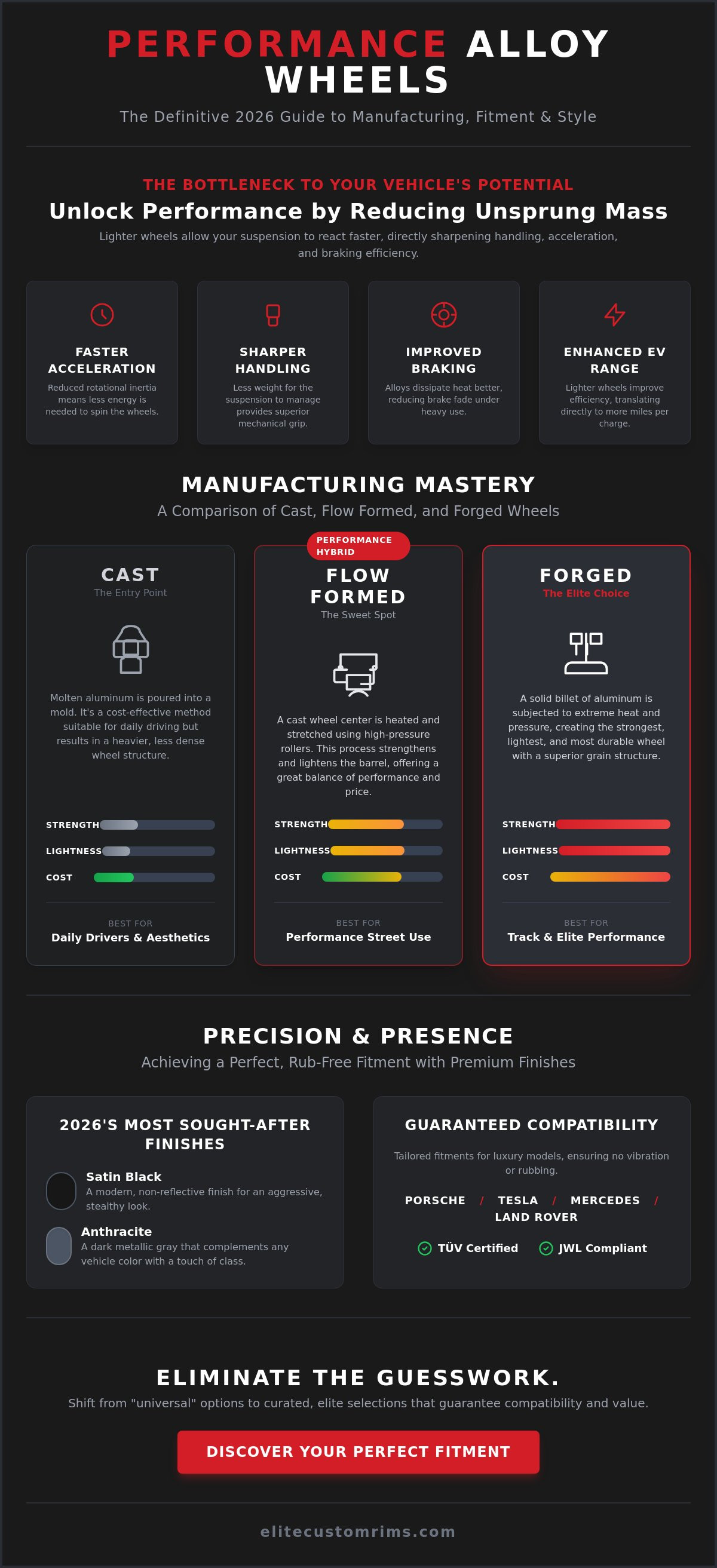
The most significant technical advantage lies in managing unsprung mass. This refers to the weight of everything not supported by your vehicle's springs, such as the wheels, tires, and brakes. When you reduce this weight, your suspension reacts faster to road imperfections. It results in a smoother ride and sharper handling. Additionally, aluminum alloys offer superior thermal conductivity. They pull heat away from your high-performance braking system, reducing brake fade during spirited driving or mountain descents. It's a functional upgrade that protects your hardware while enhancing your safety.
Beyond Aesthetics: The Functional Benefits
Performance isn't just about speed; it's about efficiency. For electric vehicle owners, reducing rotational inertia is a game changer. Lighter wheels require less energy to start spinning. This directly translates to improved EV range and better fuel economy for internal combustion engines. You'll feel the difference in your steering wheel immediately. The steering response becomes more direct, and the suspension damping feels more accurate. Beyond the drive, there's a financial upside. Investing in premium forged and cast alloy wheels significantly boosts curb appeal. This protects your vehicle's resale value in a competitive luxury market.
Alloy vs. Steel: The Modern Verdict
The debate between steel and alloy is over for performance enthusiasts. Steel remains the choice for utility trailers and base-model work trucks, but it has no place on a modern Porsche or Land Rover. Consider the dynamics of weight. Saving just 5 to 10 pounds per corner might sound small, but it completely changes how your vehicle handles a corner. Modern alloys aren't just lighter; they are engineered for extreme strength-to-weight ratios. Forget the old myths about alloy fragility. Today's high-end wheels are built to withstand the rigors of daily driving while maintaining their structural integrity under extreme pressure.
- Reduced Rotational Inertia: Achieve faster acceleration and shorter braking distances.
- Precision Handling: Less weight for the suspension to manage means better mechanical grip.
- Thermal Management: Keeps your high-performance brakes cooler for longer periods.
- Aspirational Design: Reflects the prestige and currency of your specific luxury model.
Manufacturing Mastery: Forged vs. Cast Alloy Wheels
Not all aluminum is created equal. The manufacturing method determines everything from your vehicle's curb weight to its impact resistance. In 2026, the industry has standardized three primary production methods. Each offers a different balance of cost, weight, and strength. Understanding these processes helps you move beyond the "guesswork" of wheel shopping. It ensures you select a setup that matches the prestige of your vehicle.
Casting remains the entry-point for custom wheels alloy wheels. Gravity casting is the most basic form; it involves pouring molten aluminum into a mold. Low-pressure casting is a step up. It uses positive pressure to move the molten metal into the mold more quickly. This results in a finished product with fewer internal bubbles and slightly better density than gravity-cast options. It's a reliable choice for daily drivers, but it lacks the extreme weight savings demanded by high-performance enthusiasts.
Flow Forming: The Performance Hybrid
Flow forming is the "middle ground" of modern wheel technology. The process starts with a low-pressure cast preform. Special hydraulic rollers then apply heat and pressure to mechanically stretch the wheel barrel. This process increases the tensile strength of the aluminum, making the barrel thinner and lighter. It's an ideal choice for Audi and Mercedes enthusiasts who want a significant upgrade without the full investment of a forged set. This method finds the "sweet spot" for street use by offering improved durability and reduced weight. You can explore a curated selection of these high-performance options at elitecustomrims.com.
The Forging Process: Why It Commands a Premium
Forging represents the absolute pinnacle of structural integrity. It starts with a solid block of premium 6061-T6 aluminum. Massive industrial presses apply up to 10,000 tons of pressure to shape the metal. This force creates a denser, stronger grain structure that follows the shape of the wheel. Research into Forging Simulation in Wheel Manufacturing shows how advanced modeling ensures these wheels survive extreme stresses that would shatter a cast wheel. Forging is the process of shaping solid aluminum under extreme heat and pressure to eliminate porosity.
Because the forged metal is so inherently strong, engineers can design thinner, more intricate spokes. This reduces weight at the outer edge of the wheel where it matters most. You get a wheel that's lighter than a cast version but significantly stronger. It's a smart investment for owners of Porsche or Tesla models who refuse to compromise on safety or performance. While the initial cost is higher, the long-term benefits of durability and performance are unmistakable.
- Cast: Cost-effective and widely available for basic styling needs.
- Flow Formed: Increased barrel strength and reduced weight for performance-minded drivers.
- Forged: Maximum strength, minimum weight, and the highest level of design precision.
Precision Engineering: Mastering Fitment for Luxury and Performance Brands
Accuracy is the difference between a smooth ride and a costly mistake. Your luxury vehicle isn't a generic machine. Porsche and Tesla engineers spend thousands of hours tuning suspensions to specific tolerances. Installing "universal" wheels alloy wheels on these platforms is a recipe for disaster. It leads to fender rubbing, steering wheel vibration, and compromised safety. We prioritize brand-specific fitment because accuracy is non-negotiable for high-end marques. A hub-centric design is essential for vibration-free high-speed cruising. It ensures the wheel centers perfectly on the hub, transferring the vehicle's load through the center bore rather than just the lug bolts.
Don't trust a "one size fits all" approach from a big-box warehouse. They often rely on generic inventory that requires spacers or adapter rings to function. These additions introduce more points of failure. Our commitment to new, premium-only inventory means we match the wheel to the car. We eliminate the guesswork so you can drive with confidence. You want a setup that respects the precision-tuned luxury suspension you paid for.
Understanding Offset (ET) and Backspacing
Offset determines where the wheel sits in relation to the fender. Getting this wrong ruins your stance and your suspension's geometry. A positive offset pushes the mounting surface toward the front of the wheel. This is common for modern all-wheel-drive luxury models. If you're looking for an aggressive stance on a Cadillac Escalade, you need a precise offset to achieve that "flush" look. This aesthetic perfection allows the wheel to sit perfectly in line with the fender. It provides a wide, muscular presence without the danger of tires rubbing against the wheel well during tight turns.
Bolt Patterns and Center Bores
You can't force a fit. A 5x112 pattern for an Audi or Mercedes is not interchangeable with a Tesla’s 5x114.3 hub. Even a fraction of a millimeter creates a dangerous situation. The bolt pattern, or PCD, measures the diameter of an imaginary circle passing through the center of the lug holes. Beyond the bolts, the center bore is the most critical measurement. It must match the vehicle's hub exactly to support the weight of the car. Relying on cheap plastic hub-centric rings is a compromise we don't accept. We believe in metal-to-metal precision that honors the engineering of your specific vehicle.
- Zero Rubbing: Guaranteed clearance for brake calipers and fender liners.
- No Vibration: Hub-centric designs for a factory-smooth ride at any speed.
- Suspension Integrity: Maintains original steering geometry and tire wear patterns.
- Visual Perfection: Achieving the ideal stance tailored to your car's body lines.
Aesthetic and Utility: Selecting the Ideal Finish and Diameter
Style is personal, but performance is objective. In 2026, the most sought-after finishes for wheels alloy wheels reflect a shift toward "stealth wealth" and technical precision. Satin Black and Anthracite are the current leaders for performance models. They offer a sophisticated, muted look that hides brake dust effectively. For those wanting more contrast, two-tone machined finishes provide a multi-dimensional appearance. These designs use a dark background with a bright, diamond-cut face to highlight intricate spoke patterns. Beyond the color, consider the coating. Powder coating is the gold standard for daily drivers. It is far more durable than traditional wet paint. It resists stone chips, road salt, and harsh cleaning chemicals. Protect your investment by choosing a finish built for the real world.
Diameter choice is your biggest trade-off between presence and comfort. A 22-inch wheel provides an undeniable "wow" factor for a Cadillac Escalade. However, larger diameters often require low-profile tires. This creates the "rubber band" effect, where the tire sidewall is extremely thin. While this looks aggressive, it reduces the cushion between the road and your rim. It can lead to a stiffer ride and increased vulnerability to pothole damage. A 19-inch or 20-inch setup typically offers the best balance. You get enough sidewall for a smooth ride while maintaining a modern, filled-out wheel well.
Wheels for the EV Era: Tesla and Beyond
Electric vehicles change the rules of wheel selection. Tesla Model 3 and Model Y owners must prioritize weight and aerodynamics. High torque from electric motors places massive stress on the wheel's mounting surface. Lightweight forged alloys are a must-have upgrade here. They reduce the energy needed to rotate the wheel, which can help preserve your battery range. Look for aerodynamic designs that minimize air turbulence. These "aero" styles cut through the wind more efficiently than traditional open-spoke patterns. It’s a smart way to gain performance without sacrificing your EV's efficiency.
Luxury Finishes: From Chrome to Brushed Clear
High-end platforms are seeing a resurgence of classic brilliance. We are seeing a strong return of high-polish and chrome for Rolls Royce and Bentley models. These finishes reflect the prestige of the marque. If you prefer a more technical look for Audi Q7 wheels, a brushed clear finish shows off the raw grain of the forged aluminum. Maintenance is key. Always use pH-neutral cleaners on premium finishes. Avoid automated car washes with acidic wheel brighteners. A little care ensures your wheels look as good in three years as they do on day one.
- Satin Black: The ultimate choice for a modern, aggressive aesthetic.
- Powder Coating: Superior chip resistance compared to traditional paint.
- 19-Inch Setup: Ideal for maximum ride comfort and efficiency.
- Brushed Clear: Highlights the high-end engineering of forged aluminum.
Ready to upgrade your vehicle's presence with a guaranteed fitment? Browse our curated collection of premium wheels at elitecustomrims.com today.
The Elite Advantage: Securing the Perfect Set of Custom Rims
Choosing a new set of wheels alloy wheels is more than a transaction. It's a significant investment in your vehicle's performance and safety. Big-box warehouses often treat wheels like any other commodity. They prioritize volume over precision. This leads to generic inventory that rarely meets the exacting standards of a luxury car. We take a different path. Our curated selection focuses exclusively on premium-only inventory. By specializing in specific high-end marques, we eliminate the technical anxiety that comes with aftermarket upgrades. Our specialist-led fitment verification process ensures that every set we ship is a 100% match for your vehicle's unique suspension and brake clearances.
The 2026 market presents unique challenges for enthusiasts. With LME aluminum prices reaching $3,140.90 per tonne, the cost of manufacturing high-quality forged and cast wheels continues to rise. Securing a set now isn't just an aesthetic choice. It's a savvy financial move. You're locking in current pricing before further market fluctuations impact the industry. Investing in quality today protects your vehicle's value. It also ensures you don't face the safety risks associated with lower-grade alternatives.
Tailored for Your Brand
We believe in brand-specific excellence. Your Mercedes, Porsche, or Land Rover requires a bespoke approach. We don't sell used or refurbished stock. Safety is our priority. Refurbished wheels often hide structural fatigue or micro-cracks that compromise integrity. Our commitment to factory-new, premium wheels ensures you receive a product that meets OEM specifications. We've streamlined logistics for reliable national shipping. Your high-end wheel set arrives ready for a professional transformation, no matter where you're located.
Final Checklist Before You Buy
Confidence comes from preparation. Run through this checklist to ensure a seamless upgrade experience. Confirm your vehicle's exact year, make, and model. This activates our fitment guarantee. It prevents the frustration of rubbing or vibration. Decide between a staggered or square setup. Staggered setups feature wider rear wheels. They're perfect for rear-wheel-drive platforms like Porsche to maximize traction. Square setups allow for easier tire rotation. They're often preferred for daily driving efficiency on Tesla or Audi models. Ready to upgrade? Browse our curated collection of performance wheels and find the perfect match for your drive.
- Verify Fitment: Cross-check your vehicle's specifications with our specialist team.
- Choose Your Stance: Select between staggered performance or square-setup utility.
- Invest in New: Avoid the safety risks of used or refurbished inventory.
- Secure 2026 Pricing: Act now to stay ahead of rising aluminum costs.
Elevate Your Driving Standards Today
Transforming your vehicle starts where the rubber meets the road. We've explored how the shift from cast to forged engineering isn't just about looks; it's about structural integrity and unsprung mass. High-performance wheels alloy wheels provide the heat dissipation and weight reduction your precision suspension requires. Whether you're maximizing the range of your Tesla or the presence of your Mercedes, the right fitment is non-negotiable. Our specialized approach eliminates the technical anxiety of aftermarket upgrades. We focus exclusively on new, high-performance inventory to ensure your safety and long-term satisfaction.
You don't have to settle for universal compromises when expert support for luxury and performance marques is readily available. Take the guesswork out of your next upgrade. Your vehicle deserves a setup that matches its engineering. It's time to experience the difference that elite curation and technical mastery bring to your daily drive. Secure your stance and feel the immediate improvement in handling. Upgrade your ride with the finest selection of performance wheels today.
Expert Answers for Your Performance Wheel Upgrades
Is there a difference between wheels and rims?
The rim is actually just the outer circular edge of the wheel that holds the tire in place. The wheel refers to the entire unit, including the hub, spokes, and the rim itself. In common conversation, people use the terms interchangeably, but they are technically distinct components. Understanding this difference helps when discussing specific damage or custom finish options with a specialist during your upgrade process.
Can I put larger wheels on my car without changing the suspension?
You can install larger wheels without modifying your suspension as long as you maintain the overall rolling diameter. This is achieved by using a tire with a shorter sidewall, often called "plus-sizing." However, you must ensure the new setup clears your brake calipers and fender liners during full steering locks. Extreme jumps in size may eventually require suspension adjustments to prevent rubbing or geometry issues that compromise your ride quality.
How do I know if a wheel will fit my specific car model?
Fitment is determined by matching three critical technical specifications: the bolt pattern, center bore, and offset. The bolt pattern must match your hub's lug count and diameter exactly. The center bore ensures the wheel sits flush on the hub for a vibration-free ride at high speeds. Finally, the offset dictates how far the wheel sits inside or outside the fender. Our specialist-led verification process cross-references these numbers for your specific luxury or performance model.
Are alloy wheels better than steel wheels for winter driving?
Steel wheels are traditional for winter, but modern wheels alloy wheels with powder-coated finishes offer a superior alternative. These wheels resist corrosion from road salt while maintaining the performance benefits of reduced weight in slushy conditions. Unlike painted wheels, powder coating provides a thick, durable barrier that prevents oxidation. You get the benefit of year-round style without sacrificing the structural integrity of your rims in harsh, freezing climates.
What is the benefit of a staggered wheel fitment?
A staggered fitment places wider wheels and tires on the rear axle to maximize mechanical grip and traction. This is a standard setup for high-performance rear-wheel-drive vehicles like those from Porsche or Mercedes. It allows the car to put down power more effectively while providing a wider, more aggressive stance. While it prevents traditional front-to-back tire rotation, the trade-off in handling and aesthetics is often the primary goal for performance enthusiasts.
Do custom alloy wheels affect my vehicles warranty?
Upgrading your wheels generally does not void your entire vehicle warranty. Under the Magnuson-Moss Warranty Act, a manufacturer cannot deny a warranty claim unless they can prove the aftermarket part caused the specific failure. For example, a custom wheel won't affect your engine warranty, but it could be scrutinized if there is a suspension component failure. Always choose wheels with guaranteed fitment to avoid putting unnecessary stress on factory components.
How much weight can a performance alloy wheel actually save?
A high-quality forged wheel can reduce weight by up to 40 percent compared to a standard steel wheel. This reduction in unsprung mass is the most effective way to improve your vehicle's dynamics. Lighter wheels allow your suspension to react faster to bumps and reduce the energy needed for acceleration and braking. Saving just 5 to 10 pounds per corner creates a transformative difference in how your luxury car feels on the road.
What is the best way to clean and maintain high-end alloy wheels?
The best way to maintain wheels alloy wheels is to use pH-neutral cleaners and soft microfiber tools. Avoid acidic "off the shelf" cleaners that can eat through the clear coat or powder finish over time. Rinse the wheels thoroughly with water to remove loose grit before gently agitating the brake dust with a mitt. Regular cleaning prevents brake dust from becoming permanently baked onto the surface, preserving your investment's showroom shine for years.