
The wheel that gives a Silverado or Sierra a bolder stance isn’t automatically the right fit. The best chevy/gmc wheels need to match your truck’s exact year, model, and configuration, while delivering the look and everyday performance you want. Get the fitment right first. Then choose a style that works for how you drive.
Comparing wheel diameter, width, offset, and bolt pattern can feel complicated, but each measurement answers a practical question: will the wheel mount correctly, clear nearby components, and suit the truck’s requirements? Use your exact vehicle details to narrow the options instead of choosing by appearance alone.
This guide explains what to verify for your specific Chevy or GMC, how wheel dimensions affect position and clearance, and what to consider for daily driving or a specialized truck setup. You’ll also compare style directions, from a factory-inspired look to a more distinctive upgrade. The goal is a focused shortlist of new wheels that suits your truck, intended use, and personal style.
Key Takeaways
- Start with your truck’s exact year, model, trim, and configuration. Similar Chevy and GMC models can have different fitment needs.
- Compare bolt pattern, diameter, width, offset, and load rating when choosing chevy/gmc wheels.
- Judge factory-inspired and distinctive styles by finish and spoke design, without assuming appearance guarantees better performance.
- Set priorities such as everyday use, visual impact, or a specific truck application before narrowing your wheel setup.
- Compare each wheel’s stated specifications with your specific truck, not just a similar model.
Why Chevy/GMC Wheels Need More Than a Style Match
A wheel can look perfect in a product photo and still be wrong for your truck. Fit depends on more than brand or appearance: model year, trim, cab and bed configuration, and existing equipment can all affect compatibility and clearance. Treat style as the final choice, not the first filter.
For chevy/gmc wheels, fitment means matching the wheel’s specifications to the vehicle so it mounts correctly, supports the truck’s requirements, and clears nearby components. Check these details:
- Bolt pattern: The number and spacing of the wheel’s mounting holes.
- Diameter: The wheel’s size across its face.
- Width: The distance between the inner and outer wheel lips.
- Offset: The position of the mounting surface in relation to the wheel’s centerline, which affects where the wheel sits in the wheel well.
- Load rating: The weight the wheel is designed to support.
These measurements work together. A matching bolt pattern alone doesn’t establish compatibility, and changing width or offset can affect wheel position and clearance. For a broader explanation of wheel sizing specifications, see the reference overview. Use it to understand the terms, then compare them with your truck’s specific requirements.
What makes a Chevy or GMC wheel a proper fit?
A proper fit means the wheel’s full set of specifications matches the vehicle’s requirements. A label such as “Chevy,” “GMC,” or “GM 6-lug” isn’t enough to confirm fitment. Two trucks in the same model family may differ by year, trim, or configuration, and existing equipment can change the space around the wheel and suspension. Verify each relevant measurement for your exact vehicle instead of assuming a shared badge means interchangeability.
Start with the exact truck, not a broad category
Before comparing finishes or spoke designs, record your truck’s model year, model, trim, and factory configuration. Note existing changes that could affect clearance. A broad category such as GM 6-lug can help narrow a search, but it doesn’t confirm diameter, width, offset, or load suitability. Those specifications still need to match your truck.
With those details in hand, assess fitment first, then narrow the options by use and appearance. If you’re focused on a Silverado, the Chevy Silverado wheels guide offers a model-specific path for continuing your research. Keep your vehicle details beside you as you compare fitment information, and don’t substitute a similar model for your own.
Chevy/GMC Wheel Fitment: Compare the Specifications That Matter
Fitment is a set of measurements, not a single label. Check each wheel specification against your exact year, model, trim, and configuration before comparing styles. Even trucks from the same brand or model family may have different requirements, so don’t assume one Chevy or GMC fitment applies across the lineup.
Bolt pattern: The number of mounting holes and the spacing between them. It must match the vehicle’s hub.
Diameter: The wheel’s size across its face. It affects fitment and the space available around brake components.
Width: The distance between the wheel’s inner and outer lips. It influences the wheel’s position and the clearance around it.
Offset: The position of the mounting surface relative to the wheel’s centerline. It affects how far the wheel sits inward or outward.
Load rating: The weight the wheel is designed to support. It must suit the vehicle’s requirements.
Bolt pattern, diameter, and width: the essential starting points
Start with the bolt pattern. A wheel with the wrong mounting layout won’t attach correctly, even if its style and diameter look right. As a specific example, the 2026 Chevrolet Silverado 1500 and 2026 GMC Sierra 1500 have a 6x139.7 mm bolt pattern, also known as 6x5.5 inches. That example applies to those models and year, not every Chevy or GMC truck.
Diameter and width are separate measurements, and both matter. Diameter describes the wheel’s overall size, while width affects how it sits across the wheel well. Changing either can affect component clearance, so verify the complete specification for your vehicle rather than relying on one matching measurement.
Offset, clearance, and load rating: the details behind confidence
Offset helps determine where the wheel sits relative to the truck. A different offset can move it inward or outward, changing its relationship to suspension parts, brakes, and the fender. Width and offset work together, so assess them as a pair. Clearance depends on the specific vehicle and wheel setup. Don’t assume a measurement that works for a similar truck will work for yours.
Load rating matters as well. Match the wheel’s stated rating to the vehicle’s requirements, and verify the value in the relevant product and vehicle information instead of guessing. For vehicles covered by it, Federal Motor Vehicle Safety Standard No. 120 addresses rim markings and tire/rim selection. It doesn’t replace checking the specifications of a particular aftermarket wheel.
Compare Chevy/GMC wheel options with your truck’s verified requirements. Confirm fitment first, then weigh your priorities for appearance and intended use.
Compare Chevy/GMC Wheel Styles and Materials Without Guesswork
Once you have a fitment shortlist, use style to shape your truck’s character. A factory-inspired design can keep the overall look clean and cohesive. A more pronounced aftermarket design can make the wheels a stronger visual feature. Neither choice guarantees a change in performance. Treat finish and spoke layout as design decisions, and review the care guidance for the specific wheel.
Factory-inspired, modern, and bold truck wheel looks
Start with the truck’s existing lines and the impression you want it to make. Restrained spoke patterns and understated finishes can complement a factory-style appearance. More intricate spokes or a higher-contrast finish can create a stronger focal point. Compare product images from multiple angles and consider how a wheel looks with your truck’s paint and trim. For a more focused Silverado style discussion, see the Chevy Silverado wheels guide.
Use this comparison to clarify your priorities before choosing:
| Priority | Look or use to consider | Question to ask |
|---|---|---|
| Subtle, cohesive appearance | Factory-inspired design | Does the wheel complement the truck’s existing lines? |
| More visual impact | Pronounced spoke design or contrasting finish | Does the design feel balanced with the truck’s size and trim? |
| Everyday use | Finish and design suited to your routine | What care does the specific wheel’s product information recommend? |
| Work or other intended use | Construction and specifications matched to that use | Do the listed specifications support your vehicle and priorities? |
Wheel material and finish: appearance versus practical priorities
Material and finish are different choices. Material describes what the wheel is made from; finish describes its visible surface. Neither is a shortcut for judging overall quality, durability, or suitability. Alloy and steel wheels can differ in construction and appearance, but the specific product details matter more than broad claims that one material is better. Review the listing for construction, load rating, finish, and care guidance.
Spoke design and finish can change a truck’s visual character, but they don’t by themselves promise better handling, strength, or performance. If durability testing is a priority, SAE International describes aftermarket wheel test requirements in its SAE J2530 performance standards. Use that reference to understand the standard, and rely on the specific product information for claims about an individual wheel.
Keep the order simple: choose a look that suits your truck, review material and finish details, then confirm the selected chevy/gmc wheels match your vehicle and intended use. Style should complete the decision, not replace the specifications.
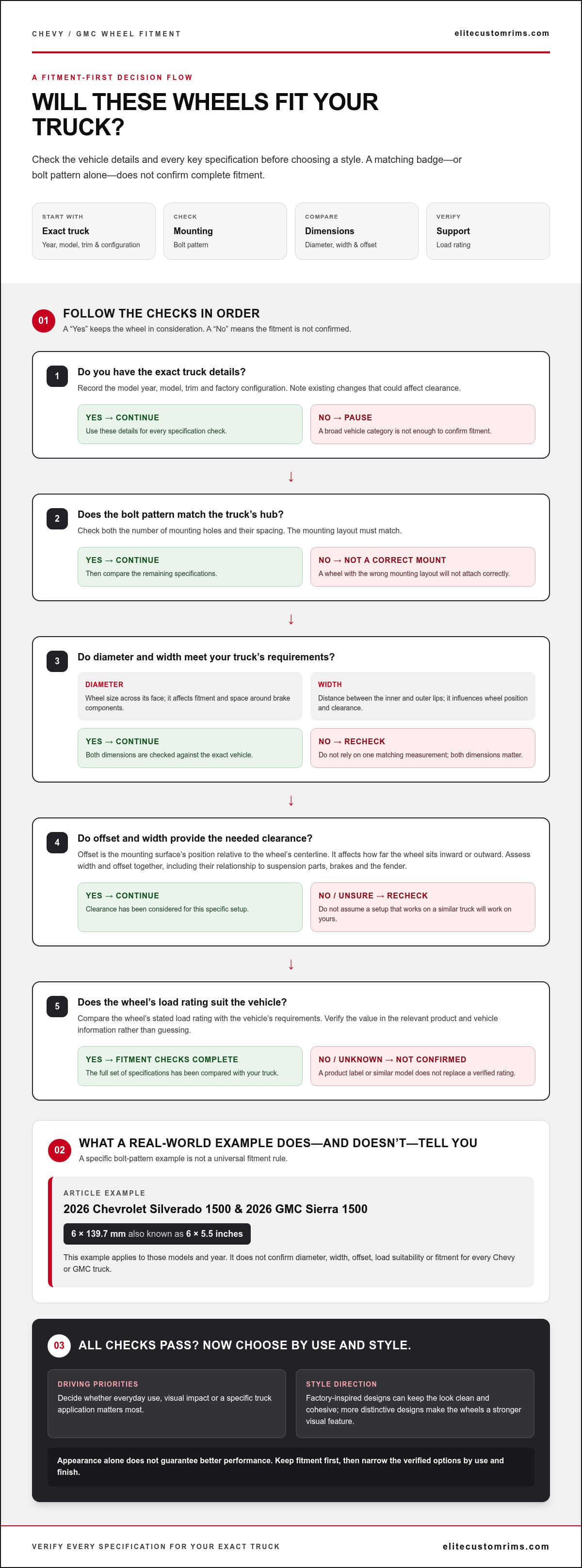
Match Chevy/GMC Wheels to Your Driving and Upgrade Priorities
The best setup depends on what your truck does most and what you want to change about its appearance. A style-led upgrade might focus on spoke design, finish, or a more distinctive stance. A use-led choice starts with the truck’s regular role and the specifications that suit it. Keep fitment at the center of either decision.
Choose a wheel setup around how you use the truck
Think about your routine before comparing designs. Is the truck mainly a daily driver? Does it regularly travel rough roads, carry loads, or serve a specific work or recreation purpose? Your answers help set priorities, but they don’t establish that a particular wheel is suitable. Match the product’s specifications to the vehicle and intended application.
- Daily driving: Put verified fitment and everyday priorities first. Consider how wheel dimensions, clearance, and the overall setup align with your truck and routine.
- Visual impact: Decide how prominent you want the wheels to look, then compare finishes and spoke designs among compatible options.
- Specific truck use: Identify the demands you expect the wheels to meet. Review the wheel’s load rating and product details instead of assuming a style or size suits towing, off-road driving, or another use.
Changes in diameter, width, or offset can affect wheel position and clearance. Don’t assume a larger or more aggressive-looking setup will preserve the characteristics you value in everyday driving. Assess the full wheel and vehicle combination, and treat ride or performance outcomes as dependent on the particular setup, not guaranteed results.
Build a shortlist that balances fitment and appearance
Use a simple filter. First, remove options that don’t match your truck’s verified fitment requirements, including mounting specifications, dimensions, clearance needs, and load requirements. Then compare the remaining wheels by finish, spoke design, and how they complement the truck. This order keeps a strong visual match from distracting you from compatibility.
For each option, ask: Does the product information match my exact vehicle? Does its size and position work with my setup? Does its load rating suit the vehicle’s requirements? Does the design fit my priorities? If a required specification doesn’t align, cross that wheel off the list. A shorter list of verified choices makes the style decision easier.
Review Chevy/GMC wheels against your truck’s specifications and the way you use it.
Shop Chevy/GMC Wheels with a Clear Fitment Checklist
Turn your research into a practical shortlist. The goal isn’t to find a wheel that fits a broad Chevy or GMC category. It’s to find a new wheel whose stated specifications align with your specific truck, then choose a design that suits your priorities.
A five-step checklist before choosing Chevy/GMC wheels
- 1. Identify your exact truck. Record its model year, model, trim, and configuration. Include relevant factory equipment or existing changes that could affect fitment.
- 2. Gather the required specifications. Note the vehicle’s bolt pattern, suitable wheel diameter and width, offset requirements, clearance considerations, and load specifications. Use reliable information for your exact vehicle rather than estimates based on a similar truck.
- 3. Compare product fitment details. Check each wheel’s stated specifications against your truck’s requirements. A broad label such as “Chevy/GMC” or “GM 6-lug” can guide a search, but it doesn’t establish compatibility on its own.
- 4. Narrow the list by intended use. Consider your regular driving and the truck’s role. Keep options whose product information supports your vehicle and intended application. Don’t assume a wheel suits a particular use based on appearance alone.
- 5. Choose the look. Once fitment and use requirements are addressed, compare finish, spoke design, and overall style. This lets you focus on options that meet your needs instead of getting sidetracked by a visual match that may not fit.
Turn a fitment shortlist into a confident wheel choice
Fit the wheel to your exact truck first, then choose a style that suits your plans. This keeps a wheel upgrade grounded in vehicle-specific compatibility. Compare product fitment details with your truck’s exact year, model, trim, and configuration, not a similar vehicle or a broad brand label. If a required dimension or load specification doesn’t align, remove that option from your shortlist.
With the specifications organized, you can weigh appearance and intended use among options that match your truck. The new Chevy/GMC wheel selection provides a focused place to compare wheels with your fitment checklist in hand.
Choose Your Next Chevy/GMC Wheel Setup with Confidence
The right chevy/gmc wheels bring together three decisions: verified fitment for your exact truck, a setup suited to how you drive, and a style you’ll enjoy every day. Start with vehicle-specific details, then compare dimensions and load requirements before choosing a finish or spoke design. A fitment-first approach helps you focus on wheels that work for your truck, not just ones that look right.
Elite Custom Rims offers new Chevy/GMC wheels with vehicle-specific fitment options. Use your checklist to compare the specifications, then shop Chevy and GMC wheels and choose a look that suits your truck and priorities.
Start with the fit, then make the style yours.
Frequently Asked Questions
Are Chevy and GMC wheels interchangeable?
Sometimes, but the brand alone doesn’t determine compatibility. For example, the 2026 Chevrolet Silverado 1500 and GMC Sierra 1500 share a 6x139.7 mm bolt pattern and 78.1 mm hub bore, but wheel diameter, width, offset, load rating, and clearance still need to suit the specific truck. Compare the complete specifications for your year, model, trim, and configuration before treating one wheel as interchangeable.
How do I find the right bolt pattern for my Chevy or GMC?
Look up the bolt pattern for your exact year, model, trim, and configuration in reliable vehicle or wheel fitment information. The pattern describes the number of mounting holes and their spacing. Match both parts of the measurement to the wheel’s specifications. Don’t rely on a broad label such as “GM 6-lug,” since it describes a category, not every fitment requirement.
Can I put larger wheels on my Chevy or GMC truck?
Possibly, if the larger diameter is compatible with your truck and the complete setup maintains suitable clearance. Diameter is only one part of the decision: width, offset, load rating, and surrounding brake and suspension components matter too. Check fitment information for your exact vehicle and the specific wheel. Don’t assume a setup fits just because it works on a similar truck or looks right in a photo.
What wheel offset works best for a Chevy or GMC truck?
There isn’t one offset that works best for every Chevy or GMC truck. Offset affects how far a wheel sits inward or outward, which can change its position relative to suspension parts and the fender. Start with the requirements for your exact vehicle, then compare the wheel’s listed offset alongside its width and diameter. Confirm the full fitment instead of choosing offset based on stance alone.
Do Chevy and GMC trucks use the same wheel size?
No. Wheel sizes can vary by model, year, trim, and configuration, even across trucks in the same brand family. For instance, factory wheel diameter options vary among 2026 Chevrolet Silverado 1500 trims. Some Chevy and GMC trucks may share select fitment specifications, but that doesn’t mean every wheel size is interchangeable. Compare the vehicle’s requirements with the specific wheel’s complete measurements.
How can I check whether aftermarket wheels will fit my truck?
For chevy/gmc wheels, start by recording your truck’s exact model year, model, trim, and configuration. Compare those details with the product’s stated vehicle fitment, then match the bolt pattern, diameter, width, offset, load rating, and clearance requirements. Account for existing changes that could affect fit. Don’t use a similar model as a substitute for your truck’s specifications.
Does changing wheel size affect clearance or everyday driving?
It can. A change in diameter, width, or offset may alter the wheel’s position and the space around brakes, suspension components, and the fender. The effect on everyday driving depends on the complete vehicle and wheel setup, so don’t assume a larger wheel will feel or perform a certain way. Check vehicle-specific fitment and clearance details before deciding, especially if your truck has existing modifications.