
What if the best case for new wheels isn’t “they look great,” but “I’ve thought through the cost, fit, and trade-offs”? If you’re wondering how to justify expensive wheel purchase to spouse, start with a calm conversation, not a checkout screen. A premium upgrade may be meaningful to you, but it still needs to fit your shared household priorities.
It’s fair to ask whether aftermarket wheels will pay off at resale. They may not, so don’t base your case on a promise of higher value. Instead, explain what matters for your vehicle: the design, possible weight and driving benefits, and the importance of correct fitment. Be clear about what you can verify and what comes down to personal enjoyment.
This guide offers a practical framework for the conversation. You’ll learn how to set a responsible budget, explain wheel terminology in plain language, compare possible benefits with financial trade-offs, and consider keeping the original wheels for a future sale. The goal isn’t to “win” approval. It’s to make a thoughtful decision together, with fewer surprises and a clear view of the costs.
Key Takeaways
- Learn how to justify expensive wheel purchase to spouse with a clear case that balances personal enjoyment, household priorities, and practical trade-offs.
- Bring vehicle-specific fitment details so the discussion is grounded in compatibility, not just appearance.
- Consider keeping your factory wheels, and don’t assume aftermarket upgrades will increase resale value.
- Choose a calm moment, explain your reasoning, and make the decision together.
The High-End Wheel Dilemma: Shifting the Narrative
“Because they look cool” may explain why you want new wheels, but it doesn’t answer the household questions that matter: Is the purchase affordable? Will the wheels fit the car? Does the upgrade make sense for the vehicle you own? Start with honesty. Don’t hide the purchase or ask for forgiveness afterward. Share the idea before buying, explain what appeals to you, and make room for your spouse’s concerns.
Listen for the real objection. Is it the total cost, concern about fit, or doubt that the upgrade is practical? Each concern calls for a different answer. Don’t rebrand a personal want as a guaranteed investment. Aftermarket wheels rarely increase resale value. Build your case around what the upgrade may offer, what it can’t promise, and how it fits your shared budget.
Understanding the “Aesthetic vs. Utility” Gap
Enthusiasts may notice how a wheel’s proportions complement the vehicle, while a non-enthusiast sees four circles and a large bill. Bridge that gap by connecting the choice to values you share, such as responsible spending, vehicle compatibility, reliability, or making a car you enjoy keeping. If you discuss wheel materials, alloys of aluminium or magnesium can differ from steel in weight, strength, and heat conduction. Keep the explanation specific to the wheel you’re considering, rather than relying on the appeal of a premium label.
Defining the “Business Case” for Your Vehicle
Think of the car as a depreciating asset to maintain, not an investment that custom wheels will automatically improve. A distinctive design can make the vehicle feel more personal, but a highly customized look may not appeal to every future buyer. If resale matters, consider an OEM-plus style and keep the factory wheels so you can return the car to its original setup later.
Fitment is a practical part of the case. The right wheel needs to match your vehicle’s requirements, including details such as bolt pattern and offset. A mismatch can create avoidable problems, so verify compatibility before ordering instead of treating fitment as guesswork. Brand-specific options, including Audi, Mercedes, and Tesla wheels, can help you focus your search on products intended for your vehicle. That’s a more credible point in a conversation about how to justify expensive wheel purchase to spouse than claiming the upgrade will pay for itself.
Be specific about the plan: which vehicle needs the wheels, why this option fits, and how the purchase affects household priorities. A transparent discussion turns a point of friction into a decision you can make together.
The Technical Defense: Safety, Efficiency, and Performance
A sound technical case is specific, not exaggerated. Premium wheels aren’t automatically safer, and lighter wheels don’t guarantee shorter braking distances. Safety depends on choosing wheels with suitable load capacity and correct fitment for the vehicle, then pairing them with appropriate tires and maintaining the setup properly. Explain how you’ll verify those details instead of relying on a “better quality” label alone.
Weight can matter, though the result depends on the wheel and vehicle. Wheels are part of a vehicle’s unsprung weight, the mass not supported by the suspension. Reducing it can help the suspension respond to bumps and lessen rotational inertia, which may support handling and acceleration. Don’t promise a smoother ride or a specific stopping-distance improvement. Compare weight alongside fit, construction, and your driving needs.
Tesla and EV Efficiency: The Range Argument
For an EV, wheel choice can affect energy use. A lighter, correctly matched setup may help reduce the energy needed to accelerate the wheels, but the actual effect on watt-hours per mile and driving range varies with the wheel, tire, route, and conditions. It’s not a guaranteed payback at the charging station. Review the considerations in this guide to Tesla Model Y wheels, then frame the upgrade as a possible efficiency and appearance improvement, not a replacement for careful range planning.
Performance and Longevity for Luxury Sedans
On a luxury sedan, correct fitment matters as much as appearance. Dimensions such as offset and bolt pattern must suit the vehicle. An incorrect match can create clearance or mechanical issues. Precise fitment helps avoid preventable problems, but it doesn’t eliminate suspension wear. Materials and finishes also vary, so check the manufacturer’s care guidance if the car regularly encounters road salt or harsh conditions.
The “one and done” approach only works when the wheel suits the vehicle and your budget. Compare construction, fitment, and intended use before deciding. A forged design may differ from a cast wheel in weight and strength, but a higher price alone doesn’t prove it’s the right choice. The custom wheels fitment guide can help you prepare informed questions. For Audi, Mercedes, and Tesla options, you can also review luxury wheel choices and verify compatibility before making a decision.
That’s how to justify expensive wheel purchase to spouse with credibility: separate measurable details from hopes, acknowledge the limits, and put fitment and household priorities first.
The Financial Logic: Resale Value and Asset Protection
Don’t present aftermarket wheels as a guaranteed financial investment. They rarely raise resale value, and a highly personalized setup may narrow the pool of interested buyers. A more realistic financial argument is flexibility: keep the factory wheels in good condition, document the upgrade, and preserve the option to return the vehicle to its original configuration.
That “Pristine OE” strategy is especially relevant for a leased vehicle. Before changing wheels, read the lease return terms and ask the leasing company how it treats non-factory wheels and wheel damage. Keeping the original set stored safely may make it easier to restore the stock setup later. It doesn’t guarantee that you’ll avoid excess-wear charges. Those depend on the lease terms and the condition of the vehicle at return.
Lease Return Insurance: Understand the Trade-Off
A replacement charge for a damaged factory wheel can vary by vehicle, wheel, and lease provider, so don’t rely on a generic estimate. Ask for the applicable return standards and replacement costs before deciding. An aftermarket set might serve as your everyday setup while the factory wheels remain protected, but it only makes financial sense if the full cost and return requirements work for your household. It preserves an option, not automatic savings.
Protecting the Investment in High-End Models
For an SUV such as the Audi Q7, a tasteful, well-matched wheel design can create a polished look. That’s different from claiming buyers will pay more for it. If resale is a priority, consider an OEM-plus appearance rather than an extreme or highly personal style. Explore the considerations in this Audi Q7 wheels guide and weigh appearance against the option of selling with the factory setup.
Keep purchase records, fitment information, and original wheels together. Buying new wheels and confirming that they suit the vehicle gives you a clearer record of what was installed. It doesn’t guarantee a future resale premium, but it can help explain the setup to a buyer and support a return to stock when needed. When explaining how to justify expensive wheel purchase to spouse, be candid about that trade-off: the upgrade may improve your ownership experience, while keeping the OE set helps preserve choices later.
If you’re comparing Audi wheel options, review the available Audi wheel choices and verify fitment before making a decision.
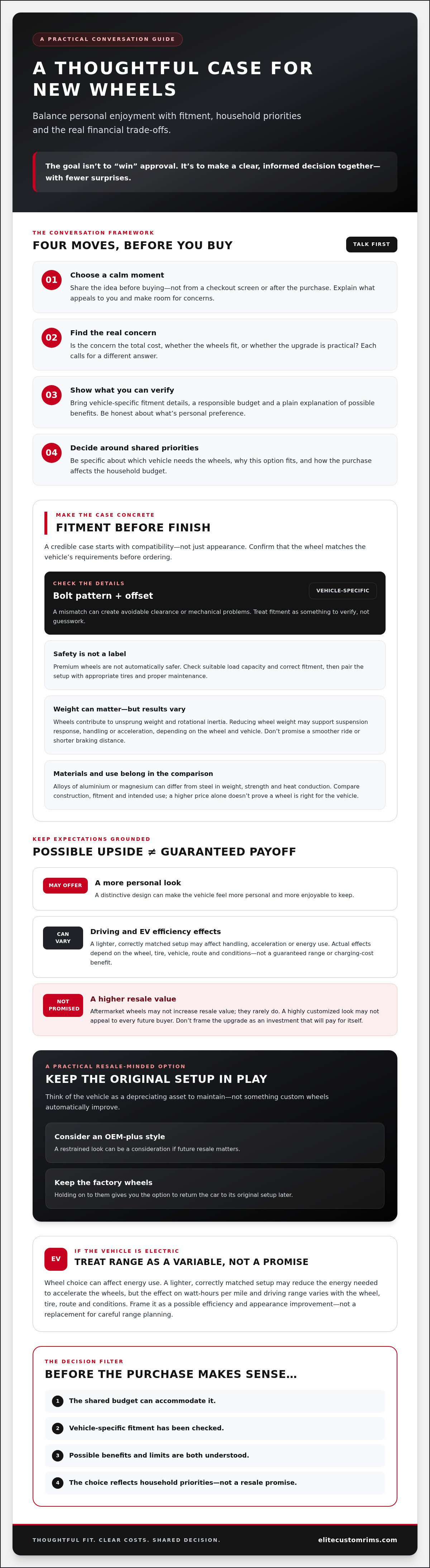
How to Justify Expensive Wheel Purchase to Spouse: A Conversation Framework
A good conversation isn’t a sales pitch. It’s a shared decision with the relevant facts on the table. Use these five steps to prepare before bringing up the upgrade.
- Do your homework. Confirm the wheel’s compatibility with your exact vehicle, including fitment details such as bolt pattern and offset. Bring the specifications and the full purchase total, including any costs you’ll need to account for separately, rather than only showing a photo of the style you like.
- Choose a calm moment. Avoid raising the topic during a stressful week, an argument, or a rushed conversation. Ask when you can both give the decision your attention.
- Lead with the reason. Explain what matters to you, whether that’s a well-matched appearance, a possible efficiency benefit, or choosing a new wheel with verified fitment. Don’t present possible benefits as guaranteed safety improvements or savings.
- Show the net-cost thinking. Start with the actual purchase total. If you estimate future resale proceeds, label them as uncertain. Keeping the factory wheels preserves the option to return the vehicle to stock, but it isn’t guaranteed cash back.
- Offer a household trade-off. Agree on a spending limit, timing, or another budget adjustment together. If the upgrade doesn’t fit current priorities, waiting is a responsible outcome, not a failed conversation.
Overcoming the “It’s Too Expensive” Objection
Try a cost-per-mile estimate: divide the purchase total by the miles you reasonably expect to drive while owning the wheels. It can make a large one-time expense easier to compare, but it doesn’t make the purchase cheaper or prove it will pay for itself. Compare the result with other planned household expenses without dismissing your spouse’s priorities. New wheels also provide a known purchase condition. With used inventory, wear or history may be harder to assess.
Use Visuals and Evidence, Not Pressure
Show photos of the same vehicle model with a similar wheel style, then discuss what you like and what feels too aggressive. For a Silverado, the Chevy Silverado wheels guide can help you compare styles and fitment considerations. Reviews may suggest useful questions to investigate, but another owner’s experience doesn’t guarantee the same result for your vehicle.
If your research points to Chevy/GMC wheels, compare wheel options for your vehicle and verify fitment before deciding. A clear, honest case is the best answer to how to justify expensive wheel purchase to spouse. Be ready to listen, revise the plan, or wait.
Choosing a Wheel Retailer: What to Check
A strong household case depends on more than choosing a style. The wheels also need to match the vehicle. Confirm the specifications before ordering, including bolt pattern, offset, and other fitment details relevant to your make, model, and year. A precise match helps reduce the risk of compatibility problems and avoidable costs, though it can’t make every ordering or shipping issue impossible.
Elite Custom Rims is an online retailer selling new wheels for brands including Audi, Mercedes, Tesla, Porsche, and others, with a focus on vehicle-specific fitment. Its selection includes wheels for luxury, performance, and utility vehicles. When comparing retailers, check that product information clearly identifies vehicle compatibility and provides the details you need to verify fitment. Don’t assume a product will fit based on appearance or a broad claim of compatibility.
Eliminating Technical Anxiety
Before you decide, make sure you can answer practical questions: Does the wheel fit your exact vehicle? Are the bolt pattern and offset appropriate? What’s included in the order, and what installation arrangements will you need to make? Use the answers to compare options instead of relying on a product photo or a broad compatibility claim. A fitment-focused selection can narrow the search, but you should still confirm the details for your vehicle.
For a busy household, reviewing product information online can make research easier to fit into your schedule. Save the specifications and discuss the choice before buying. If you need professional installation, arrange it separately with a local provider. Wheel installation isn’t a service offered by Elite Custom Rims.
Ready to Upgrade Your Vehicle?
Use this final checklist before placing an order:
- Vehicle: Confirm make, model, and year.
- Fitment: Verify bolt pattern, offset, and other compatibility details.
- Household plan: Agree on the budget and keep the original wheels if you may want to return the vehicle to stock.
- Order and installation: Review the seller’s shipping and order information, then arrange local installation independently.
If you and your spouse have agreed on the budget, browsing a focused selection is a practical next step. Browse our curated collection of luxury wheels and verify fitment before finalizing your selection. That’s a grounded way to approach how to justify expensive wheel purchase to spouse: make the decision together, with the vehicle details and household priorities in view.
Make the Upgrade a Decision You Share
The strongest case for new wheels isn’t a promise that they’ll increase resale value or pay for themselves. It’s a transparent plan: confirm fitment, be honest about benefits and limitations, protect your household budget, and decide together. That’s how to justify expensive wheel purchase to spouse without turning a personal upgrade into an ongoing source of friction.
When you’re ready to explore options, Elite Custom Rims sells new, high-performance wheels, with options for Tesla, Mercedes, Porsche, and other vehicle brands. Review the vehicle details carefully and confirm compatibility before ordering. The online selection can help you compare brand-specific options as you work toward a well-informed choice.
Browse wheels at Elite Custom Rims. Start with the facts, keep the conversation collaborative, and choose the upgrade together.
Frequently Asked Questions
Is buying expensive wheels ever actually a good investment?
Usually, expensive wheels are better viewed as a personal upgrade than a financial investment. Aftermarket wheels rarely increase a vehicle’s resale value, and a highly customized style may put off some buyers. They may still be worthwhile if you value the appearance, construction, or driving characteristics and can afford the purchase without compromising household priorities. Compare the benefits you can verify with the cost, and don’t count on recovering the full amount at resale.
How do I explain “wheel offset” to my spouse without sounding like a nerd?
Explain offset as how far the wheel sits inward or outward relative to its mounting point. In everyday terms, it affects where the wheel sits in the wheel well and its position relative to the suspension and fender. The right offset helps the wheel fit the vehicle correctly. The wrong one can cause clearance or compatibility problems. You can keep the conversation simple: it’s a key measurement that helps confirm the wheel is appropriate for the car.
Can high-end wheels really improve my car’s gas mileage or EV range?
They may, if the selected wheels are lighter than the current setup, but the result isn’t guaranteed. Lower wheel weight can reduce rotational inertia, which affects the energy needed to get the wheels moving. Actual fuel economy or EV range also depends on factors such as tires, wheel design, driving habits, and road conditions. Treat efficiency as a possible benefit, not a promised way to recover the purchase cost.
What is the resale value of premium aftermarket wheels?
There’s no standard resale value for premium aftermarket wheels. It depends on the brand, condition, fitment, style, and interest from buyers. A desirable set may sell separately, but that doesn’t mean it will recoup its original price or raise the value of the vehicle. Keep purchase records and original factory wheels if possible. A buyer who prefers a stock vehicle can then choose the factory setup instead.
Should I keep my factory wheels after I upgrade?
Yes, keeping the factory wheels preserves the option to return the vehicle to its original configuration. That can be useful when selling the car or checking lease-return requirements, though it doesn’t guarantee you’ll avoid charges. Store the wheels carefully to help prevent damage, and keep related fitment or purchase records together. Before changing wheels on a leased vehicle, review the agreement and ask the leasing company about its specific return rules.
How do I justify the cost of forged wheels over cast wheels?
Forged wheels are made by compressing a solid billet of aluminum, while cast wheels are formed by pouring molten aluminum into a mold. Forged construction can produce a denser, lighter, and stronger wheel, which may matter if those qualities suit your vehicle and driving needs. It isn’t automatically the right choice for everyone. Compare verified specifications, intended use, fitment, and total cost, then explain why those differences matter to your household.
Is it better to buy wheels online or at a local shop?
Either can work. Online shopping can make it easier to compare brand-specific options, while a local shop may let you discuss choices in person. In both cases, verify compatibility with your exact vehicle and review the seller’s return, shipping, and product policies before ordering. Elite Custom Rims is an online retailer focused on new wheels and vehicle-specific fitment. Installation is separate, so plan for that with a local provider.
Will custom wheels void my vehicle’s manufacturer warranty?
Don’t assume that custom wheels automatically void the entire vehicle warranty, or that every repair will remain covered. Warranty terms and applicable protections vary, and a manufacturer may question coverage for a problem it believes is connected to an aftermarket part or its fitment. Check your vehicle’s warranty documents and ask the manufacturer or dealer about the specific wheel setup before buying. Keep the response and product details with your vehicle records.