
Upgrading to premium aftermarket wheels can slash up to 30% of unsprung weight, completely transforming how your Porsche handles the apex. It's the single most effective way to sharpen steering response and acceleration. However, choosing the wrong Porsche 911 wheels turns a dream build into a technical nightmare. You want that aggressive, flush look without the constant worry of fender rub or clearance issues. It's about finding that perfect balance between track-ready engineering and head-turning aesthetics that respects the heritage of your car.
We know the frustration of staring at offset charts and wondering if a 5x130 bolt pattern still applies to your specific year. Most owners feel overwhelmed by the technical gap between a classic 997 and the complex center-lock requirements of a 992.2 GT3. This guide changes that. You'll master the technical nuances of Porsche 911 fitment and discover how to choose the perfect forged or alloy wheels for your specific generation. We're breaking down everything from the weight-saving benefits of flow-forming to the precise measurements needed for a rub-free, flush fitment. Get ready to upgrade with total confidence and professional assurance.
Key Takeaways
- Learn how premium forged materials can reduce unsprung weight by up to 30 percent, significantly sharpening your 911's handling and steering response.
- Master the critical differences between traditional five-lug patterns and high-performance center-lock systems to ensure a secure, engineer-approved fitment.
- Discover how to select the ideal Porsche 911 wheels for your specific generation, from the 19-inch benchmarks of the 997 to the staggered 20/21-inch setups of the 992.
- Understand the material science behind 6061-T6 aluminum and why forged construction offers the ultimate strength-to-weight ratio for both track and street.
- Eliminate technical guesswork with expert fitment data that guarantees a perfectly flush, rub-free aesthetic without compromising factory suspension geometry.
The Porsche 911 Wheel Dilemma: OEM vs. Performance Aftermarket
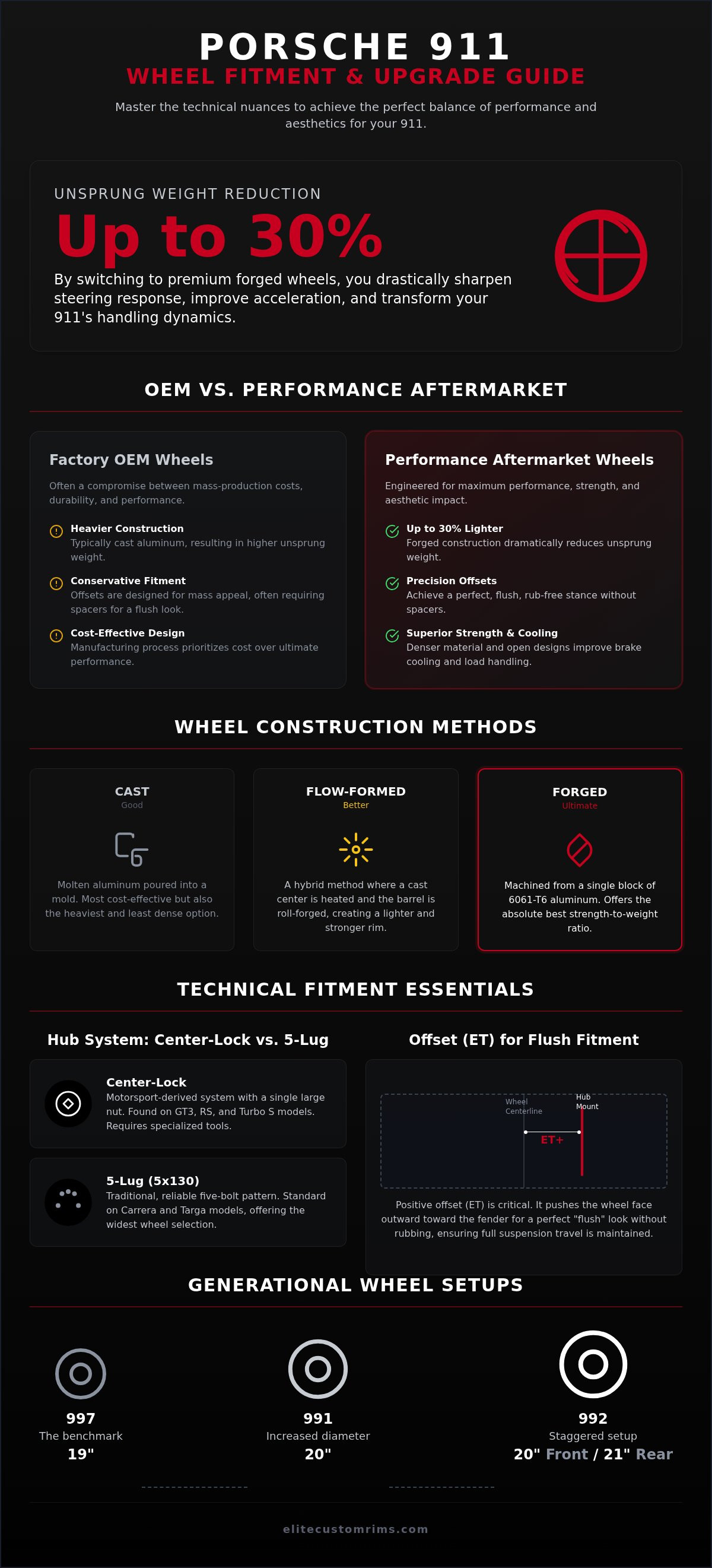
Porsche engineers treat every gram as a challenge. When you look at the Porsche 911 history, you see a legacy of wheel innovation that spans from the iconic Fuchs designs to the massive staggered setups on the latest 992.2. However, factory cast wheels are often a compromise between production costs and durability. Premium Porsche 911 wheels made from forged aluminum can weigh 25% to 30% less than their factory counterparts. This isn't just about the scale. Reducing unsprung weight allows your suspension to react faster to road imperfections, keeping your tires in better contact with the pavement.
Achieving a flush stance usually requires wheel spacers, but these add complexity and potential points of failure. High-end aftermarket options use precision offsets to push the wheel face to the fender edge naturally. Most importantly, these upgrades respect the Porsche Active Suspension Management (PASM) system. By maintaining correct diameters and load ratings, you ensure the electronic damping sensors continue to function exactly as Zuffenhausen intended. You get the look you want without sacrificing the ride quality you paid for.
The Benefits of Performance Upgrades
Upgrading your Porsche 911 wheels provides immediate dividends in driving dynamics. Forged construction creates a denser, stronger grain structure, allowing for thinner spokes that don't flex under heavy cornering loads. This design also improves airflow to your braking system, which is critical for preventing fade during spirited canyon runs or track sessions. Beyond the physics, a curated wheel set offers a level of personalization that separates your vehicle from every other stock model at the local meet. It's a statement of intent and performance.
When to Stick with OEM Styles
Originality is a major factor for collectors focused on concours events or maximizing future resale value. For these owners, the "OE-Plus" aesthetic is the ideal middle ground. This involves choosing aftermarket wheels that mirror factory design languages but offer superior widths and offsets. At Elite Custom Rims, we focus on premium fitment that rivals or exceeds factory standards. We eliminate the guesswork by providing wheels that bolt up perfectly to the standard 5x130 pattern or center-lock hubs. You keep the classic Porsche soul while benefiting from modern manufacturing precision.
Technical Fitment: Center-Lock vs. Five-Lug and Offset Precision
Precision is the difference between a car that tracks perfectly and one that vibrates at highway speeds. When selecting Porsche 911 wheels, the technical specifications are non-negotiable. Every 911 uses a staggered setup, meaning the rear wheels are significantly wider than the fronts. This isn't just for a muscular stance. It's a functional requirement to manage the weight bias of the rear-engine layout and ensure maximum traction during acceleration. Ignoring these factory ratios can severely disrupt the car's balance and trigger traction control errors.
Mastering Porsche Wheel Offset
Offset (ET) is the distance from the hub mounting surface to the wheel centerline. In the world of Porsche, you'll almost exclusively deal with positive offset. This means the mounting surface is located toward the street side of the wheel's center. Getting this number right is the only way to achieve that "flush" look without the risk of fender rub. If you lower your car on aftermarket springs or coilovers, offset becomes even more critical. A few millimeters of error can result in the tire sidewall catching the inner fender lip under compression. We provide exact fitment data to ensure your wheels sit perfectly within the wheel well while maintaining full suspension travel.
Center-Lock vs. 5-Lug Bolt Patterns
The Technical Fitment: Center-Lock vs. Five-Lug debate often comes down to which model you drive. Most Carrera and Targa models utilize the traditional 5x130 bolt pattern. It's a reliable, industry-standard benchmark that offers the widest variety of aftermarket styles. However, track-focused models like the GT3, GT3 RS, and Turbo S feature center-lock hubs. These systems use a single massive nut to secure the wheel, a technology born from endurance racing to allow for faster pit stops.
While center-locks offer a clean, motorsport aesthetic, they require specialized tools and a massive torque wrench capable of reaching 443 lb-ft. Switching between these two systems is technically possible but involves replacing entire hub assemblies, which is rarely cost-effective for street builds. For a deeper dive into these technical specs, consult our definitive reference for luxury fitment. If you're ready to find the perfect set for your specific hub type, browse our curated collection of Porsche wheels to see what's currently in stock for your generation.
Comparing Construction: Forged, Flow-Formed, and Cast Alloys
The construction of your Porsche 911 wheels determines whether you're adding dead weight or performance-enhancing agility to your build. Most factory wheels use traditional casting, where molten aluminum is poured into a mold. While functional, cast wheels often contain microscopic voids that compromise structural integrity under extreme stress. This is why performance enthusiasts demand 6061-T6 aluminum. It's the aerospace-grade standard for high-performance rims. This material provides the necessary tensile strength to withstand high-speed cornering and the intense heat generated by modern braking systems. Choosing the right construction is a balance of your driving environment, performance goals, and budget.
The Case for Forged Monoblock Wheels
Forged monoblock wheels represent the peak of rim technology. During the forging process, a solid billet of aluminum is subjected to immense hydraulic pressure. This crushes the metal into shape, creating a continuous grain structure that is significantly denser and stronger than any cast alternative. For the track-focused 911 owner, this results in a wheel that can be engineered with thinner, more intricate spoke designs without fearing structural failure. While we prioritize the aggressive, lightweight sport fitment required for Zuffenhausen's finest, we also recognize the luxury precision of Mercedes wheels for owners who value refined aesthetics alongside raw performance. CNC machining allows for nearly limitless customization, ensuring your 911 stands out at any event.
Flow-Formed Technology for the Daily Driver
Flow-forming is the strategic middle ground for the Carrera or Targa daily driver. This process starts with a specialized cast "blank" that is then spun at high speeds while hydraulic rollers apply pressure to the barrel. This stretches the aluminum, improving its grain structure and strength in the barrel area where it matters most. It's an efficient way to gain forged-like properties at a more accessible price point.
- Weight Savings: Flow-formed wheels are typically 15% to 25% lighter than standard cast rims, reducing the energy needed to rotate the wheel.
- Increased Durability: The rolling process increases the tensile strength of the aluminum, making it more resistant to impacts from potholes or track curbing.
- Improved Handling: Lowering the weight at the corners of the car allows the PASM system to work more effectively, providing a more composed ride.
For street use, flow-formed Porsche 911 wheels offer a massive upgrade over stock cast options. They provide the durability to handle real-world road conditions while being light enough to noticeably sharpen your steering response and acceleration. It's the value sweet spot for enthusiasts who want better performance without the cost of full monoblock forgings.
Generational Selection: Choosing Rims for 997, 991, and 992 Models
Every Porsche 911 generation carries a unique mechanical DNA. Selecting the right Porsche 911 wheels requires more than just picking a style you like. You must understand the specific chassis constraints of your vehicle. A critical distinction is between widebody and narrowbody models. Widebody cars, such as the Carrera 4, GTS, and Turbo models, feature flared rear arches that demand lower offsets to achieve a flush look. Narrowbody variants require higher offsets to prevent the tires from poking beyond the bodywork. Identifying your chassis correctly ensures your fitment is aggressive yet functional.
992 Generation: The Modern Stance
The 992 generation, including the latest 992.2 models, introduced a major shift in Porsche engineering. It utilizes staggered diameters, typically running 20-inch wheels in the front and 21-inch wheels in the rear. This setup isn't just for show. The larger rear diameter allows for a massive contact patch, improving traction and stability under power. Standard Carrera models differ significantly from GT3 or Turbo fitments, especially regarding width and hub type. For 2026, the trend is moving toward deep concave forged designs. These wheels provide a dramatic visual depth that emphasizes the 992's wide hips. Classic mesh patterns also remain a favorite for those wanting a motorsport-inspired aesthetic.
997 And 991: Timeless Upgrades
Refreshing an older 911 is the fastest way to modernize its presence on the road. The 997 generation (2005-2012) is often considered the peak of "analog" Porsche design, typically performing best on 19-inch benchmarks. Moving to the 991 (2012-2019) saw a shift toward 20-inch wheels as the standard. A common mistake is over-sizing. Installing 21-inch wheels on a 997 chassis often compromises ride quality and ruins the carefully tuned suspension geometry. Instead, focus on modern finishes. Satin black and brushed titanium are the standout choices for 2026. These finishes highlight the complex CNC-machined details of forged rims while maintaining a sophisticated, high-end look.
Don't leave your fitment to chance. Our specialists have mapped out the exact specifications for every 911 chassis since the 997 to take the guesswork out of your upgrade. Browse our curated selection of Porsche wheels to find the perfect generational match for your build.
Upgrading Your 911 with Elite Custom Rims
Elite Custom Rims isn't just a retailer. We're your technical partners in the pursuit of automotive perfection. Choosing the right Porsche 911 wheels is a high-stakes decision that impacts your car’s safety, performance, and resale value. We eliminate the guesswork entirely. Our team curates a selection that meets the rigorous demands of the 911 chassis, focusing on premium materials like 6061-T6 forged aluminum. Every set we ship is verified for your specific generation, ensuring a precise, vibration-free fitment that feels factory-fresh.
We prioritize practical reliability and professional assurance. You don't have to worry about incorrect offsets or hub-bore mismatches. We handle the technical heavy lifting. From the moment you place your order to the day your wheels arrive via our streamlined national shipping, our experts provide dedicated support. We're here to ensure your vision becomes a reality without the technical anxiety often associated with aftermarket modifications. Our goal is a seamless experience from consultation to delivery.
Standout Performance Styles
Our collection features designs that bridge the gap between heritage and modern engineering. We've selected styles that complement the iconic silhouette of the 911 while providing tangible performance gains.
- Lightweight Multi-Spoke Forged: This is the ultimate track-ready choice. It maximizes rigidity while stripping away every unnecessary ounce of unsprung weight for razor-sharp turn-in.
- Classic 5-Spoke Deep Dish: These heritage-inspired looks are perfect for modern chassis. They offer a timeless aesthetic that pays homage to Porsche’s racing history with a contemporary twist.
- Satin Gunmetal Flow-Formed: Get performance aesthetics at a smart price point. These rims offer a sophisticated finish that hides brake dust while providing a significant weight advantage over stock cast wheels.
Start Your Transformation
Your 911 deserves a setup that reflects its pedigree. Don't settle for "good enough" when professional-grade perfection is within reach. Browse our curated collection of performance-driven Porsche 911 wheels today. If you're unsure about your specific hub type or offset requirements, consult with our specialists immediately. We'll verify your 911 generation and lug type to guarantee a flawless result. Beyond our Porsche-specific offerings, you can also Explore our Elite Exotic Wheel Collections to see how we cater to the world's most prestigious supercars.
Take the next step. Sharpen your handling. Perfect your stance. Trust the authoritative specialist to deliver the results your vehicle deserves. Experience the Elite Custom Rims difference.
Master Your Porsche 911 Transformation
Choosing the right Porsche 911 wheels is the most impactful decision you'll make for your car's driving dynamics and visual presence. We've explored how moving from factory cast rims to lightweight forged aluminum can reduce unsprung weight significantly, sharpening every corner you take. Whether you're navigating the complex center-lock requirements of a 992.2 or seeking a flush, rub-free offset for a classic 997, precision is the only path forward. You don't have to settle for guesswork when professional-grade performance is available.
Elite Custom Rims takes the anxiety out of the upgrade process with expert fitment verification for every 911 generation. Our curated selection focuses exclusively on high-performance materials that respect your Porsche's engineering heritage while delivering modern, head-turning aesthetics. With reliable national shipping across the United States and dedicated support, your next performance milestone is closer than you think. It's time to unlock the full potential of your chassis with a setup that matches its pedigree.
Ready to start? Shop Premium Exotic Wheel Collections and consult with our specialists to find your perfect fit. Your 911 is ready to be redefined.
Frequently Asked Questions
Will aftermarket wheels void my Porsche factory warranty?
Upgrading your Porsche 911 wheels won't automatically void your factory warranty. Under federal law, a manufacturer can't deny a warranty claim unless they prove the aftermarket part caused the specific failure. It's vital to choose wheels with correct load ratings and offsets to avoid unnecessary stress on suspension components. We focus on precise fitment to ensure your vehicle remains within factory operating parameters, protecting your long-term investment and providing professional assurance.
What is the difference between center-lock and 5-lug wheels on a 911?
The main difference lies in the mounting mechanism and intended application. Standard 911 models use a 5x130 bolt pattern with five individual lugs. High-performance variants like the GT3 and Turbo S utilize a center-lock system, which secures the wheel with a single massive nut. Center-locks offer a motorsport look and faster wheel changes on the track but require specialized high-torque tools. We provide curated options for both hub types to ensure a perfect mechanical match.
Do I need to buy new TPMS sensors when upgrading my Porsche wheels?
You don't strictly need new sensors, but we highly recommend them for a fresh installation. While you can swap your existing Tire Pressure Monitoring System (TPMS) sensors to new rims, the internal batteries have a limited lifespan. Installing new sensors during your wheel upgrade prevents the hassle of dismounting tires later when an old battery fails. It's a smart, low-cost way to ensure your dashboard alerts remain accurate and reliable from day one.
Can I use my OEM Porsche center caps on aftermarket wheels?
Many of our premium Porsche-specific wheels are engineered to accept factory center caps. This allows you to maintain a clean, original equipment look while benefiting from the performance of a forged or flow-formed barrel. However, compatibility depends on the specific wheel's hub bore and cap diameter. Always verify the cap size with our specialists before ordering. We help you achieve that "OE-Plus" aesthetic by matching the right wheel design with your heritage crests.
How much weight can I save by switching to forged Porsche wheels?
Switching to forged monoblock wheels can save between 25% and 30% of unsprung weight compared to factory cast rims. This reduction is significant because it directly affects the energy required for your suspension to react. Lowering the mass at each corner improves steering response, acceleration, and braking performance. It's the most effective technical upgrade for owners looking to sharpen the handling characteristics of their 911 without making invasive mechanical modifications to the car.
What is the largest wheel size I can fit on a Porsche 992 without rubbing?
The 992 generation is designed for a staggered 20-inch front and 21-inch rear setup. While some enthusiasts attempt 21-inch fronts and 22-inch rears, this often requires extremely thin tire sidewalls that compromise ride quality and risk fender rub. For a flush, daily-driver stance, we recommend sticking to the factory-diameter staggered setup but increasing the width and adjusting the offset. This fills the wheel wells perfectly without interfering with the Porsche Active Suspension Management (PASM) sensors.
Does Elite Custom Rims offer wheel and tire packages?
Elite Custom Rims focuses exclusively on providing new, high-performance Porsche 911 wheels. We don't sell standalone tires or offer wheel and tire packages. By specializing in the wheels themselves, we ensure every rim in our collection meets the highest standards for forged and alloy construction. This allows you to select the exact performance tire brand you prefer from your local specialist while we provide the authoritative fitment and national shipping for your new rims.
What is the ideal offset for a widebody Porsche 911 Turbo?
Widebody 911 Turbo models require a lower rear offset compared to narrowbody Carrera variants to fill the deeper wheel arches. While exact numbers vary by generation, a rear offset (ET) in the range of 45mm to 50mm is common for achieving a flush look on a 991 or 992 Turbo. Getting this right is essential for traction and stability. Our specialists verify your specific chassis data to ensure your new setup provides an aggressive stance without any clearance issues.