
Buying the wrong set of custom rims isn't just a blow to your ego. It's an expensive mistake that can compromise your vehicle's safety and performance. You've likely spent hours browsing the latest styles for your Tesla or Cadillac Escalade, yet the technical jargon surrounding what is wheel backspacing causes hesitation. It's stressful to wonder if your dream wheels will actually clear your brake calipers or if they'll rub against the suspension the moment you turn the wheel. You want a transformative look, but you need the practical reliability of a perfect fit.
This guide eliminates the guesswork and gives you total control over your vehicle's stance. Mastering this measurement is the only way to achieve a professional, rub-free fitment on high-performance vehicles. We'll turn that technical anxiety into authoritative knowledge. You'll learn the physical boundaries of wheel geometry, the specific differences between backspacing and offset, and how to measure your way to a flawless installation every time. Get ready to choose your next set of rims with the confidence of an industry specialist.
Key Takeaways
- Define exactly what is wheel backspacing to protect your suspension from costly interference and rubbing issues.
- Master the measurement process with a simple straightedge and tape measure to verify fitment before you buy.
- Differentiate between backspacing and offset to achieve the ideal "poke" or "stance" for your specific vehicle.
- Protect your investment by identifying inner clearance danger zones involving struts, shocks, and control arms.
- Access professional-grade insights for fitting custom wheels on luxury brands like Tesla, Porsche, and Cadillac.
What is Wheel Backspacing? The Technical Definition
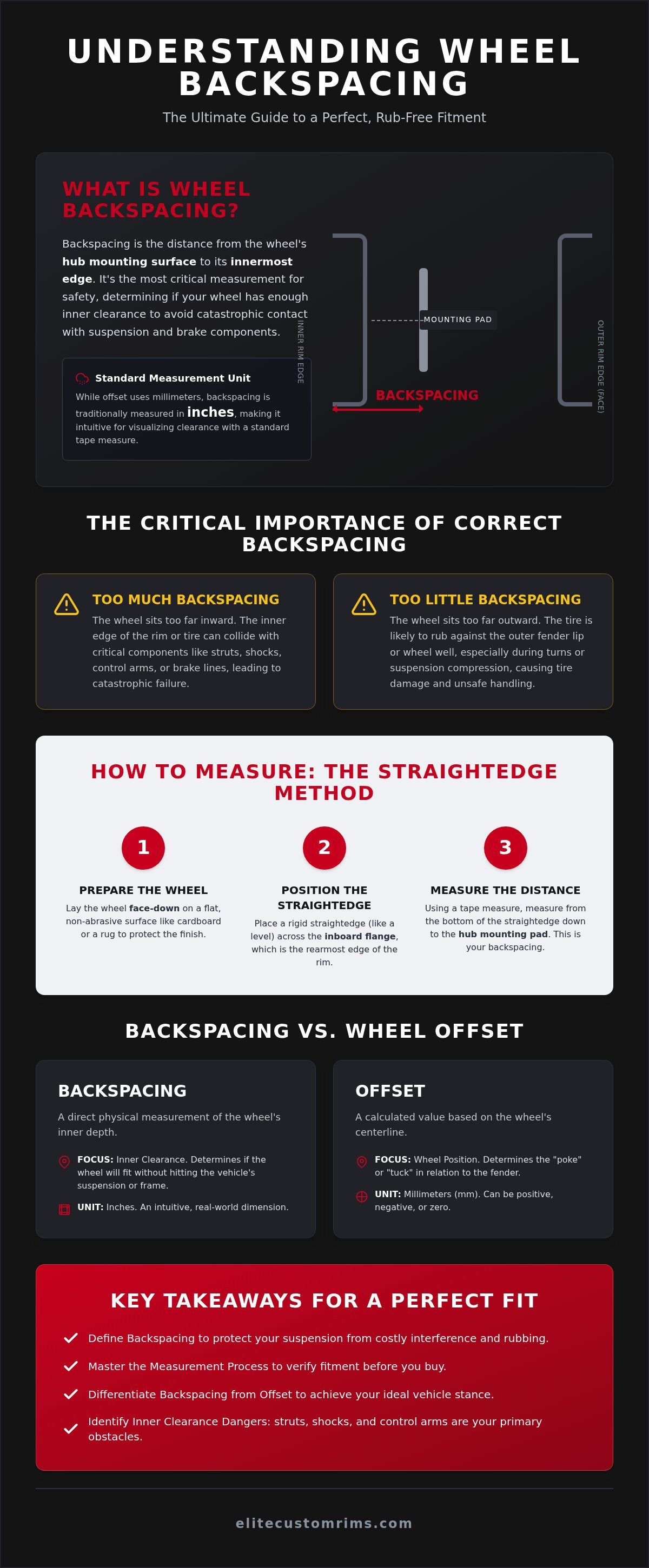
Precision is everything in the world of high-end automotive upgrades. To understand what is wheel backspacing, you must look at the physical relationship between your rim and your vehicle's hub. Simply put, wheel backspacing is the measured distance from the wheel's hub mounting surface to its innermost edge. This measurement is the definitive safety metric for your vehicle. While other specs focus on style, backspacing determines whether your wheels will actually turn without catastrophic failure.
This dimension is critical because it defines the "inner territory" of your wheel well. If the backspacing is too deep, the inboard rim flange will collide with your suspension components. If it's too shallow, your tires might rub against the outer fender lip. Most factory setups utilize a positive offset between +20mm and +45mm, which results in specific backspacing requirements. Mastering this geometry allows you to achieve the "flush" look on a Porsche or the aggressive "poke" on a Cadillac Escalade without compromising mechanical integrity.
The Anatomy of a Wheel: Where Backspacing Lives
The hub mounting surface is the "zero point" for all fitment calculations. This is the flat area on the back of the wheel that presses directly against your vehicle's brake rotor or drum. From this point, we measure back toward the inboard lip, which is the edge of the wheel closest to the frame. This distance is your backspacing. It's a direct indicator of how much room remains for your struts, shocks, and control arms. As you increase wheel width, your backspacing must be carefully managed. A wider wheel with the same offset will naturally have more backspacing, potentially pushing the rim into your suspension. We eliminate the guesswork by ensuring every wheel we offer respects these tight tolerances.
Why We Use Inches Instead of Millimeters
The wheel industry often feels like a tug-of-war between two different measuring systems. While modern offset is almost always calculated in millimeters, backspacing remains firmly rooted in the American standard of inches. This legacy measurement is particularly vital for truck and SUV enthusiasts. When you're selecting custom wheels for a lifted Toyota or a GMC, backspacing is the most intuitive way to visualize frame clearance. It's much easier to measure a three-inch gap with a standard tape measure than to convert complex metric offsets on the fly. For a broader look at how these dimensions interact with width and diameter, exploring Wheel Sizing standards provides the technical foundation every enthusiast needs. Understanding what is wheel backspacing in inches ensures you speak the same language as the specialist builders who demand perfection.
How to Measure Wheel Backspacing: A Step-by-Step Guide
You don't need a degree in mechanical engineering to verify your wheel fitment. You just need the right technique. Understanding what is wheel backspacing is the first step; physically measuring it is where you gain the confidence to buy. For those who want to confirm their specs before placing an order, this DIY method provides professional-grade results without specialized equipment. Precision is the difference between a flawless stance and a costly return. Get your tools ready and follow these steps for a perfect read.
The Straightedge Method
Accuracy starts with preparation. Gather a rigid straightedge, like a carpenter's level, and a precise tape measure. Find a flat, stable surface where you can work comfortably. This process is the gold standard for enthusiasts who demand total certainty.
- Step 1: Lay the wheel face-down. Always use a non-abrasive surface like cardboard or a clean rug to protect the finish of your custom rims.
- Step 2: Place the straightedge across the inboard flange. This is the very edge of the rim that faces the vehicle's frame. Ensure the straightedge is perfectly flat and not resting on any debris.
- Step 3: Measure the vertical distance. Drop your tape measure from the bottom of the straightedge down to the hub mounting pad. This is the flat surface where the wheel meets the rotor.
This simple process gives you the exact measurement in inches. It's the most reliable way to learn How to Measure Wheel Backspacing for any rim in your garage. Double-check your measurement to ensure you haven't tilted the tape measure; even a small angle can skew your results.
Measuring with Tires Mounted
Measuring with tires attached adds a layer of complexity. Tires naturally bulge past the rim flange, which can interfere with your straightedge. To get an accurate read, you may need to deflate the tire slightly. This allows the straightedge to sit flush against the metal edge of the rim rather than the rubber sidewall. Alternatively, use the "straightedge gap" trick. Place two small blocks of equal thickness on the rim flange to lift the straightedge above the tire bulge. Measure the distance to the hub, then subtract the block thickness from your total. This ensures your data remains pure despite the tire's presence.
If you are still in the shopping phase, you can calculate this dimension using the manufacturer's specs. Remember that a wheel's overall width is typically one inch wider than its stated width. Use this formula: (Overall Width / 2) + (Offset / 25.4). This conversion is vital for ensuring your luxury wheels will clear your suspension. Mastery of these steps removes the anxiety of fitment and puts you in the driver's seat of your vehicle's transformation.
Backspacing vs. Wheel Offset: Clearing the Confusion
Understanding what is wheel backspacing requires a clear grasp of its metric sibling: wheel offset. These two measurements describe the same physical reality but use different starting lines. Offset measures the distance from the wheel's centerline to the hub mounting surface in millimeters. Backspacing measures from the innermost edge to that same hub surface in inches. They are two sides of the same coin. Precision dictates stance, and you cannot master one without respecting the other.
The most common point of confusion occurs when enthusiasts assume these numbers move in lockstep. They don't. If you take two wheels with an identical +20mm offset, but one is 8 inches wide and the other is 10 inches wide, their backspacing will be completely different. The wider wheel will reach much further toward your suspension components. This is why relying solely on offset can lead to clearance disasters. For a deep dive into these mechanics, our guide on Backspacing vs. Wheel Offset provides the technical clarity needed for a professional build.
The Centerline Connection
The centerline is the invisible pivot point for every fitment calculation. To find it, you must first acknowledge that a wheel's total width is usually one inch wider than its listed size due to the rim flanges. A 9-inch wheel is actually 10 inches wide from edge to edge. The centerline sits exactly in the middle at 5 inches. To calculate the relationship, use this formula: (Total Width / 2) + Offset = Backspacing. Luxury wheel manufacturers for brands like Audi and Mercedes often list both specs because they know high-performance braking systems leave zero room for error. We provide these precise details to ensure your wheels arrive ready for a perfect, bolt-on transformation.
Positive vs. Negative Offset vs. Deep Backspacing
Your desired aesthetic depends entirely on how you manipulate these numbers. The coveted "Deep Dish" look found on custom Chevy or GMC trucks relies on low backspacing and negative offset. This pulls the mounting surface toward the back of the rim, pushing the wheel face outward. Conversely, modern Tesla and Porsche models typically require high backspacing and positive offset. This design keeps the wheel tucked within the fender for optimal aerodynamics and suspension geometry. Whether you want a "flush" look that aligns perfectly with the fender or an aggressive "poke" that commands attention, these dimensions dictate your vehicle's final stance. We take the guesswork out of this equation by curating brand-specific wheels designed to meet these technical requirements perfectly.
Performance Impact: Why Your Backspacing Must Be Precise
Precision isn't a luxury; it's a mechanical necessity. When you're upgrading a high-performance vehicle, every millimeter counts toward your safety. Understanding what is wheel backspacing allows you to navigate the "inner clearance" danger zone with absolute certainty. If your backspacing is off by even half an inch, you risk catastrophic contact with your struts, shocks, or control arms. This isn't just about a noisy ride. It's about preventing a tire blowout or suspension failure at highway speeds. Proper fitment ensures your vehicle performs exactly as the engineers intended.
Beyond physical clearance, backspacing dictates your steering geometry. It directly influences your scrub radius, which is the distance between the steering axis and the center of the tire's contact patch. If you push your wheels too far out or pull them too far in, you'll feel it in the steering wheel. Your car might wander on the highway or exhibit aggressive kickback when you hit a pothole. Precision fitment preserves that crisp, factory steering feel while giving you the upgraded look you desire. It eliminates the anxiety of "fender rub" during full-lock turns or when the suspension compresses over a dip in the road.
Suspension and Frame Interference
What happens when backspacing is too high? The wheel sits too deep in the well. This often leads to tires "polishing" your frame rails. You'll notice shiny, bare metal where the rubber has rubbed away the paint during full-lock turns. This contact can damage the tire sidewall and compromise your turning radius. While some enthusiasts use spacers as a temporary fix for backspacing errors, this adds another failure point to your hub assembly. It's always better to start with a wheel that fits correctly from the factory. We take the guesswork out of the equation by providing wheels that respect these tight tolerances.
Brake Caliper Clearance
Modern luxury cars like Audi and Mercedes present a unique challenge: massive multi-piston calipers. For these vehicles, what is wheel backspacing is only half the battle. You must also consider the "X-factor," which refers to the curvature of the spokes. Even if your backspacing clears the suspension, a flat spoke design might still collide with a big brake kit. You need a wheel that accounts for both the mounting depth and the physical volume of high-performance brakes. We specialize in performance wheels that provide the necessary clearance for high-piston calipers without requiring dangerous modifications.
Ready to upgrade? Shop precision-engineered wheels for your luxury performance car.
Selecting the Right Backspacing for Your Elite Vehicle
Finding the perfect fitment starts with a solid baseline. To identify your factory specs, check the stamping on the back of your OEM rims or consult a vehicle-specific fitment database. Understanding what is wheel backspacing for your stock setup allows you to make informed decisions when moving to wider aftermarket options. Whether you're lifting a domestic truck or lowering a luxury sedan, the goal is always the same: maximum aesthetic impact with zero mechanical compromise. We eliminate the risk by curating wheels designed for your exact chassis and performance needs.
Universal fitment is a myth in the high-end wheel world. A specialist who understands brand-specific geometry can tell you exactly how a change in width will affect your inner clearance. This expertise is what takes the guesswork out of the equation. Buying from an authoritative partner ensures your new rims are engineered to clear your specific suspension and brake setup right out of the box. It turns a stressful technical decision into a confident investment in your vehicle's transformation.
Truck and SUV Fitment: GMC, Chevy, and Toyota
Truck enthusiasts often prioritize an aggressive "poke" or a deep-dish look. For those looking at Chevy Silverado wheels, backspacing typically ranges between 4.5 and 5.5 inches. This balance is critical when running 22-inch rims with wide, high-profile tires. You need enough inner clearance to avoid the frame rails while maintaining a full turning radius. Achieving that commanding stance requires a specialist who knows how lift kits and leveled suspensions alter these requirements. We provide the precise data needed to ensure your GMC or Toyota remains as functional as it is stylish.
Luxury Fitment: Tesla, Mercedes, and Audi
The luxury segment demands even higher precision. Modern electric vehicles and performance sedans utilize high-offset designs that result in deep backspacing. For example, Tesla Model Y wheels must clear sophisticated suspension sensors and regenerative braking hardware. Similarly, selecting Mercedes S-Class wheels involves respecting the tight tolerances of advanced air suspension systems. Elite Custom Rims guarantees fitment for these performance brands because we only offer wheels engineered for these specific technical profiles. We ensure your Audi or Porsche maintains its sophisticated look without any risk of rubbing.
Never skip the test fit. Before you finalize a custom order, verify the physical clearance on your hub. This final check confirms that your understanding of what is wheel backspacing translates to a rub-free reality. Working with an authoritative specialist ensures your investment is protected by data, not guesswork. Get the stance you want with the reliability you deserve.
Achieve Your Perfect Stance with Total Confidence
You now have the technical foundation to transform your vehicle without the fear of expensive fitment errors. By mastering what is wheel backspacing, you've moved past the common confusion between offset and inner clearance. You understand how to measure with precision and why specific suspension geometry matters for your high-performance build. This knowledge is the definitive difference between a generic upgrade and a professional-grade fitment that performs as well as it looks on the road.
Don't let technical anxiety hold back your vehicle's true potential. We take the guesswork out of the process with expert support for custom truck offsets and guaranteed fitment for luxury brands like Tesla, Audi, and Mercedes. Every order includes national shipping to ensure your performance wheels arrive ready for a flawless, rub-free installation. Our team is dedicated to providing the reliable expertise and support you need for a successful, high-end transformation.
Browse Precision-Fit Luxury Wheels at Elite Custom Rims
Your dream build is finally within reach. Take the next step and give your vehicle the elite presence and superior performance it deserves.
Frequently Asked Questions
Is more backspacing better for my car?
No, more backspacing isn't necessarily better. It pushes the wheel further into the wheel well. If backspacing is too high, the inboard rim flange will hit your suspension, struts, or brake lines. The best backspacing is the specific measurement that aligns with your vehicle's factory geometry while allowing for the desired wheel width. We ensure every wheel we ship matches these precise requirements for a safe, rub-free fitment on every performance order.
Can I change my backspacing without buying new wheels?
You can technically decrease backspacing by using wheel spacers. A spacer sits between the hub and the wheel, pushing the rim outward and effectively reducing the backspace measurement. However, you can't increase backspacing without replacing the wheel itself. While spacers provide a quick fix for minor clearance issues, they add another failure point to the hub. It's always safer to buy brand-specific wheels engineered with the correct dimensions from the start.
How does wheel width affect backspacing calculations?
Wheel width is a critical variable because what is wheel backspacing depends on where the hub mounting surface sits relative to the total width. If you increase the width of your rim but keep the offset the same, your backspacing will naturally increase. For example, moving from an 8-inch to a 10-inch wheel with the same offset adds an extra inch of backspacing. This pushes the inner lip closer to your suspension components.
Will a higher backspacing cause my wheels to stick out?
No, a higher backspacing actually pulls the wheel further into the vehicle's body. Higher numbers mean the mounting surface is closer to the front face of the wheel, pushing the bulk of the rim toward the frame. If you want your wheels to "poke" or stick out for an aggressive stance on a Chevy or GMC truck, you actually need lower backspacing. This moves the mounting surface toward the back of the wheel.
What is the difference between backspacing and frontspacing?
Backspacing measures the distance from the hub mounting surface to the inboard edge, while frontspacing measures from that same surface to the outboard face. Together, these two measurements equal the total width of the wheel. While backspacing is the safety metric for suspension clearance, frontspacing determines your fender flushness. Balancing both is the key to achieving a professional look on luxury models like the Tesla Model Y or Audi RS series.
How do I know if my backspacing is causing rubbing?
Listen for metal-on-metal grinding or a dull thud when turning the steering wheel to full lock. You should also visually inspect your inner wheel wells and frame rails for shiny spots or worn paint. These polished areas are clear indicators that your tires are making contact with the vehicle's structure. If you notice these signs, your backspacing is likely too high for your current suspension and tire combination, requiring a more precise fitment solution.
Do I need to measure backspacing for OEM-style replacement wheels?
You don't need to measure if you are buying brand-specific wheels from an authoritative specialist. We already maintain a database of what is wheel backspacing requirements for every vehicle we support. If you're replacing a damaged rim on a Mercedes S-Class or Porsche, we provide wheels engineered to match the factory geometry exactly. This eliminates the need for manual measurements and ensures a perfect, bolt-on installation every time you upgrade your vehicle.
What happens if I use the wrong backspacing on a performance vehicle?
Using the wrong backspacing can lead to catastrophic mechanical failure. On performance cars with big brake kits, incorrect dimensions can cause the wheel spokes to collide with the calipers. It also alters your scrub radius, which ruins steering precision and causes the car to wander at high speeds. Precision is mandatory for safety. We focus on providing new, high-performance wheels that respect these technical boundaries to keep your vehicle stable and responsive during every drive.