
What if the best-looking 18-inch rims are the wrong choice for your vehicle? A sharp finish and the right diameter aren’t enough to confirm fit. When shopping for an 18 inch rims set of 4, you also need to match the wheels to your vehicle’s exact year, make, model, and trim.
Terms like bolt pattern, offset, center bore, and wheel width can make it hard to compare listings. A listing that says “set” may also leave questions about quantity and included components. Check the specifications before you order, not after the wheels arrive.
This guide explains how to verify vehicle-specific fitment, compare wheel materials, finishes, and designs, and check what a four-wheel listing includes. You’ll also learn what to confirm about load ratings and other fitment details. Elite Custom Rims sells new wheels with dedicated fitment options for specific vehicle models. Review each listing’s specifications and contents before purchasing. Start with compatibility, then choose the look and construction that suit your priorities.
Key Takeaways
- An 18-inch diameter alone doesn’t confirm fit. Match wheel specifications to your vehicle’s year, make, model, and trim.
- Before choosing an 18 inch rims set of 4, check the stated quantity and confirm exactly which components are included.
- Compare verified wheel attributes, such as material, weight, and finish, to balance practical priorities with the look you want.
- Use a fitment checklist to compare bolt pattern, offset, center bore, width, and load rating instead of relying on appearance.
- Confirm fitment first, then compare listed features and styles across vehicle-specific wheel options.
Shopping for an 18 Inch Rims Set of 4? Start With What the Listing Means
Start with the measurements, not the finish. “18-inch” refers to the wheel’s diameter, but it doesn’t tell you whether the wheel fits your vehicle. Likewise, “set of 4” confirms a quantity only when the listing says so. Before comparing designs, check what the listing describes and which specifications you still need to verify.
What does “18-inch rims set of 4” mean?
The 18-inch measurement is the wheel diameter. It isn’t the wheel’s width or the tire size. Wheels and tires are related but separate components. “Rim” is often used to mean the complete wheel, though it has a more specific meaning; see what a wheel rim is for a basic explanation.
An 18 inch rims set of 4 should mean four wheels only if the product listing confirms that quantity. Read the item description and included-items details. Check whether tires, mounting hardware, center caps, or other components are listed. Don’t assume they’re included if the listing doesn’t specify them. Elite Custom Rims sells new wheels, not standalone tires or tire installation services.
Why diameter alone cannot confirm fitment
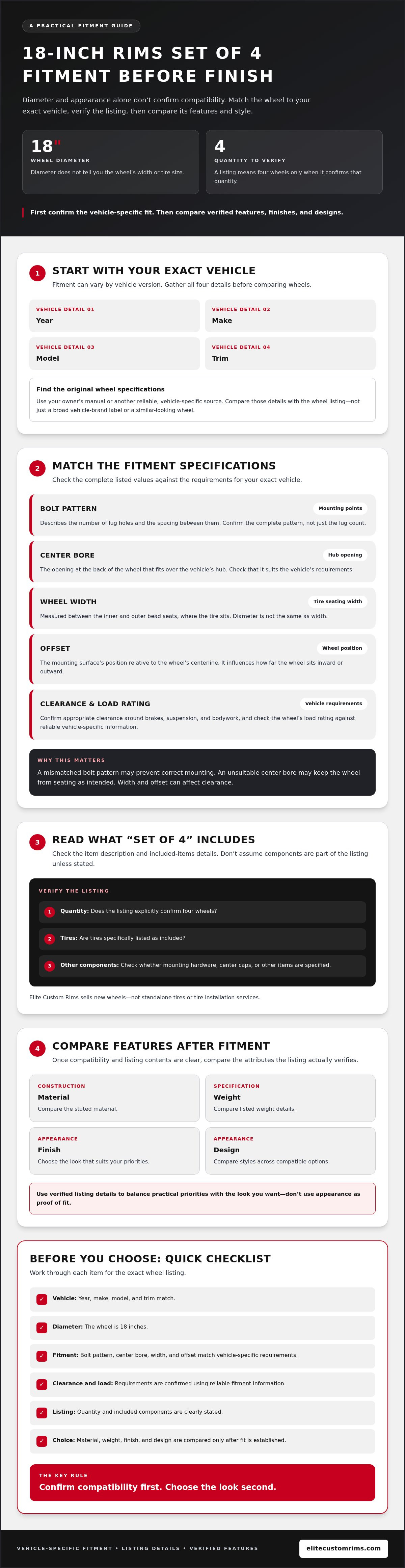
Diameter is only one part of compatibility. The bolt pattern must match the vehicle’s mounting points; width and offset affect how the wheel sits; and the center bore must suit the vehicle’s hub. Required specifications can vary by year, make, model, and trim, so a wheel that fits one version may not fit another.
Before browsing, identify your exact vehicle details and find its original wheel specifications in reliable vehicle-specific information. Compare those details with the specifications in each product listing. Similar appearance, a matching diameter, or a broad vehicle-brand label doesn’t prove fit.
- Diameter: Confirm the wheel is 18 inches.
- Vehicle details: Match year, make, model, and trim.
- Fitment specifications: Compare bolt pattern, width, offset, and center bore.
- Listing contents: Verify quantity and any included components.
Bottom line: An 18-inch diameter is only one part of wheel fitment. Confirm compatibility and listing contents first. Once those details are clear, compare finishes, designs, and other verified features.
Will 18-Inch Rims Fit Your Vehicle? Check These Specifications
They can, but an 18-inch diameter by itself doesn’t establish fit. The bolt pattern, center bore, width, and offset must also suit your vehicle, and clearance needs to be considered. Start with the exact year, make, model, and trim. Find the original wheel specifications in your owner’s manual or other reliable vehicle-specific information, then compare them with the specifications in the wheel listing.
Small measurement differences can matter. A mismatched bolt pattern may prevent a wheel from mounting correctly, while an unsuitable center bore may keep it from seating on the hub as intended. Width and offset affect where the wheel sits and can change clearance around brakes, suspension components, and the vehicle body. For an overview of vehicle-specific fitment considerations, see this custom wheels fitment reference.
Bolt pattern and center bore: match the hub
Bolt pattern describes the number of lug holes and the spacing between them. Confirm the complete vehicle-specific pattern, not just the lug count. Center bore is the opening at the back of the wheel that fits over the vehicle’s hub. Check both measurements in the listing and compare them with your vehicle’s requirements. A shared brand, familiar-looking wheel, or matching diameter doesn’t prove compatibility.
Wheel width, offset, and clearance
Wheel width is measured between the inner and outer bead seats, where the tire sits. Offset describes the position of the wheel’s mounting surface relative to its centerline, influencing how far the wheel sits inward or outward. Don’t judge either value by appearance. Confirm that the listed dimensions suit your vehicle and allow appropriate brake, suspension, and body clearance.
Use this quick comparison before choosing an 18 inch rims set of 4:
- Vehicle: Record year, make, model, and trim.
- Original specifications: Find the wheel measurements in a reliable vehicle-specific source.
- Wheel listing: Compare bolt pattern, center bore, width, and offset.
- Clearance: Confirm fit around brakes, suspension, and bodywork using verified fitment information.
For additional context on rim-related federal safety standards, consult the NHTSA’s Federal Wheel Rim Safety Standards reference. Use verified measurements, not a visual match, to decide whether a wheel fits. Once you have your vehicle details, explore vehicle-specific wheel options and compare each listing’s specifications before choosing a style.
Compare 18-Inch Wheel Materials, Finishes, and Everyday Trade-Offs
After verifying fitment, compare construction and appearance. Material, manufacturing method, and finish can influence a wheel’s weight, strength, care needs, and visual character. Don’t assume those traits from a photo or a broad product label. Check each listing’s specifications, including its load rating, and compare that rating with your vehicle’s requirements.
Alloy and other wheel construction options
Wheel materials and construction methods involve different trade-offs, but there’s no reliable shortcut based on category alone. A wheel’s actual weight, strength, and intended use depend on its design and specifications. Review the product details rather than assuming one material is automatically lighter or more durable. If a listing doesn’t state an attribute you care about, treat it as unconfirmed.
Choose a finish and design that suit your vehicle
Spoke patterns, such as multi-spoke, split-spoke, or mesh, create distinct looks. Finishes may include black, silver, grey, bronze, or machined surfaces, but confirm the exact finish in the product listing. Consider how the design complements your vehicle, how much time you want to spend cleaning it, and how you use the vehicle day to day. Check the manufacturer’s care guidance for the specific finish.
For a model-specific example of how wheel choices connect to vehicle style and performance, explore this Audi Q7 wheel guide. For more on the relationship between offset and backspacing, see Tire Rack’s Understanding Wheel Offset and Backspacing.
Use this comparison table to assess listings side by side. Record details stated by the seller or manufacturer, not guesses based on appearance.
| What to compare | What to record | Buyer priority |
|---|---|---|
| Fitment | Vehicle-specific specifications and verified load rating | Compatibility and suitable load capacity |
| Material and construction | Confirmed material, manufacturing method, and stated weight | Functional needs and intended driving |
| Finish | Exact listed color and surface treatment | Appearance that suits the vehicle |
| Maintenance | Care instructions for the specific finish and design | Cleaning preferences and upkeep |
For an 18 inch rims set of 4, compare the confirmed attributes of each wheel and check whether the listing specifies matching or different front and rear sizes. Choose the style once the fitment details check out. A confident choice balances the look you want with the verified specifications your vehicle requires.
Use This 18-Inch Rim Fitment Checklist Before You Order
Make your final comparison with specifications in front of you, not by judging whether a wheel looks like it should fit. Work through these checks before selecting a listing. If a measurement, trim detail, or listing term is unclear, pause and ask the retailer to clarify it before ordering.
Gather the vehicle and original wheel details
Start with your vehicle’s year, make, model, and trim. Note any relevant brake package, since vehicle configurations can affect fitment and clearance. Check the owner’s manual, vehicle documentation, or markings on the existing wheels for the original specifications. If you’re researching a Chevy Silverado, consult this Chevy Silverado wheel guide as a model-specific reference.
Verify the listing before checkout
Compare every relevant measurement with reliable vehicle-specific information. Don’t rely on wheel diameter, vehicle brand, or a similar-looking photo as proof of compatibility. Then read the listing carefully to understand what you’re ordering.
- Record vehicle details: Write down the year, make, model, trim, and any relevant brake package.
- Check your existing wheels: Use your owner’s manual, vehicle documents, or wheel markings to locate original specifications. Confirm they apply to your exact vehicle configuration.
- Match the wheel measurements: Compare diameter and width, then verify bolt pattern, offset, and center bore against the vehicle’s requirements.
- Confirm load rating: Check that the wheel’s stated load rating meets the requirement for your vehicle. If the listing doesn’t provide this information, ask before purchasing.
- Read the set details: Confirm the stated quantity and check which components are included. Don’t assume tires, hardware, or other items come with the wheels unless the listing says so.
- Review purchase terms: Check the retailer’s current shipping, return, and warranty terms directly before checkout.
- Resolve uncertainty: If trim, brake clearance, or any specification is unclear, contact the retailer with your full vehicle details and the listing information. Get clarification before placing the order.
Keep the details together as you compare options. A completed checklist helps you assess an 18 inch rims set of 4 based on verified fitment and confirmed listing contents, rather than appearance alone. To compare vehicle-specific wheel options, browse wheels for your vehicle and check each listing against your checklist.
Choose Your 18-Inch Rims Set of 4 With Fitment Confidence
Make the decision in the right order: verify fitment, compare confirmed specifications and features, then choose the finish and design you prefer. That sequence helps you avoid choosing an attractive wheel that doesn’t suit your vehicle. Also confirm the quantity and contents in the listing. Some vehicle configurations may require different front and rear wheel specifications, so check the listing details rather than assuming all four wheels are identical.
Start with your exact vehicle
A broad search for an 18-inch diameter can return options that don’t match your vehicle’s requirements. Begin with the year, make, model, and trim, then compare the wheel’s specifications with reliable vehicle-specific information. Elite Custom Rims is an online retailer of new wheels with vehicle-specific fitment options. Check current listings to confirm whether an 18-inch option is available for your vehicle. Don’t assume availability based on a general brand or diameter category.
Resolve listing questions before checkout
If you’re unsure about trim differences, brake clearance, or a wheel measurement, ask the retailer to clarify before placing an order. Check the listing for stated specifications, quantity, and included components. Confirm what comes with the wheels rather than assuming tires, hardware, or other parts are included. Review the retailer’s current terms directly if you have questions about shipping, returns, or warranty coverage.
Keep the key checks in view:
- Fitment: Match the vehicle details and required wheel measurements.
- Product attributes: Compare only specifications and features confirmed in the listing.
- Set contents: Verify the number of wheels and any included components.
- Remaining questions: Get clarification before checkout if a detail is uncertain.
Elite Custom Rims sells new wheels. It doesn’t sell standalone tires or used or refurbished wheels, and it doesn’t provide tire installation or custom powder coating. If you’re ready to compare vehicle-specific options, explore Elite Custom Rims and verify your fitment before ordering.
Make Your Next Wheel Upgrade a Confident One
A smart 18 inch rims set of 4 purchase starts with verified fitment, not appearance alone. Confirm the wheel measurements against your vehicle’s exact year, make, model, and trim. Then compare listed materials, finishes, and design features, and check the quantity and included components before ordering.
Elite Custom Rims offers new wheels for a range of luxury, performance, and utility vehicle brands, with dedicated fitment options for specific models. Check current listings to see whether an 18-inch option is available for your vehicle, and review its specifications rather than relying on diameter or a visual match. If trim, clearance, or listing details are uncertain, ask for clarification before checkout.
Ready to compare options for your vehicle? Explore Elite Custom Rims and verify your fitment before ordering.
Frequently Asked Questions
Will 18-inch rims fit my car?
They’ll fit only if the other wheel specifications match your vehicle. Check your year, make, model, and trim, then compare the wheel’s bolt pattern, center bore, width, offset, and load rating with vehicle-specific requirements. Also verify brake, suspension, and body clearance. Don’t rely on diameter alone or assume a wheel fits just because it’s listed for the same vehicle brand.
What does an 18-inch rims set of 4 include?
The phrase describes four wheels with an 18-inch diameter, but confirm both the quantity and included items in the listing. Don’t assume tires, mounting hardware, or other components come with the wheels unless the listing states they’re included. Elite Custom Rims sells new wheels, not standalone tires or tire installation. Read the product details before checkout if you need to know exactly what’s supplied.
Can I reuse my current tires with 18-inch rims?
Possibly, but only if your tires are designed for an 18-inch wheel and their size is compatible with the new wheel’s width and your vehicle. Tires made for a different wheel diameter won’t fit an 18-inch rim. Check the tire sidewall for its size and consult a qualified tire professional if you’re unsure about compatibility, condition, or whether the overall tire diameter is suitable.
Are all 18-inch rims the same size?
No. The 18-inch measurement refers only to wheel diameter. Wheels with that diameter can still differ in width, bolt pattern, center bore, offset, load rating, and construction. Those specifications affect whether a wheel mounts properly and clears vehicle components. Compare the full specifications with your vehicle’s requirements rather than treating all 18-inch wheels as interchangeable.
Do I need different tires when switching to 18-inch rims?
You may need different tires if your current tires aren’t designed for an 18-inch wheel. The tire’s size must suit the wheel width and vehicle, and its overall diameter should be appropriate for the vehicle’s clearance and operation. Check your vehicle’s recommended tire sizes and the tire and wheel specifications before buying. Don’t choose a tire based on rim diameter alone.
What is the difference between wheel offset and bolt pattern?
Bolt pattern describes the number of lug holes and their spacing, so it must match the vehicle’s mounting points. Offset describes the position of the wheel’s mounting surface relative to its centerline, affecting how far the wheel sits inward or outward. They’re separate measurements, and both matter for fitment. Verify each one against reliable information for your exact vehicle configuration.
How can I make sure a set of four rims will fit before ordering?
Record your vehicle’s year, make, model, and trim, then compare its required specifications with the listing. Check diameter, width, bolt pattern, offset, center bore, load rating, and clearance. Confirm that the listing states four wheels and review exactly which components are included. If trim, brake clearance, or any measurement remains unclear, ask the retailer to confirm the details before ordering an 18 inch rims set of 4.