
The factory wheel may be a sensible baseline, but it isn’t automatically the best upgrade. When comparing oem vs aftermarket wheels, the real question is whether an alternative can meet your vehicle’s requirements while delivering the look and performance you want. If you’re concerned about vibration, fitment mistakes, or warranty complications, it pays to check the details before buying.
OEM wheels are designed for a specific vehicle. Aftermarket quality and fit can vary, but well-chosen options can offer considered engineering, fresh styling, and the possibility of reducing wheel weight. The difference comes down to the wheel’s specifications and fit, not simply whether it’s factory or custom.
This guide compares construction, safety, weight, appearance, resale considerations, and warranty questions. You’ll learn what to check, including load rating, offset, bolt pattern, and hub fitment, so you can make an informed choice. We’ll also look at how OE-style designs and bold 22- and 26-inch options can change a vehicle’s appearance without leaving compatibility to guesswork.
Key Takeaways
- Understand the difference between factory OEM wheels, third-party aftermarket options, and OE-style designs before comparing choices.
- Compare casting, flow forming, and forging to see how construction can affect weight, strength, and driving feel.
- Consider finishes and designs beyond factory catalogs, then weigh personal style against durability and resale considerations.
- Compare more than price. Construction, fitment, vehicle requirements, and intended use all matter when choosing between OEM and aftermarket wheels.
- Start with your vehicle’s load and speed requirements, then narrow the options to an OE-style or more distinctive custom look.
Defining the Standard: OEM vs Aftermarket vs OE-Style
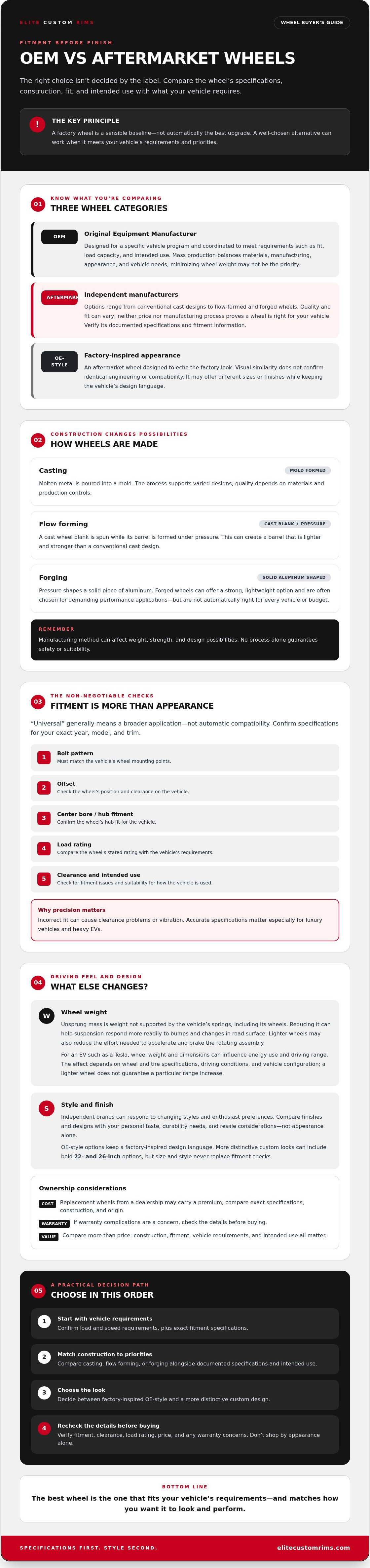
In the oem vs aftermarket wheels comparison, the labels describe who made the wheel and how it was designed, not a guaranteed level of quality. OEM means “Original Equipment Manufacturer,” a term for companies that make parts to an automaker’s specifications. The Original Equipment Manufacturer definition offers useful context, but buyers should still assess each wheel’s construction, specifications, and fitment.
The Anatomy of an OEM Wheel
An automaker selects wheel designs and specifications for a vehicle program, then coordinates production to meet requirements such as fit, load capacity, and intended use. The wheels must work with the model’s planned configurations and production needs. As a result, the design may prioritize broad suitability over specialized preferences for performance or appearance.
Cost efficiency is also part of mass production. Automakers balance materials, manufacturing, appearance, and vehicle-level requirements, so minimizing wheel weight isn’t always the priority. Replacement wheels purchased through a dealership may also carry a premium over other options. Compare the exact specifications, construction, and origin rather than assuming the OEM label alone establishes value.
The Aftermarket Evolution
Aftermarket wheels come from independent manufacturers and range from conventional cast designs to flow-formed and forged options. Neither price nor manufacturing process proves that a wheel is right for your vehicle. Check its documented specifications and the seller’s fitment information. Independent brands can also respond to changing styles and enthusiast preferences without waiting for a new vehicle generation or factory trim.
Not every aftermarket wheel fits every vehicle. “Universal” generally means a broader application, not automatic compatibility. Some designs are developed for particular vehicles and their fitment requirements. Before choosing, confirm the bolt pattern, offset, center bore, and load rating for your exact year, model, and trim. For luxury vehicles and heavy EVs, accurate specifications matter. The wrong fit can cause clearance problems or vibration.
Where OE-Style Fits
OE-style wheels are aftermarket products designed to echo factory appearance. They aren’t made by the vehicle’s original manufacturer, and visual similarity doesn’t confirm identical engineering or compatibility. Their appeal is a factory-inspired look that preserves the vehicle’s design language while offering different sizes or finishes. Check fitment and specifications just as carefully as you would for a more dramatic custom design.
Avoid guesswork by starting with your vehicle’s requirements, then choosing the style and construction that suit your priorities. Don’t shop by appearance alone.
Engineering and Performance: The Technical Truth
In the oem vs aftermarket wheels decision, the manufacturing label alone won’t tell you how a wheel will perform. Construction, weight, load capacity, and fitment all matter. An aftermarket wheel can be a sound choice when its specifications suit the vehicle and its intended use.
Weight Matters: Unsprung Mass Explained
Unsprung mass is the weight not supported by a vehicle’s springs, including its wheels. Reducing it can help the suspension respond more readily to bumps and changes in road surface. Lighter wheels may also reduce the effort needed to accelerate and brake the rotating assembly, although real-world results depend on the full vehicle setup.
For an EV such as a Tesla, wheel weight and dimensions can influence energy use and driving range. The effect varies with wheel and tire specifications, driving conditions, and vehicle configuration, so don’t assume a lighter wheel guarantees a particular range increase. Verify fitment and load rating first.
Strength and Durability Standards
Manufacturing methods shape a wheel’s design possibilities, but no process alone guarantees safety:
- Casting: Molten metal is poured into a mold. This process supports varied designs, but quality depends on materials and production controls.
- Flow forming: A cast wheel blank is spun and its barrel formed under pressure. This can create a lighter, stronger barrel than a conventional cast design.
- Forging: Pressure shapes a solid piece of aluminum. Forged wheels can offer a strong, lightweight option, which is why they’re often chosen for demanding performance applications. They aren’t automatically the right choice for every vehicle or budget.
For a heavy luxury SUV such as a Cadillac Escalade or a high-torque EV, compare the wheel’s stated load rating with the vehicle’s requirements. Appearance and construction type are no substitute for this check. JWL is a manufacturer self-certification standard, while VIA independently verifies and registers test results. SAE references may apply to particular specifications, so ask what a cited standard covers rather than treating “SAE certified” as a universal performance rating. NHTSA’s wheel rim standards reference helps clarify the difference between dimensional or marking rules and a guarantee of performance.
Fitment precision matters just as much. A hub-centric wheel centers on the vehicle’s hub, while a lug-centric setup relies on the lug hardware for centering. Confirm the wheel’s center bore and required hardware for your specific vehicle to help prevent installation issues and vibration. Brand-specific, hub-centric custom wheels can combine style and strength when their specifications match the vehicle. To compare options by vehicle, explore Tesla and Cadillac Escalade wheel options.
Aesthetics and Customization: Beyond the Showroom Floor
Factory catalogs keep styling within the automaker’s planned trims. Aftermarket options give you more room to coordinate wheel design, finish, and size with a vehicle’s character. That flexibility matters when comparing oem vs aftermarket wheels, but the look still needs to suit the vehicle’s fitment and intended use.
Finish changes a wheel’s overall impression. PVD chrome gives a bright, reflective look; matte finishes bring a subdued, modern edge; and tinted clears add depth while letting the underlying wheel color show through. Black finishes, including matte, satin, and gloss, remain a popular 2026 choice for luxury vehicles. A darker finish can sharpen a performance look, while a machined face or restrained contrast may better complement classic lines.
Staggered setups use different wheel widths, and sometimes diameters, at the front and rear. They can create a more planted, purposeful appearance, but shouldn’t be chosen on looks alone. Confirm that the specific setup suits the vehicle and clears its components before committing.
Bespoke Fitment for Luxury Brands
For an Audi Q7, a flush, assertive stance depends on carefully chosen offset and width, not simply a larger diameter. When exploring Audi Q7 wheel options, consider the overall design: concave faces emphasize depth, while deep-lip profiles draw attention to the outer edge. Choose proportions that complement the vehicle rather than overwhelm it.
Rolls-Royce styling calls for a different touch. A refined wheel design should support the vehicle’s formal presence and keep attention on details such as the Spirit of Ecstasy. Consider Rolls-Royce wheel choices that enhance the look without competing with its signature character.
Truck and SUV Presence
A 22-inch wheel can give a Chevy Silverado a more contemporary street stance while keeping the design appropriate to the truck’s proportions. Browse Chevy Silverado wheel styles with utility in mind, too. Consider whether the chosen size and design suit your driving needs, and verify fitment rather than assuming a popular diameter works with every configuration.
On a Cadillac Escalade, 26-inch rims make a bold visual statement. The key is balance: match the finish and spoke design to the SUV’s lines, and confirm the wheel’s specifications for the vehicle. A considered look should feel deliberate, not oversized for its own sake.
Financial Logic: Cost, Value, and ROI
The useful comparison isn’t simply the price of one OEM wheel against a full aftermarket set. Consider the cost of finding the right replacement, the quality you’re buying, and how well the choice fits your plans for the vehicle. In the oem vs aftermarket wheels decision, a low upfront cost can become poor value if the wheel’s specifications or manufacturing quality aren’t suitable.
The Replacement Dilemma
Replacing one damaged factory wheel through a dealer may be straightforward, but the part can carry a dealer premium. If several wheels need replacement, comparing a complete aftermarket set may make sense. Compare equivalent options carefully, including construction, finish, load rating, fitment, and what’s included. Don’t assume a set is a better deal just because it replaces four wheels at once.
OE-style wheels can offer a useful middle ground. Their factory-inspired appearance suits drivers who want a refreshed look without a dramatic design departure, while aftermarket sizing may provide more choice. Factory-like styling doesn’t guarantee factory specifications, though, so verify compatibility and quality before deciding.
Consider resale separately from purchase value. A tasteful aftermarket set may appeal to some buyers, but custom wheels rarely increase a vehicle’s resale value, and aggressive styling may narrow its appeal. Keeping the original wheels gives you the option to return the vehicle to its factory look later. If considering OEM take-offs on the used market, check their condition, authenticity, and specifications. They’re different from new wheels.
Also ask your insurer how a wheel upgrade could affect coverage, documentation, or a future claim. Policies vary, so confirm the details directly rather than assuming custom wheels are automatically covered.
Investment in Performance
Lightweight alloy wheels may reduce rotating weight, which can help the vehicle use energy more efficiently in some driving conditions. Fuel or EV-range savings aren’t guaranteed, however. Wheel size, tire choice, driving habits, and vehicle setup all matter. Treat efficiency as a possible benefit, not a promised payback.
Quality and correct fitment protect more than appearance. A poorly matched wheel can cause clearance or vibration issues, while an unsuitable load rating can make it the wrong choice for the vehicle. Avoid the cheap-wheel trap by checking specifications, construction details, and credible documentation, not just the finish or price.
Forged aluminum wheels may appeal to drivers who value their potential blend of low weight and strength, but the higher initial investment may not be recovered through savings or resale alone.
Compare new wheel options for your vehicle with precision-fit luxury wheels before you commit.
Selecting Your Set: The Elite Decision Framework
Make the oem vs aftermarket wheels choice with a fitment-first checklist. Style matters, but the right set must also suit your vehicle’s weight, brakes, and intended use.
- Check load and speed requirements. Confirm each wheel’s load rating meets the vehicle’s requirements, especially for a heavy luxury SUV or high-torque EV. Match tire speed ratings to the vehicle and your driving needs as well.
- Choose your look. Decide whether you want OE-style restraint or a more distinctive custom design. Consider how the spokes, size, and finish work with the vehicle’s proportions.
- Verify offset and backspacing. These measurements affect where the wheel sits relative to suspension and body components. Confirm clearance for your exact year, model, and trim instead of relying on general “zero-rub” claims.
- Coordinate the finish. Select a finish that complements your paint, trim, and existing details. Consider how it looks in both bright daylight and shade.
- Confirm fulfillment details. Before ordering, check the seller’s fitment information and ask how the wheels will be protected and shipped. Don’t assume shipping or delivery details that haven’t been stated.
Brand-Specific Considerations
Vehicle-specific details can change the right choice. For a Tesla Model Y, compare wheel designs with aerodynamics in mind, and review Tesla Model Y wheel options against your priorities for appearance and efficiency. On a Mercedes S-Class, confirm clearance around the brakes before settling on a spoke design. The Mercedes S-Class wheel guide can help frame that comparison.
For GMC and Toyota trucks, verify the exact bolt pattern and other fitment specifications for the vehicle’s year and configuration. Never assume two trucks share compatible wheels because they look similar.
The Final Inspection
New wheels offer a known condition, while refurbished OEM wheels may have a repair or use history that needs careful assessment. That doesn’t make every refurbished wheel unsuitable, but inspect its condition and documentation closely before buying. Check whether hub-centric rings are required for the wheel’s center bore, and ensure the lug nuts match the wheel’s seat type. Both details matter for correct mounting.
For a more confident comparison, review Elite Custom Rims’ new wheel options for your vehicle and verify the fitment details before ordering.
Choose the Wheels That Fit Your Vision
The right upgrade balances appearance with engineering. OEM wheels provide a factory-designed baseline, while quality aftermarket options can offer more choice in style, construction, and fitment. OE-style wheels sit between them, bringing a factory-inspired look with aftermarket possibilities.
Before deciding on oem vs aftermarket wheels, check the details that protect your investment: load rating, construction, offset, bolt pattern, and hub fit. Then choose a finish and design that suit your vehicle, driving needs, and plans for resale. A bold look matters, but compatibility is what helps make an upgrade feel right every time you drive.
Ready to explore new wheels for your vehicle? Shop luxury and performance wheels from a retailer focused on brand-specific wheels and OE-style options. Compare the specifications, confirm fitment, and choose the set that suits your vehicle.
Frequently Asked Questions
Will aftermarket wheels void my vehicle's factory warranty?
Installing aftermarket wheels doesn’t automatically void your entire factory warranty, but coverage can depend on the warranty terms and the issue being claimed. If a wheel or its fitment is found to have caused damage, related repairs may not be covered. Check your warranty documents and ask the manufacturer or dealer about your specific vehicle before upgrading. Keep the wheel specifications and purchase records for reference.
Are aftermarket wheels as strong as OEM wheels for daily driving?
Some aftermarket wheels are suitable for daily driving, but quality varies by design, materials, and manufacturing. OEM wheels are engineered for a specific vehicle, while aftermarket wheels must be assessed by their own specifications. Check that the wheel’s load rating meets your vehicle’s requirements and review its construction and testing documentation. A premium aftermarket option can be a sound choice, but appearance or price alone can’t establish strength.
What is the difference between hub-centric and lug-centric wheels?
Hub-centric wheels are centered on the vehicle’s hub by a close-fitting center bore. Lug-centric wheels rely on the lug hardware to center the wheel. Correct centering and compatible mounting parts help avoid fitment problems and vibration. Check whether the wheel’s center bore matches your vehicle and whether hub-centric rings are required. Also confirm that the lug nuts match the wheel’s seat design, since mismatched hardware can prevent proper seating.
Why are OEM wheels so much more expensive than aftermarket options?
OEM replacement wheels may cost more because they’re sold through manufacturer and dealer parts channels and are tied to a specific vehicle’s factory design and specifications. Aftermarket wheels span a broad range of construction, features, and production volumes, so their prices vary too. Don’t compare labels alone. Check whether the options match in size, load rating, construction, finish, and fitment, then weigh those details against the overall value.
Can I use my original TPMS sensors with aftermarket rims?
Often, original tire pressure monitoring system (TPMS) sensors can be reused, but compatibility depends on the vehicle, sensor type, wheel design, and sensor condition. Check that the new wheels accept the required sensor and valve setup. Some vehicles may also need sensor relearning or programming after a wheel change. Confirm the requirements for your exact year and model before ordering, and consult your vehicle documentation or a qualified professional.
How do I know if an aftermarket wheel will fit my car perfectly?
Start with your exact year, make, model, and trim, then verify the wheel’s bolt pattern, diameter, width, offset, center bore, and load rating. Check brake and suspension clearance, too. In the oem vs aftermarket wheels comparison, a matching bolt pattern alone doesn’t prove full compatibility. Ask for vehicle-specific fitment confirmation and check whether the setup needs hub-centric rings or particular lug hardware. Don’t rely on appearance or broad “fits” claims.
Do aftermarket wheels affect the resale value of my luxury car?
Aftermarket wheels don’t reliably increase resale value. A tasteful, high-quality set may suit some buyers, while an aggressive or highly personal design can narrow appeal or affect a trade-in appraisal. Keep the original wheels if you still have them, so you can offer the factory setup with the vehicle or reinstall it before sale. Choose a design that complements the car, and don’t treat the upgrade as a guaranteed financial return.
What are the benefits of choosing OE-Style wheels over pure custom designs?
OE-style wheels are aftermarket wheels designed to echo factory styling. They can refresh a vehicle’s appearance while retaining its original design character, making them a more restrained choice than a bold custom look. Depending on the specific wheel, they may also offer sizing or finish options beyond the factory catalog. OE-style doesn’t mean factory-made or automatically compatible, so verify specifications and fitment just as carefully.