
What if the finish that makes your wheels stand out is also what makes peeling clear coat harder to judge? Weighing diamond cut wheels pros and cons means looking beyond the bright, machined-metal face. If the clear coat is damaged, moisture may reach the aluminum and contribute to peeling or corrosion. What looks cosmetic deserves a closer look before you try a DIY fix.
It’s easy to see the appeal: diamond-cut wheels pair a reflective finish with contrasting painted areas. Unlike a painted or powder-coated finish, their shine comes from a thin layer of metal machined from the wheel face, then protected with clear lacquer. That distinctive look has a practical limitation: each time the wheel is refinished, more material is removed.
This guide explains how diamond-cut wheels compare with other finishes, what may contribute to clear coat peeling, and what to do when you spot damage. You’ll learn what to ask a qualified professional, when refinishing may be considered, and when replacement may be the better next step. Get the facts before sanding, refinishing, or deciding the wheel is beyond saving.
Key Takeaways
- Understand the diamond cut wheels pros and cons by comparing a machined appearance with painted and powder-coated finishes.
- Learn what may contribute to peeling clear coat, and why appearance alone can’t confirm a wheel’s condition.
- Use a careful first-step checklist, including checking for visible cracks, bends, or signs of air loss.
- Know what to discuss with a qualified wheel professional before considering refinishing or replacement.
- If replacement is appropriate, learn which fitment details to verify before choosing new wheels.
What Diamond-Cut Wheels Are, and Why Clear Coat Matters
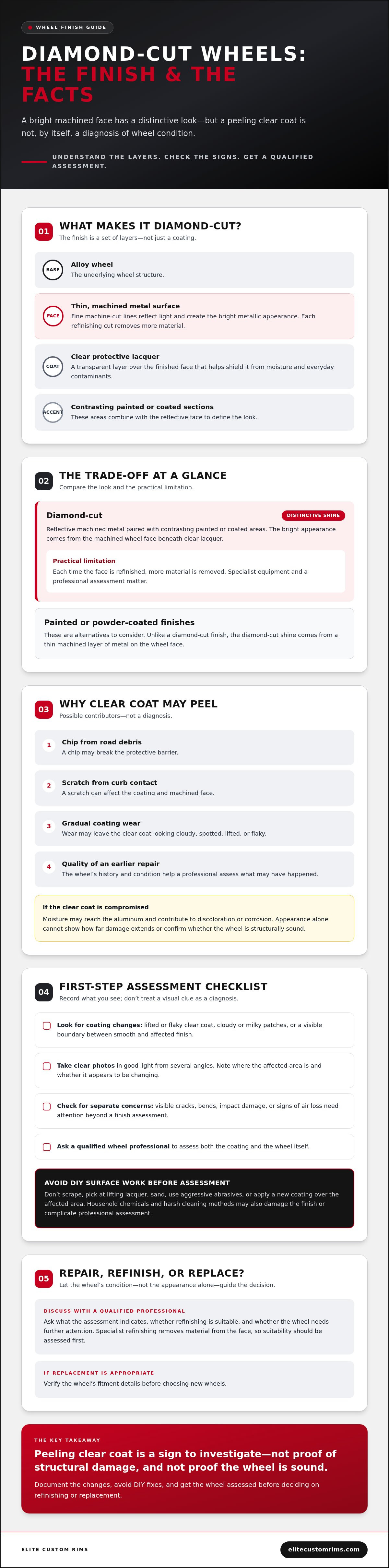
A peeling wheel finish can leave you wondering whether you’re seeing a cosmetic issue or a sign of deeper damage. Appearance alone can’t answer that. A diamond-cut wheel has an alloy base, a reflective machined face, and contrasting painted or coated sections. The face may look like bare metal, but it’s generally protected by a clear coating. Understanding these layers puts the diamond cut wheels pros and cons into perspective without treating a photo or quick glance as a diagnosis.
A diamond-cut finish is the reflective, finely machined surface on part of an alloy wheel, not the clear protective coating applied over it. For context on the base material and common wheel construction, see Alloy wheels.
How the diamond-cut finish is created
During production or specialist refinishing, a machine removes a very thin layer from the wheel face. This creates fine, precise lines that reflect light and give the wheel its bright, metallic appearance. Other areas remain painted or coated, creating the contrast that defines the look. The process requires care and specialist equipment, and each cut removes material. Before refinishing is considered, ask a qualified wheel-refinishing professional to assess the wheel and explain whether the work is suitable.
What clear coat does on a diamond-cut wheel
The clear coat is a transparent protective layer over the finished surface. It helps shield the machined face from moisture and everyday contaminants. If a chip, scratch, or coating failure breaks that barrier, the surface may look dull or spotted, or it may start to peel. These changes show that the finish has been affected, but they don’t establish whether the wheel itself is structurally sound.
That distinction matters. Peeling lacquer may be limited to the finish, while a crack, bend, or other impact damage raises a different concern. Don’t assume either condition from appearance alone. A qualified professional can inspect the wheel and advise whether the issue appears cosmetic or needs further attention.
Until the wheel is assessed, avoid scraping, sanding, or applying a new coating over the affected area. A DIY attempt can alter the machined face or complicate a later professional assessment. The right next step depends on the wheel’s condition, not just how dramatic the peeling looks. That’s a practical starting point for deciding whether the distinctive finish suits your priorities.
Why Clear Coat Peels on Diamond-Cut Wheels
Peeling clear coat can have several possible contributors, and the visible patch doesn’t tell the whole story. A small chip from road debris, a scratch from contact with a curb, gradual coating wear, or the quality of an earlier repair may all be relevant. These are possibilities to discuss, not a diagnosis. The likely explanation depends on the wheel’s history and condition.
Once the protective layer is compromised, moisture and road contaminants may reach the surface beneath it. That can contribute to discoloration or corrosion, but appearance alone can’t show how far any damage extends. It also can’t confirm whether the wheel remains structurally sound or whether refinishing is feasible. This is an important distinction when weighing the diamond cut wheels pros and cons: finish symptoms and wheel integrity need separate assessment.
Signs that the coating may be failing
Look for clear coat that appears lifted or flaky, cloudy or milky patches, or a visible boundary between smooth, intact finish and an affected area. These clues can help you describe what you see, but they don’t confirm the cause or severity.
Before cleaning or touching the spot, take clear photos in good light from several angles. Note where the affected area is and whether it appears to be changing. A crack, bend, or other visible impact damage is different from peeling and deserves prompt assessment by a qualified wheel professional. Don’t rely on the finish’s appearance to rule out structural concerns.
What can make the problem worse
Aggressive abrasives, improvised sanding, or household chemicals can alter or damage the finish, particularly across a precisely machined face. Harsh cleaning methods may also affect a wheel’s coating. Products and finishes vary, so don’t assume a cleaner or repair method suitable for one wheel is appropriate for another.
For now, don’t pick at lifting lacquer or try to smooth the area yourself. Share your photos and observations with a qualified wheel-refinishing professional, and ask them to assess both the coating and the wheel. If that assessment points toward replacement, you can explore new wheel options and verify fitment details before ordering.
Diamond-Cut Wheels: Pros, Cons, and Finish Alternatives
The diamond cut wheels pros and cons largely come down to appearance, care preferences, and the wheel’s condition. A bright machined face can make spoke contours stand out, while other finishes may suit owners who prefer a more uniform look. No finish is automatically right for every driver or wheel.
The advantages of a diamond-cut finish
On wheels with defined spokes or sculpted surfaces, the reflective machined areas create contrast with darker painted sections. That contrast can highlight the wheel’s shape and give it a crisp, detailed appearance. These are aesthetic advantages, not evidence of greater strength, performance, or resale value. The final look depends on the wheel’s design and the owner’s taste.
The drawbacks to consider before choosing it
Face damage may be more noticeable against the bright surface, and restoring its original appearance may require specialist assessment. Routine care matters: follow the wheel or vehicle maker’s cleaning guidance, avoid unapproved products, and inspect the finish for changes. Painted finishes can also chip or need care, so compare how each finish fits your ownership habits instead of assuming one is maintenance-free.
| Finish | Appearance | Routine care | Visible damage and refinishing |
|---|---|---|---|
| Diamond-cut | Reflective machined face, often contrasted with painted sections. | Use suitable cleaning methods and check the face for finish changes. | Marks can stand out on the bright face. Restoring the machined look may require specialist assessment and equipment. |
| Painted | Color covers the wheel surface, creating a more consistent appearance. | Follow finish-specific care guidance and inspect for chips or scratches. | Damage may interrupt the color. A professional can advise whether the finish can be matched or restored. |
| Powder-coated | Typically presents a consistent coated appearance, depending on the wheel and chosen finish. | Care needs depend on the coating; use appropriate cleaning guidance. | Scratches or chips may be visible. Ask a qualified professional about refinishing options for the specific wheel. |
Use the comparison as a guide to preferences, not as a durability ranking. If you value reflective detail and are comfortable monitoring the finish, diamond-cut may appeal. If you prefer a more uniform look, painted or powder-coated finishes may be worth considering. The wheel’s existing condition matters too: a finish choice can’t resolve structural damage, and a qualified professional should assess whether refinishing is suitable. Weigh the appearance you want against the care you’re prepared to give it.
What to Do When Clear Coat Peels: Assessment Checklist
A peeling patch is a reason to pause, not to start sanding. Use this checklist to record what you can safely observe and get the right assessment. A visual check can help you describe the issue, but it can’t confirm whether the wheel is safe or suitable for refinishing.
- Step 1: Park safely. Choose a safe, level place to stop before looking at the wheel. If you notice air loss, a tire-pressure warning, unusual handling, or impact damage, don’t treat the problem as cosmetic. Arrange an appropriate professional inspection before continuing to drive.
- Step 2: Look for obvious damage. Without putting yourself in an unsafe position, check for visible cracks, bends, or other impact marks. Don’t test the wheel by striking, flexing, or applying pressure to it. If you see structural damage or aren’t sure what you’re looking at, leave the assessment to a qualified professional.
- Step 3: Record the finish condition. Note where the peeling appears, its approximate size, and whether it seems to be spreading. Photograph the area clearly from more than one angle before cleaning or touching it. The photos can help you compare changes and explain the concern during an assessment.
- Step 4: Avoid a DIY finish repair. Don’t scrape, sand, polish, or apply clear coat over an uncertain surface. Those steps may alter the machined face or make it harder to assess the original condition. If cleaning is appropriate, follow the vehicle or wheel maker’s guidance and use only a gentle method. Skip cleaning if the wheel may be damaged or the product’s suitability is unclear.
- Step 5: Ask for a professional assessment. A qualified wheel professional should evaluate the wheel material, existing finish, and possible refinishing options. Ask what the proposed process involves, whether it’s suitable for your specific wheel, and how the professional will account for applicable manufacturer requirements. Refinishing isn’t appropriate or feasible in every case, so don’t assume a particular repair will work.
Keep the main question focused: is the issue limited to the coating, or is there damage that affects the wheel itself? That distinction is central to weighing the diamond cut wheels pros and cons and choosing a safe next step. Elite Custom Rims sells new wheels, not repair or refinishing services. If a qualified assessment points toward replacement, explore new wheel options and verify vehicle fitment before ordering.
Repair or Replace? Choose the Next Step and Verify Wheel Fitment
Peeling alone doesn’t provide a reliable answer about whether to repair or replace a wheel. Start with an assessment from a qualified wheel professional, then consider the wheel’s condition, whether refinishing is feasible, your preferred finish, and what matters most to you. That condition-led approach makes the diamond cut wheels pros and cons more useful than choosing by appearance alone.
How to weigh repair against replacement
If the concern appears limited to the finish, ask a qualified professional whether the wheel can be safely refinished and what the process would involve. Feasibility depends on the wheel’s material, existing condition, and repair history. Don’t assume every diamond-cut face can be restored.
Replacement may be worth considering if an assessment identifies damage that makes refinishing unsuitable, if the wheel has limited scope for further machining, or if you’d rather choose a different finish. Compare the professional’s findings with your priorities: preserving the current wheel, changing its look, or choosing a replacement. Elite Custom Rims sells new wheels, but doesn’t offer wheel repair, refinishing, powder coating, or installation.
What to confirm before ordering replacement wheels
Fitment involves more than matching a wheel’s appearance or diameter. Confirm your vehicle’s year, make, model, and trim, then compare the replacement wheel specifications with reliable vehicle-specific fitment information. Verify:
- Bolt pattern: It must match the vehicle’s mounting points.
- Diameter and width: Both need to suit the vehicle and intended tire fitment.
- Offset: This affects how the wheel sits relative to suspension and bodywork, so the wrong specification may create clearance issues.
- Load rating: Confirm the wheel is rated appropriately for the vehicle’s requirements.
- Clearance: Check fit around brakes, suspension components, and the vehicle body. Don’t assume a wheel fits just because it looks similar to the original.
Use reliable fitment details, not guesses based on a photo or a wheel that fits another trim. The custom wheels fitment reference can help you understand the specifications to check. If replacement is the right direction after assessment, explore new wheel options for your vehicle and verify fitment before ordering. Checking the details first helps you make a more informed choice.
Choose Your Next Step With Confidence
The diamond cut wheels pros and cons depend on what you value: a distinctive machined look, the care it calls for, and the wheel’s condition. Peeling clear coat can signal finish damage, but appearance alone can’t confirm structural integrity or whether refinishing is feasible. Document what you see, avoid a DIY coating fix, and ask a qualified wheel professional to assess the wheel before deciding.
If replacement makes sense after that assessment, confirm the specifications and fitment for your exact vehicle rather than choosing by appearance alone. Elite Custom Rims offers new wheels for luxury, performance, and utility vehicles, with brand-specific selection focused on precise fitment. Explore new wheels and verify fitment for your vehicle.
With a careful assessment and the right fitment information, you can make a choice that suits both your vehicle and your priorities.
Frequently Asked Questions
Can clear coat peeling on diamond-cut wheels be fixed?
Sometimes, but a qualified wheel professional should inspect the finish before recommending a repair. The right option depends on how much coating has lifted, the condition of the surface beneath it, and the wheel’s history, including prior refinishing. Take clear photos to document the damage, and avoid sanding or applying a new coating first. An unsuitable attempt may complicate assessment or make refinishing more difficult.
Can I repair peeling clear coat on diamond-cut wheels at home?
A DIY repair is risky because restoring the machined face and its protective coating requires an appropriate process. Don’t scrape, use abrasive polish, or apply household clear coat to the affected area. These steps may change the finish or interfere with later assessment. Photograph the peeling without touching it, then ask a qualified wheel professional to inspect the surface and explain whether refinishing is suitable.
Why does clear coat peel on diamond-cut wheels?
Possible contributors include an impact chip, a surface scratch, coating wear, or the quality of a previous repair. Moisture or contaminants may affect the surface if the protective layer has been compromised, but peeling alone doesn’t identify the cause or reveal how far any damage extends. A qualified professional can assess the coating and underlying surface, then discuss whether continued care, refinishing, or replacement may be appropriate.
Are diamond-cut wheels more difficult to repair than painted wheels?
They can be more involved to refinish because restoring the reflective machined face may require specialist equipment and a compatible coating process. Painted finishes have different appearance and refinishing considerations, but neither finish is automatically simple to repair. The wheel’s condition, design, and previous finish all matter. Ask a qualified wheel professional to assess your wheel and compare feasible options instead of assuming restoration is possible.
Are diamond-cut wheels worth the extra maintenance?
They may suit you if you value a bright, high-contrast appearance and are comfortable following appropriate cleaning guidance and checking the finish. Damage can stand out on the machined face, and refinishing may involve specialist assessment. The diamond cut wheels pros and cons depend on your priorities, the wheel’s condition, and how much attention you’re willing to give its finish. Compare alternatives before choosing.
Should I replace a wheel if its clear coat is peeling?
Not necessarily. Peeling alone doesn’t prove that a wheel needs replacement, but appearance can’t confirm structural condition either. Ask a qualified wheel professional to inspect it and explain whether refinishing is feasible or replacement should be considered. If you shop for a replacement, verify fitment for your vehicle’s year, make, model, and trim, along with the wheel’s specifications. Don’t match by diameter or style alone.
Can I put clear coat over peeling wheel finish?
Don’t apply new clear coat over peeling finish without professional guidance. The surface may need assessment and suitable preparation, and a coating intended for another application may not be compatible with the wheel’s finish. Covering the area could also make it harder to evaluate. Ask a qualified wheel-refinishing professional to identify the finish, assess its condition, and recommend whether any refinishing process is appropriate.